
If you want a hard sprint workout without relying on a motor, manual treadmills can be an excellent fit. They reward aggressive drive, help keep intervals honest, and often feel more athletic than standard treadmills.
Below, we focus on the best manual treadmills for sprint training in 2026, with options for home runners, serious athletes, and higher-capacity users who want a durable curved deck and responsive resistance.
Best 10 Manual Treadmills for Sprint Training Picks for 2026
Torque-Driven Sprint Trainer
Curved Manual Treadmill, 8 Resistance Levels

- 8 resistance levels for quick workout changes
- Heavy-duty steel frame with reinforced base
- LED display plus phone holder and transport wheels
Best For: Home runners seeking a stable curved treadmill for sprint intervals and HIIT
App-Connected Runner

- No speed limit for sprinting at your own pace
- 8 magnetic resistance levels for control
- Free SunnyFit app with Bluetooth connectivity
Best For: Athletes who want app-backed curved treadmill training with unlimited pace
Space-Saving Sprint Deck

- Foldable handrails for easier storage
- No speed limits for sprint intervals
- 350 lb capacity with anti-slip rubber tracks
Best For: Home runners who need a foldable curved treadmill for speed work
Commercial Interval Builder
SB Fitness CT400 Curved Treadmill
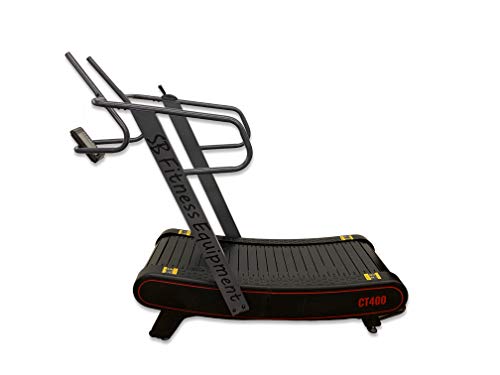
- No maximum speed for sprint intervals
- 3 resistance levels for tougher workouts
- Flexible slats add shock absorption
Best For: Serious runners and training spaces needing a commercial curved treadmill
Home Sprint Trainer
Adjustable Resistance Curved Manual Treadmill

- No speed limit for sprint or interval pacing
- 8 resistance levels for adjustable intensity
- Foldable design with LED workout tracking
Best For: Home users wanting a foldable curved treadmill for sprint-focused training
HIIT Power Pick
Heavy-Duty Curved Self-Powered Treadmill

- Instant speed changes for sprint intervals
- 6 resistance levels and a long running deck
- 400-lb capacity with shock-absorbing belt
Best For: Athletes and HIIT training where fast response and durability matter most
Wide Deck Performer
Sturdy Curved Manual Running Machine

- Wide 62.9" x 18.9" belt for comfortable strides
- Fast response for sprinting and HIIT
- 440-lb capacity with alloy steel frame
Best For: Runners who want extra deck width and a stable sprint-training platform
Heavy-Duty Sprint Trainer
8-Level Curved Manual Treadmill

- 8 resistance levels for interval work
- Tracks speed, pace, heart rate, and calories
- Self-powered curved belt with shock absorption
Best For: Users who want adjustable sprint intensity in a non-electric curved treadmill
Commercial-Style HIIT Runner
4-Level Manual Curve Treadmill

- 4 resistance levels for HIIT and sprints
- 63" x 19" belt gives more room to run
- Commercial-grade frame with 450 lb capacity
Best For: Athletes wanting a sturdy curved treadmill for sprint intervals and HIIT
Quiet Interval Performer
8-Resistance Manual Curved Treadmill

- 8 resistance levels for sprint and cardio work
- Step-forward speed changes with no buttons
- Wide curved belt and LCD workout tracking
Best For: Users who want a quiet curved treadmill for intervals and sprint training
Torque-Driven Sprint Trainer – Curved Manual Treadmill, 8 Resistance Levels
For manual treadmills for sprint training, this curved model is built to handle hard acceleration without an outlet or motor limiting your pace. The heavy-duty steel frame, wide running surface, and quick side-mounted tension control make it a practical pick for fast intervals, HIIT, and steady running at home.
Best For: Runners who want a heavy-duty curved treadmill for sprint intervals, HIIT, and general home training.
Pros:
- 8 resistance levels let you switch from lighter movement to harder sprint work quickly.
- Heavy-duty steel frame and reinforced base are designed for stability during intense running.
- 51.2″ x 16.5″ running surface gives taller users more room to stride naturally.
- LED display tracks time, distance, speed, calories, and heart rate with compatible devices.
Cons:
- At 418.5 pounds, it is very heavy and not especially easy to relocate.
- Heart-rate monitoring requires a compatible chest strap or fitness watch sold separately.
This is a solid choice if you want a self-powered treadmill that emphasizes stability and adjustable resistance for sprint-focused sessions. The curved belt and low-impact design also make it useful for runners who want a more joint-friendly training setup.
App-Connected Runner – Sunny Smart Curved Treadmill
If you’re comparing manual treadmills for sprint training, this Sunny curved treadmill stands out for its no-speed-limit design and free app access. The spacious anti-slip deck, magnetic resistance levels, and shock-absorbing build make it a flexible option for runners who want fast-paced workouts with more training data.
Best For: Users who want a curved manual treadmill with app support, adjustable resistance, and unrestricted pace for sprint work.
Pros:
- No speed limits, so you can walk, jog, or sprint at your own pace.
- 8 resistance levels with magnetic assistance give you more control over effort.
- Free SunnyFit app access adds trainer-led workouts, scenic tours, and progress tracking.
- 59″ x 17.7″ anti-slip surface and shock absorption support a more comfortable run.
Cons:
- Maximum weight capacity is 330 lbs, which is lower than some competing models.
- Heart-rate tracking depends on the separately sold HR200 sensor.
This treadmill makes sense if you want sprint-friendly performance plus connected workout features. It blends a roomy curved deck with adjustable resistance and a clear monitor for everyday training.
Space-Saving Sprint Deck – Foldable Curved Treadmill
For manual treadmills for sprint training, this foldable curved treadmill offers the key feature many home users need: the ability to train hard without taking over the room. Its no-speed-limit design, anti-slip rubber tracks, and zoned running surface are aimed at runners who want a self-propelled machine for fast intervals and daily use.
Best For: Home users who need a foldable curved treadmill for sprint training and space-saving storage.
Pros:
- No speed limits allow complete control over acceleration and pace.
- Foldable handrails help save space when the treadmill is not in use.
- Anti-slip rubber tracks and raised particles are designed to improve footing.
- Durability testing and a 350 lb weight capacity support regular home use.
Cons:
- The 15.75″ x 51.2″ track is narrower than some larger commercial-style options.
- It lists distance as the measured metric in details, so display data appears more limited than some rivals.
This is a practical pick if you want sprint capability but also need easier storage. The foldable design and wheels make it better suited to compact home setups than bulkier commercial models.
Commercial Interval Builder – SB Fitness CT400 Curved Treadmill
If you want manual treadmills for sprint training with a more commercial feel, the SB Fitness CT400 is built for fast pace changes and tough interval sessions. Its self-generated drive, curved design, and three resistance levels make it well suited to running, sport-specific drills, and HIIT.
Best For: Serious trainees and facilities that want a commercial curved treadmill for sprint intervals and mixed workouts.
Pros:
- Self-generated power and no maximum speed support unrestricted sprint work.
- 3 resistance levels help add difficulty and strength demand.
- Flexible track slats are designed to add shock absorption.
- Digital display tracks time, distance, speed, calories, and total miles.
Cons:
- Only 3 resistance levels, so adjustability is more limited than higher-range models.
- It is a heavier commercial-style unit, so it is less convenient for small spaces.
This treadmill is a strong fit for users who prioritize performance, quick speed changes, and a more rugged build. The curved deck and slatted track should appeal to anyone focused on intense training sessions rather than casual walking.
Home Sprint Trainer – Adjustable Resistance Curved Manual Treadmill
Rongle Manual Treadmill, Adjustable Resistance, Foldable, LED Display, Supports up to 350 lbs
Check Price On AmazonIf you’re comparing manual treadmills for sprint training, this curved non-electric model is built for fast self-paced work, with no speed limit and a zoned deck that supports acceleration, steady running, and deceleration. The 8 resistance levels and curved running surface make it a flexible option for intervals, while the rubber belt adds traction and safety.
Best For: Runners who want a foldable, high-capacity curved treadmill for sprints, intervals, and home use.
Pros:
- No speed restriction, so you can walk, jog, or sprint at your own pace.
- 8 resistance levels let you fine-tune workout intensity.
- Curved design encourages forefoot striking and a more natural running posture.
- Foldable frame with wheels helps save space and move it more easily.
Cons:
- At 152 pounds, it is still a heavy machine to reposition compared with lighter fitness equipment.
- The running deck is 59″ x 15.7″, which is ample for running but not the widest in this group.
Overall, this is a practical choice if you want manual treadmills for sprint training with a clear emphasis on pace control, resistance adjustment, and compact storage. The LED display adds useful workout tracking without complicating the setup.
HIIT Power Pick – Heavy-Duty Curved Self-Powered Treadmill
For manual treadmills for sprint training, this self-powered curved machine is aimed squarely at high-intensity work, with instant speed response and a resistance knob that adjusts effort without motor delay. Its long 94.5″ x 16.5″ belt, shock-absorbing surface, and commercial-grade frame make it a strong fit for hard intervals and repeated sprint sessions.
Best For: Athletes and HIIT users who want a heavy-duty curved treadmill for explosive sprint training and conditioning.
Pros:
- Instant speed response makes interval changes feel immediate.
- 6-level metal resistance knob offers more adjustment than many curved treadmills.
- 5-layer shock-absorbing belt helps reduce impact on joints.
- Commercial-style steel frame supports up to 400 lbs and runs quietly.
Cons:
- At 316 pounds, it is the heaviest and least portable option here.
- Its size may be overkill for buyers who only need light jogging or casual walking.
This model stands out if your priority is serious sprint work, not simple cardio. The combination of rapid acceleration, large deck space, and durable construction makes it especially appealing for demanding interval training.
Wide Deck Performer – Sturdy Curved Manual Running Machine
If you want manual treadmills for sprint training with a wider running surface, this curved model gives you a 62.9″ x 18.9″ belt and fast acceleration and deceleration response. It is built for walking, jogging, sprinting, and HIIT, with 4 resistance levels and a sturdy alloy steel frame that supports higher-capacity use.
Best For: Runners who want a wider curved deck and fast response for sprint and HIIT sessions.
Pros:
- Wide 62.9″ x 18.9″ running belt adds room and comfort.
- Fast acceleration and deceleration response supports interval-style training.
- 4 resistance levels provide simple intensity control.
- 440-lb capacity and alloy steel frame add stability and durability.
Cons:
- Only 4 resistance levels, so tuning is less granular than some rivals.
- It weighs 286 pounds, so moving it is not especially easy.
This is a well-rounded pick if you value deck width and a stable build for hard running. The LED display and quiet operation round out a solid setup for home, gym, hotel, or rehab use.
Heavy-Duty Sprint Trainer – 8-Level Curved Manual Treadmill
If you’re comparing manual treadmills for sprint training, this curved model is built for fast pace changes, interval work, and high-output conditioning. The 8-level resistance system lets you scale intensity from lighter runs to all-out efforts, while the curved belt encourages a more natural running pattern.
Best For: Home or gym users who want a self-powered curved treadmill with adjustable resistance for sprint intervals and anaerobic training.
Pros:
- 8 resistance levels provide a wide intensity range, including sprint training.
- LCD display tracks time, distance, pace, calories, speed, and heart rate.
- Curved deck and shock-absorbing belt are designed to reduce impact.
- No electricity required, so it can be placed almost anywhere.
Cons:
- Large, heavy unit may be harder to move than smaller home treadmills.
- Assembly and setup may be more involved than basic fitness equipment.
This is a strong pick if you want a manual curved treadmill that supports both conditioning and sprint-focused sessions. The combination of adjustable resistance, real-time metrics, and a durable self-powered design makes it well suited to serious daily use.
Commercial-Style HIIT Runner – 4-Level Manual Curve Treadmill
For buyers focused on manual treadmills for sprint training, this curved runner emphasizes quick acceleration, smooth deceleration, and a large running surface. Its 4 resistance levels make it easy to move from light jogging into harder efforts, and the self-powered design keeps speed changes tied to your stride.
Best For: Athletes and home gym users who want a commercial-style manual treadmill for HIIT, sprinting, and strength-focused cardio.
Pros:
- 4 adjustable resistance levels support jogging, sprinting, and HIIT.
- Fast response to pace changes helps with interval training.
- 63″ x 19″ curved belt offers a spacious, safer running area.
- Commercial-grade build supports up to 450 lbs and includes transport wheels.
Cons:
- Only 4 resistance levels, so fine-tuning is more limited than on some rivals.
- Large commercial footprint may take up substantial floor space.
This model makes sense if you want a sturdy, motorless treadmill that responds quickly during hard interval sessions. The wide belt and heavy-duty frame add confidence for faster training, especially in home gyms that need a more commercial feel.
Quiet Interval Performer – 8-Resistance Manual Curved Treadmill
If you want manual treadmills for sprint training with a simple, no-fuss speed transition, this curved treadmill is designed for step-forward acceleration and backward deceleration. Its 8 resistance levels and roomy curved running area make it practical for both steady conditioning and harder interval work.
Best For: Home gym users and athletes looking for a quiet, non-electric curved treadmill with multiple resistance levels for sprint work.
Pros:
- 8 resistance levels cover walking, jogging, and sprint training.
- 63″ x 19″ belt provides a spacious running surface.
- Manual speed control is quick and intuitive with no buttons needed.
- LCD monitor tracks time, speed, steps, and calories burned.
Cons:
- Listed specs include some inconsistent details, so shoppers may want to verify before buying.
- Heavy-duty construction can make it less convenient for tight spaces.
This option stands out for athletes who want straightforward interval control and a quiet training setup. The curved deck, solid resistance adjustment, and transport wheels give it a practical edge for regular cardio and anaerobic sessions.
How We Picked the Best Manual Treadmills for Sprint Training
For Manual Treadmills for Sprint Training, we prioritized a curved running surface, stable frame construction, smooth belt response, and resistance systems that support short, intense efforts. We also looked at user weight limits, display readability, foldability, and whether the machine seems suitable for repeated interval sessions rather than casual walking.
Quick Comparison
Most models in this roundup fall into two groups: lighter-duty home units with adjustable resistance and compact storage features, and heavier commercial-style runners built for harder intervals and more frequent use. If your main goal is top-end sprint work, choose the most stable curved platform with the least belt lag and the strongest frame. If you want versatility, look for digital tracking, transport features, and enough resistance range to challenge both acceleration and longer conditioning sets.
Key Buying Factors for Manual Treadmills for Sprint Training
Curved Deck Feel
A true curved belt encourages a forward running posture and better ground contact for acceleration drills. The curve should feel responsive, not slippery or overly abrupt.
Resistance and Drive
More resistance levels can help you vary workouts, but the real priority is consistent tension under fast turnover. For sprint training, the machine should let you explode into each rep without belt hesitation.
Stability and Weight Capacity
Hard intervals create side-to-side force. A solid frame and a realistic capacity rating matter more than extra features if you train fast and often.
Console and Feedback
Basic metrics like time, distance, speed, and calories are enough for most athletes. A clear digital display is helpful for interval timing and repeatability.
Space and Storage
Some manual treadmills are foldable or easier to move, which can matter in home gyms. Commercial-style options usually deliver a more planted feel but take up more room.
Who Should Buy Which Manual Treadmills for Sprint Training?
If you are an athlete focused on short bursts, sled-style effort, or conditioning circuits, choose a curved model with strong stability and fast belt response. If you need a space-saving home setup, pick a foldable unit with a decent display and enough resistance for progression. If you coach, train multiple users, or want a machine that can handle frequent all-out sessions, a commercial-grade option is the safer long-term choice.
Overall, the best choice depends on how hard you sprint, how often you train, and how much room you have. For most buyers, the ideal machine is the one that feels controlled at full effort and remains consistent session after session.
