
Manual treadmills offer a simple, non-electric way to walk, jog, or run while keeping your workout fully under your control. They’re popular for home gyms, apartments, and anyone who wants lower operating cost and less setup hassle.
Below, we’ve rounded up 10 of the best manual treadmills for 2026, focusing on build quality, resistance options, portability, and comfort so you can find the right fit faster.
Best 10 Manual Treadmills Picks for 2026
Compact Incline Pick
AKLUER Dual Flywheel Manual Treadmill

- Dual flywheel resistance with fixed incline
- Foldable, cordless design for small spaces
- LCD tracks time, pace, distance, and calories
Best For: Small-space walking and light jogging with added incline effort
Commercial Curved Runner
SB Fitness CT400 Curved Treadmill
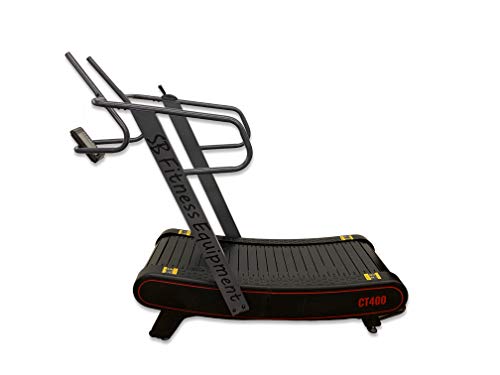
- Self-generated curved deck for fast training
- 3 resistance levels for tougher sessions
- Shock-absorbing slats for added comfort
Best For: Gyms and high-intensity runners needing a non-motorized curved deck
Space-Saving Walker
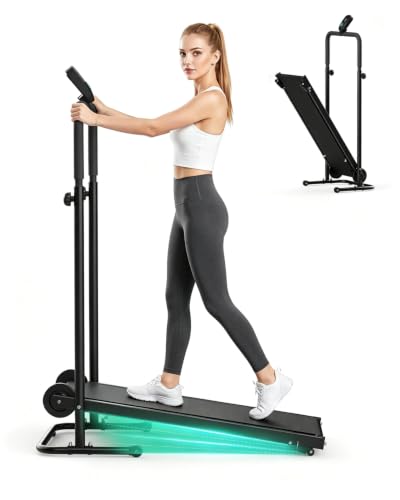
- Cordless foldable design for easy storage
- Dual flywheel with fixed incline for more effort
- LCD shows duration, pace, distance, and calories
Best For: Apartment or home walking with a simple low-maintenance setup
Curved Resistance Pick
Manual Treadmill with LED Display

- No speed limit for walking, jogging, or sprinting
- 8 resistance levels for more training control
- Curved deck with LED workout readout
Best For: Pace-controlled training and variable-intensity home workouts
Compact Incline Walker
AKLUER Dual Flywheel Manual Treadmill

- Fixed incline and dual flywheel resistance
- LCD tracks time, pace, distance, calories
- Foldable, cord-free design for small spaces
Best For: Walkers and light joggers in compact homes
Curved Sprint Trainer
Curved Manual Treadmill with 8 Resistance Levels

- 8 resistance levels for walking, running, and HIIT
- Curved belt aims to reduce joint impact
- Large deck fits taller users up to 6'3"
Best For: Taller runners and interval training
Heavy-Duty Foldable Climber
ANCHEER 20% Incline Manual Treadmill

- 20% incline boosts cardio without power
- 500 lb capacity with reinforced steel frame
- Foldable design with transport wheels
Best For: Users needing a steep-incline, high-capacity manual treadmill
Power-Driven Curved Trainer
Curved Manual Treadmill for HIIT & Conditioning

- Self-powered curved belt for active running
- 5-layer shock-absorbing surface for traction
- 6 resistance levels with 400 lb capacity
Best For: HIIT runners and conditioning-focused home gyms
Space-Saving Wood Walker
Curved Manual Walking Pad for Home & Office

- No electricity needed for flexible placement
- Foldable design with transport wheels
- 330 lb capacity with anti-slip belt
Best For: Home or office users who want easy walking and light jogging
Foldable Sprint Curve
Non-Electric Curved Treadmill with LED Display

- No-speed-limit curved design for pacing control
- Foldable handrails and built-in wheels
- LED display tracks workout metrics
Best For: Sprint training and space-conscious home runners
Compact Incline Pick – AKLUER Dual Flywheel Manual Treadmill
If you want manual treadmills that save space without feeling basic, this foldable AKLUER model is built for simple home use. The dual flywheel design adds resistance as you move, while the fixed incline helps raise workout intensity for walking or light jogging. Its cordless setup and low-maintenance build make it easy to place almost anywhere.
Best For: Small-space buyers who want a non-electric treadmill for walking, light jogging, and calorie-focused incline sessions.
Pros:
- Dual flywheel system adds natural resistance as speed increases.
- Fixed incline helps boost workout intensity and calorie burn.
- Foldable, cordless design is easier to store and move.
- LCD tracker shows time, pace, distance, and calories.
Cons:
- Running deck is compact at 36" x 15".
- Best suited to brisk walking and gentle jogging, not large-stride running.
- Users need to follow the safety and setup guidance carefully.
Overall, this is a practical manual treadmill for buyers who care more about space efficiency and steady cardio than a high-end training platform. The incline and resistance combination makes it feel more demanding than a flat walking machine while staying simple to use.
Commercial Curved Runner – SB Fitness CT400 Curved Treadmill
For buyers comparing manual treadmills for serious conditioning, this curved SB Fitness CT400 stands out as a self-generated commercial machine. It is designed for walking, running, sport-specific training, and HIIT, with no maximum speed limit and quick response to pace changes. The curved deck and flexible track slats are aimed at more intense workouts with added shock absorption.
Best For: Serious trainees, gyms, and HIIT users who want a non-motorized curved treadmill for fast-paced workouts.
Pros:
- No maximum speed limit for sprint-style training.
- 3 resistance levels let you make workouts harder.
- Curved, self-generated design supports running, walking, and HIIT.
- Flexible track slats add shock absorption.
Cons:
- Large commercial footprint takes significant space.
- Much heavier than compact home manual treadmills.
- Better suited to committed training than casual daily walking.
This is the most performance-oriented option in the group, especially if you want a manual treadmill that can handle fast interval work. Its commercial build and adjustable resistance make it a strong pick for demanding training environments.
Space-Saving Walker – FUNRAY Home Manual Treadmill
This FUNRAY pick is a straightforward manual treadmill for home users who want a cordless cardio option with a small footprint. Like other manual treadmills, it relies on your movement rather than electricity, and the fixed incline plus dual flywheel setup is meant to raise effort during walking or gentle jogging. The LCD tracker helps keep an eye on the basics without adding complexity.
Best For: Home users who want a simple, foldable manual treadmill for walking and light cardio in limited space.
Pros:
- Cordless design can be used without a power outlet.
- Dual flywheel and fixed incline increase workout intensity.
- Foldable build is easier to tuck away after use.
- LCD display tracks duration, pace, distance, and calories.
Cons:
- 36" x 15" deck is relatively compact.
- Best for brisk walking and gentle jogging rather than long-stride running.
- Requires careful use and setup to stay stable and safe.
In practical terms, this is a good fit if you want a low-maintenance manual treadmill that doesn’t dominate a room. It focuses on everyday cardio convenience, with enough resistance and incline to make workouts feel more purposeful.
Curved Resistance Pick – Manual Treadmill with LED Display
Rongle Manual Treadmill, Adjustable Resistance, Foldable, LED Display, Supports up to 350 lbs
Check Price On AmazonIf you want manual treadmills with more workout control, this curved model is built around adjustable resistance and a no-speed-limit design. The zoned deck supports acceleration, cruising, and deceleration, while the curved shape encourages a forefoot strike similar to outdoor running. It also includes an LED display that surfaces key workout data at a glance.
Best For: Users who want a foldable curved manual treadmill for pace control, resistance training, and running at their own speed.
Pros:
- No speed limit lets you walk, jog, or sprint at your pace.
- 8 resistance levels provide more training flexibility.
- Curved shape is designed to support a more natural running posture.
- LED display shows time, calories, speed, distance, pace, and heart rate.
Cons:
- Heavy 152-pound build is less convenient than compact home models.
- Large frame may be too much for very small spaces.
- Maximum weight recommendation in the details is listed lower than the product description, so buyers should verify fit before ordering.
This is a strong choice if you want a manual treadmill that feels more like a training tool than a basic walking machine. The curved deck and resistance levels make it well suited to users who like to vary intensity without relying on a motor.
Compact Incline Walker – AKLUER Dual Flywheel Manual Treadmill
Manual treadmills like this AKLUER model are a strong fit if you want a simple, space-saving machine for brisk walks and gentle jogs at home. Its fixed incline and dual flywheel design are meant to add resistance naturally as you move, while the foldable, cord-free build keeps setup and maintenance straightforward.
Best For: Walkers and light joggers who want a compact, non-electric treadmill with added incline resistance.
Pros:
- Fixed incline and dual flywheel system increase workout intensity without electricity.
- LCD tracker shows time, pace, distance, and calories for easy workout monitoring.
- Foldable, lightweight design helps it fit smaller living spaces.
- Non-slip belt and foam hand grips add comfort and stability.
Cons:
- Running deck is relatively small at 36″ x 15″.
- Best suited to walking and gentle jogging rather than high-speed training.
This is a practical choice if your priority is a manual treadmill that saves space and keeps workouts simple. The incline and resistance-focused design should appeal to users who want more effort from each stride without dealing with plugs, motors, or complicated upkeep.
Curved Sprint Trainer – Curved Manual Treadmill with 8 Resistance Levels
If you want a manual treadmill built for harder training, this curved model is geared toward walking, running, and HIIT intervals. The self-powered belt, 8 resistance levels, and spacious curved running surface make it a more performance-oriented option than basic flat-belt manual treadmills.
Best For: Taller runners and HIIT users who want a heavy-duty curved manual treadmill with adjustable resistance.
Pros:
- 8 resistance levels let you switch from walking to sprinting quickly.
- Curved rubber belt is designed to reduce impact on knees, ankles, and hips.
- Large 51.2″ x 16.5″ running surface suits users up to 6’3″.
- LED display, phone holder, and transport wheels add convenience.
Cons:
- Very heavy at 418.5 pounds, so it is not easy to move frequently.
- Large footprint requires substantial home gym space.
Overall, this is the manual treadmill to consider if you want a tougher workout and more room to run. The combination of curved design, adjustable resistance, and heavy-duty construction makes it better suited to serious training than casual walking.
Heavy-Duty Foldable Climber – ANCHEER 20% Incline Manual Treadmill
For buyers comparing manual treadmills, this ANCHEER model stands out for its high weight capacity and steep 20% incline. It is self-powered, foldable, and aimed at home users who want a low-maintenance machine that can support walking, jogging, and running with more intensity.
Best For: Users who want a foldable manual treadmill with a steep incline and high capacity.
Pros:
- 20% incline adds intensity without needing electricity.
- 500 lb heavy-duty capacity offers broad user support.
- LCD monitor tracks time, speed, distance, calories, and scan mode.
- Foldable frame and transport wheels make storage and room-to-room moves easier.
Cons:
- No mention of multiple resistance levels like some curved models.
- Best suited to home use rather than compact ultra-light portability.
This is a solid pick if incline and durability matter more than advanced training extras. The non-slip belt, folding design, and strong frame make it a practical manual treadmill for a wide range of indoor workouts.
Power-Driven Curved Trainer – Curved Manual Treadmill for HIIT & Conditioning
This manual treadmill is built for users who want a tougher, more engaged workout than a standard electric machine. Its curved, self-powered design uses your stride to move the belt, making it a strong fit for interval work, sprint drills, and conditioning sessions at home or in light commercial settings.
Best For: HIIT-focused runners, strength-conditioning workouts, and users who want a self-powered curved treadmill with a heavier-duty feel.
Pros:
- Self-powered curved design encourages active running and faster calorie burn than motorized models.
- 5-layer shock-absorbing belt is designed to reduce impact and improve traction.
- 6-level metal resistance knob allows instant intensity changes without motor lag.
- Heavy steel frame supports up to 400 lbs and includes a digital monitor for key workout metrics.
Cons:
- At 316 lbs, it is much heavier than typical home treadmills.
- Its size and commercial-style build may be overkill for casual walkers.
- Manual operation means the pace depends entirely on user effort.
Overall, this is a serious option among manual treadmills for buyers prioritizing resistance, stability, and training intensity. It makes the most sense if you want a robust curved machine that is designed for hard workouts rather than basic walking.
Space-Saving Wood Walker – Curved Manual Walking Pad for Home & Office
If you want manual treadmills that are more walking-friendly than sprint-focused, this curved walking pad is built around convenience and everyday movement. It runs without electricity, folds for storage, and uses a compact footprint that works well in a home office, apartment, or shared space.
Best For: Walking, light jogging, and users who want a portable non-electric treadmill for home or office use.
Pros:
- No electricity, motor, or electronics needed, so it can be used almost anywhere.
- Foldable, detachable handle and transport wheels make it easier to store and move.
- Solid wood and reinforced steel construction supports up to 330 lbs.
- 99% pre-assembled setup and an anti-slip belt make it simple to start using.
Cons:
- Designed mainly for walking and light jogging rather than fast sprint training.
- The 15.75″ belt width is more compact than larger running-focused models.
- Wood construction may appeal less to buyers seeking a purely gym-style look.
This is a practical choice if you want a manual treadmill that prioritizes simplicity, storage, and natural walking movement. It stands out for everyday use, especially where space and easy setup matter more than top-end running performance.
Foldable Sprint Curve – Non-Electric Curved Treadmill with LED Display
Among manual treadmills, this curved, non-motorized model is aimed at users who want control, speed, and a more athletic run. The no-speed-limit design, folding handrails, and rubber track make it a strong option for sprint training, home running, and space-conscious buyers.
Best For: Sprint training, home runners, and buyers who want a foldable non-electric curved treadmill with a simple display.
Pros:
- No-speed-limit curved design gives you full control over pace and effort.
- Anti-slip rubber track and raised particles are designed to improve safety.
- Foldable handrails and wheels help save space and make repositioning easier.
- LED display shows workout data including time, calories, speed, and distance.
Cons:
- The 15.75″ track width is relatively narrow compared with larger commercial-style models.
- At 110 lbs, it is still substantial even with a foldable design.
- Manual operation requires sustained effort, especially at higher speeds.
This model is a good fit if you want a straightforward training treadmill that stays mechanical and responsive. It is especially appealing for users who value sprint-style workouts and a foldable frame over extra electronics.
How We Picked the Best Manual Treadmills
For this roundup, we prioritized Manual Treadmills that balance usability, durability, and value. Key factors included resistance or incline options, deck comfort, weight capacity, foldability, monitor features, and whether the design suits walking, steady cardio, or higher-intensity training. We also favored models with practical home-friendly features such as compact storage and non-electric operation.
Quick Comparison: Which Style Fits Your Routine?
Not all Manual Treadmills feel the same. Flat belt models are usually simpler and better for walking or light jogging. Curved designs tend to feel more athletic and can better suit interval work, sprint training, and calorie-focused sessions. Dual-flywheel and resistance-based models often sit in the middle, offering a smoother feel and more adjustability for everyday home use.
Key Buying Factors for Manual Treadmills
Resistance and Deck Design
Check whether the treadmill uses incline, magnetic resistance, a curved running surface, or another mechanism to create effort. More resistance usually means more workout variety, but it can also change how natural the stride feels.
Size, Storage, and Portability
Many Manual Treadmills are marketed as space-saving, but folded dimensions and transport wheels matter more than the headline claim. Measure your room and look at the footprint you’ll actually need during use.
Comfort and Stability
A wider belt, sturdy frame, and shock-absorbing surface can make longer sessions easier on the joints. If you plan to run, prioritize stability and deck feel over ultra-compact sizing.
Display and Tracking
Basic monitors can show time, speed, distance, calories, and scan data. That’s enough for most buyers, but more detailed feedback can help if you train by pace or intervals.
Weight Capacity and User Fit
Always compare the listed weight limit with a margin to spare. If multiple people will use the machine, choose a treadmill that comfortably supports the heaviest user and their training style.
Who Should Buy Which Manual Treadmills?
If you want an easy walking solution for home or office use, a compact curved or foldable model is often the best fit. If you plan to run more seriously or do higher-intensity conditioning, look for a sturdier curved treadmill with multiple resistance levels and a stable frame. For mixed-use households, a dual-flywheel or incline-based option can offer the most flexibility without the complexity of a motorized machine.
In short, the best Manual Treadmills are the ones that match your pace, available space, and training goals. Pick the design that feels natural to use consistently, because that’s the one most likely to earn regular workouts.
