
Finding the right stair solution can make daily life safer, easier, and less stressful for older adults. The best options balance stability, ease of use, and the level of help the user actually needs.
From simple assist canes to powered stair lifts and mobility chairs, this roundup of stair climbers for seniors focuses on practical choices for different homes, budgets, and mobility levels.
Best 10 Stair Climbers for Seniors Picks for 2026
Permanent Stair Lift
AmeriGlide Rave 2 DIY Self-Install Stair Lift

- Battery powered with 15 ft. of track
- 350 lb capacity for straight stairs
- Swivel seat, armrests, and safety sensor
Best For: A permanent straight-stair lift with backup power
Portable Stair Support
Upgraded Stair Climbing Assist Cane

- 20-level height adjustment from 35" to 45"
- Dual handles for up and down stairs
- Wide V-base with reinforced steel frame
Best For: Portable support on indoor or outdoor stairs
Wheel-Free Stair Walker
Foldable Stair Climbing Walker for Seniors

- No-wheels design for stair control
- 16 height settings up to 38"
- Lightweight 6.2 lb foldable frame
Best For: Users needing walker-style stability on stairs
Adjustable Stair Cane
20-Level Stair Climbing Assist Cane with Feet
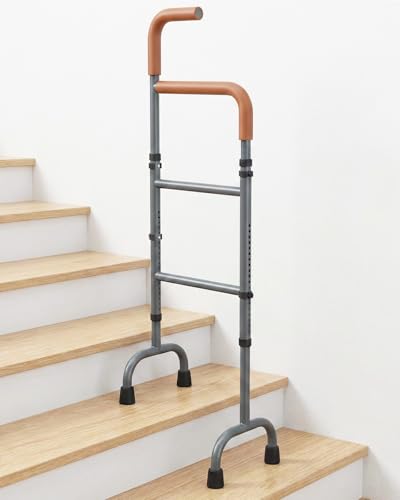
- 20 height levels from 35" to 45"
- Four rubber feet for extra grip
- Lightweight 4.4 lb slim design
Best For: A compact stair aid for standard and non-standard steps
Heavy-Duty Stair-Climbing Mobility
Powered Wheelchair, 480lb Foldable Lift

- 480 lb capacity with aluminum alloy frame
- Slow, button-activated climb on straight stairs
- Foldable design for indoor and outdoor use
Best For: Seniors needing a powered stair-climbing wheelchair with high capacity
Curved Grip Stair Support
Adjustable Stair Cane for Indoor Steps
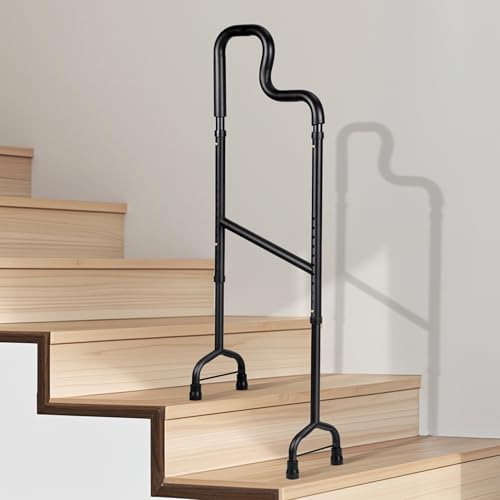
- Multi-position curved handle
- 4-point support across two treads
- No-drill freestanding setup
Best For: Seniors needing flexible hand placement and simple stair support
Heavy-Duty Quad Base
20-Level Adjustable Stair Cane
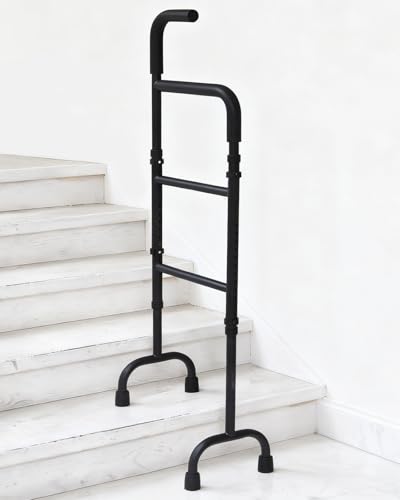
- 20 locking height positions
- Carbon steel quad-base stability
- Self-standing freestanding design
Best For: Seniors who want a sturdy, adjustable stair cane
4-Claw Stability Cane
13-Level Stair Assist for Seniors

- Tool-free 13-level height adjustment
- 4-claw rubber base for traction
- 330 lb carbon steel capacity
Best For: Seniors and post-surgery users needing durable stair traction
Permanent Stair Lift – AmeriGlide Rave 2 DIY Self-Install Stair Lift
If you’re comparing stair climbers for seniors for a straight staircase, this battery-powered stair lift is built for a more complete mobility solution. It includes 15 feet of track, a 350 lb weight capacity, and wireless call stations at both the top and bottom of the stairs for added convenience.
Best For: Seniors who need a permanent straight-stair solution with battery backup and self-installation.
Pros:
- Battery powered for dependable operation
- DIY self-install design with 15 ft. of track included
- 350 lb maximum weight capacity
- Safety features include swivel seat, flip-up seat and armrests, footrest safety sensor, and wireless call stations
Cons:
- Designed for straight staircases only
- More of a fixed lift than a portable stair aid
- Requires installation and track placement
This is the most substantial option in the group, and it makes sense for homes where a permanent lift is the goal. If your priority is stable, battery-powered support for one straight staircase, it offers a strong set of safety and convenience features.
Portable Stair Support – Upgraded Stair Climbing Assist Cane
Among stair climbers for seniors, this adjustable stair assist cane is a portable option meant to give extra support on indoor or outdoor steps. The dual handle positions help users push upward going up stairs and stay balanced coming down, while the V-shaped base and steel bracing are designed to improve stability.
Best For: Seniors or post-surgery users who want a portable stair support device for home steps.
Pros:
- 20 height settings from 35″ to 45″
- Dual handle positions support both up and down stairs
- Wide V-shaped base with reinforced carbon steel frame
- Tool-free assembly with illustrated guide
Cons:
- Requires the user to manage the device manually
- Not a fixed rail or powered lift
- Best suited to stairs where a portable aid is practical
This model focuses on adjustability and stability rather than automation. It’s a practical pick when you need a stair aid that can move with you and fit different household stair setups.
Wheel-Free Stair Walker – Foldable Stair Climbing Walker for Seniors
If you’re shopping stair climbers for seniors and want a walker-style aid with maximum control, this wheel-free design is made for stair use. It adjusts in height, folds for storage, and uses a lightweight aluminum alloy frame to provide stable support without rolling.
Best For: Seniors who want a no-wheels walker for added stability on stairs and uneven surfaces.
Pros:
- Wheel-free design for greater control on stairs
- 16 height adjustments from 7.8″ to 38″
- Lightweight 6.2 lb aluminum alloy frame
- Folds compactly and needs no assembly
Cons:
- Only supports up to 300 lbs
- Bulkier than a simple cane-style stair aid
- Designed as a walker, not a lift
This is a straightforward mobility tool for users who need a stable, ready-to-use walker on stairs and other tricky surfaces. The no-wheel setup is the main selling point if rolling movement is a concern.
Adjustable Stair Cane – 20-Level Stair Climbing Assist Cane with Feet
This stair assist cane is aimed at seniors who want a compact option among stair climbers for seniors without moving to a bulky lift. It uses 20 height levels, anti-slip foam handling, and four rubber feet to improve grip on wood, tile, stone, and other step surfaces.
Best For: Seniors who need a lightweight, space-saving stair assist cane for standard and non-standard steps.
Pros:
- 20 adjustable height levels from 35″ to 45″
- 4 non-slip rubber feet for added stability
- Lightweight 4.4 lb carbon steel design
- Slim profile stands upright for easy storage
Cons:
- Manual support device rather than a lift
- Works best when the user can bear some weight
- Single-cane design may not suit every mobility need
For buyers who want a small footprint and adjustable fit, this cane is easy to understand and easy to store. It emphasizes grip and portability, making it a practical alternative to larger stair assist equipment.
Heavy-Duty Stair-Climbing Mobility – Powered Wheelchair, 480lb Foldable Lift
If you are comparing stair climbers for seniors and need a more full-support solution, this powered stair-climbing wheelchair is built for controlled movement on straight stairs. It is designed for indoor and outdoor use, with a slow, button-activated climb that aims to make stair navigation easier for both the user and caregiver.
Best For: Seniors who need a powered stair-climbing wheelchair with high weight capacity and foldable portability.
Pros:
- 480 lb maximum weight capacity with aluminum alloy construction
- Button-activated, slow controlled stair climbing for straight stairways
- Foldable design with 70 lb unit weight for easier transport
- Works on stairs, flat surfaces, and uneven terrain
Cons:
- Not suitable for spiral stairs
- Heavier and more specialized than a cane-style stair aid
- May be more than some users need for simple step support
This is a practical choice when the priority is powered stair travel rather than a simple balance aid. Its strength is the combination of high capacity, controlled movement, and foldable construction, making it best suited to users who need more complete stair assistance.
Portable Stair Support Aid – Adjustable Elderly Stair Climbing Cane
For shoppers looking at stair climbers for seniors in a lightweight support format, this adjustable stair climbing cane focuses on balance and stability rather than powered lifting. It is meant for elderly users or post-surgery recovery, with a wide base, non-slip feet, and tool-free assembly for everyday stair help.
Best For: Seniors or recovery users who want a portable, adjustable stair support cane with a high weight capacity.
Pros:
- 450 lb weight capacity for sturdy support
- 8-claw wide base with non-slip rubber feet for added stability
- Adjustable height from 28.5″ to 45.5″ and adjustable width
- Tool-free assembly and compact storage-friendly design
Cons:
- Designed as a support aid, not a powered stair lift
- Best suited to straight, manageable stair use and stable footing
- May feel bulky for users wanting a very minimal cane
This model stands out for users who want a portable stair helper with broad adjustability and a strong support rating. It is a sensible pick when you want something easy to set up, easy to store, and designed to add confidence on stairs and flat surfaces.
Adjustable Stair Support – Standing Stair Lift Cane with Light
If you want stair climbers for seniors that stay simple and portable, this stair assist cane is built around adjustable support and everyday convenience. It offers width and height adjustment, foam handles, widened anti-slip foot pads, and a built-in light to help improve visibility during use.
Best For: Seniors and post-surgery users who want a lightweight stair assist cane with added visibility.
Pros:
- Adjustable height and width to fit different users and steps
- 300 lb handrail weight capacity in a lightweight aluminum alloy frame
- Anti-slip foam handles and widened foot pads for stability
- Includes an external light with three dimming modes
Cons:
- Lower weight capacity than heavier-duty support options
- Requires a flat-surface stability test before stair use
- Best for limited-mobility support rather than powered stair climbing
This is a practical option for users who want a compact stair aid with helpful extras like lighting and easy adjustment. It favors portability and simple setup, making it a strong fit for households that want a straightforward stair support tool.
Curved Grip Stair Support – Adjustable Stair Cane for Indoor Steps
If you’re comparing stair climbers for seniors, this stair assist cane stands out for its multi-position curved handle and freestanding, no-drill design. It’s built to give extra support on indoor stairs, porch steps, and entryways while letting users reposition their hands naturally as they move.
Best For: Seniors and adults who want a stable stair support cane with multiple grip heights and easy placement.
Pros:
- Continuous curved handle offers high, middle, and low grip areas.
- Two U-shaped bases create 4-point support across two stair treads.
- Adjustable to fit different user heights and step height differences.
- No-drill, freestanding design is easy to set up and move.
Cons:
- Best suited to clean, dry, level surfaces for traction.
- Not as compact as a standard cane for everyday walking.
- Primarily intended for stairs and entry steps rather than general mobility.
This is a practical pick if you want a stair helper that prioritizes hand placement flexibility and broad support without permanent installation. The aluminum frame and open design add everyday convenience while keeping the setup straightforward.
Heavy-Duty Quad Base – 20-Level Adjustable Stair Cane
For shoppers evaluating stair climbers for seniors, this freestanding stair assist cane focuses on adjustability and a heavy-duty frame. Its 20 locking height positions, carbon steel construction, and wide four-foot base are designed to add balance on home stairs and entryways.
Best For: Seniors who want a sturdy, height-adjustable stair cane with a quad base and self-standing design.
Pros:
- 20-level pin-lock adjustment helps match different stair heights.
- Carbon steel frame and quad-base design emphasize stability.
- Soft EVA foam handles help reduce hand fatigue.
- Self-standing design keeps it within reach at top or bottom of stairs.
Cons:
- Requires full assembly before first use.
- Recommended for users taller than 5’0".
- Severe mobility impairments may require caregiver help during initial use.
This model is a strong choice if you want a more adjustable, heavy-duty option and are comfortable with assembly. It also pairs best with a wall-mounted handrail when maximum stability is the priority.
4-Claw Stability Cane – 13-Level Stair Assist for Seniors
If you’re shopping for stair climbers for seniors, this stair assist cane is built around quick height adjustment and a traction-focused base. It adjusts from 28 to 36 inches and uses a 4-claw rubber base to help improve grip on common stair surfaces.
Best For: Seniors, post-surgery users, and mobility-aid users who want a durable stair helper with strong traction.
Pros:
- Tool-free 13-level adjustment fits a range of step heights.
- Heavy-duty carbon steel frame supports up to 330 lbs.
- 4-claw rubber base is designed to grip wood, tile, cement, and even wet surfaces.
- Ergonomic soft-grip handle is shaped to reduce wrist and finger pressure.
Cons:
- Not suitable for icy, snowy, or uneven outdoor stairs.
- Must stay within the 330 lbs weight capacity.
- Users with severe mobility issues should use it with caregiver supervision.
This is a practical stair aid if durability and traction matter most, especially for households that need a dependable helper for indoor or entryway steps. The straightforward adjustment range makes it easier to match different stair situations without extra tools.
How We Picked Stair Climbers for Seniors
We focused on products that solve real stair-use problems without adding unnecessary complexity. Key factors included weight capacity, adjustability, traction, portability, setup difficulty, and whether the product is better suited for mild support or full assistance. We also looked for designs that can help reduce strain for both the user and caregiver.
Quick Comparison
Not every option serves the same purpose. Assist canes and standing supports are best for users who can still manage stairs with extra balance help. Walkers designed for stairs offer more stability for controlled step-by-step movement. Powered stair lifts and stair-climbing chairs are the right fit when the user needs seated transportation and significantly more assistance.
Key Buying Factors for Stair Climbers for Seniors
Mobility Level
Choose the lightest solution that still provides enough support. A cane-style aid may be enough for someone with balance concerns, while a powered stair chair is better for limited lower-body strength or fatigue.
Stair Type and Home Layout
Measure stair width, step depth, landing space, and rail placement before buying. Some Stair Climbers for Seniors are made for straight staircases only, while others are better for standard steps or indoor use with more maneuvering room.
Safety Features
Look for anti-slip grips, wide bases, stable foot contact, secure harnessing or seating when applicable, and easy-to-use controls. Good ergonomics matter too, especially for seniors with arthritis or reduced hand strength.
Setup and Storage
If the device will be moved often, foldability and lighter weight matter. If it will stay in place, prioritize long-term comfort and durability over compact storage.
Who Should Buy Which Stair Climbers for Seniors?
Buy a stair assist cane if the user mainly needs balance support and confidence on standard steps. Choose a stair climbing walker if more standing stability is needed. Pick a powered stair-climbing wheelchair or stair lift when the user cannot safely manage stairs independently or needs seated transport. For households comparing Stair Climbers for Seniors, the best choice is the one that matches the user’s strength, stair layout, and caregiver support, not just the highest number of features.
