
If you want firm core support without the stiffness of a leather belt, nylon weightlifting belts are a smart place to start. They’re popular for lifters who want a lighter feel, easier adjustments, and more versatility across workouts.
This roundup highlights 10 strong options for squats, deadlifts, functional training, and general gym use, with a focus on fit, lock security, and comfort.
Best 10 Nylon Weightlifting Belts Picks for 2026
Heavy-Duty Support Strap
4-Inch Nylon Belt with 3-Inch Support Strap

- 4-inch belt with extra-wide 3-inch support strap
- 346-count nylon stitching adds stability
- Steel roller buckle for simple tensioning
Best For: Heavier lifts when you want a traditional, supportive nylon belt
Quick-Lock Competition Fit
Self-Locking Nylon Belt for Competition Lifts

- Self-locking metal buckle for secure use under load
- Infinitely adjustable for precise pressure control
- Breathable nylon with no break-in period
Best For: Competition and training lifters who want quick adjustment and a flexible fit
Reinforced Steel Buckle
4-Inch Nylon Belt with Steel Roller Buckle
- 4-inch belt with extra-wide 3-inch support strap
- 346-count stitching improves belt stability
- Steel roller buckle makes tensioning easy
Best For: Lifters who prefer a durable, traditional nylon belt
Large Quick-Adjust Fit
Large Self-Locking Nylon Belt for Heavy Training
- Self-locking buckle for secure support under load
- Infinitely adjustable for precise pressure control
- Competition approved for lifting meets and workouts
Best For: Large-size lifters who want a secure, adjustable nylon belt
Heavy-Duty Support Pick
Harbinger 4-Inch Nylon Weightlifting Belt
- 3-inch support strap for extra lower-back and abdominal support
- 346-count nylon stitching for belt stability
- Steel rollerbuckle for easy tensioning
Best For: lifters wanting sturdy support for heavier lifts
Competition-Ready Pick
Element 26 Self-Locking Weight Lifting Belt
- Self-locking buckle designed to stay secure
- 100% premium nylon with full metal buckle
- Competition approved for Olympic lifting and functional fitness
Best For: athletes needing a secure, competition-approved belt
Premium Back Support Pick
Schiek Model 2004 Nylon Lifting Belt

- 4.75-inch nylon design
- One-way buckle for easy adjustment
- Built for core and lower-back support
Best For: Lifters who want a secure nylon belt for training and bodybuilding
Comfort-Focused Stability Pick
DMoose 6-Inch Adjustable Lifting Belt

- 6-inch back support for heavy lifts
- Neoprene and nylon construction
- Breathable foam core for comfort
Best For: Lifters who want a comfortable, secure belt for squats and deadlifts
Auto-Lock Value Pick
6-Inch Nylon Auto-Lock Lifting Belt
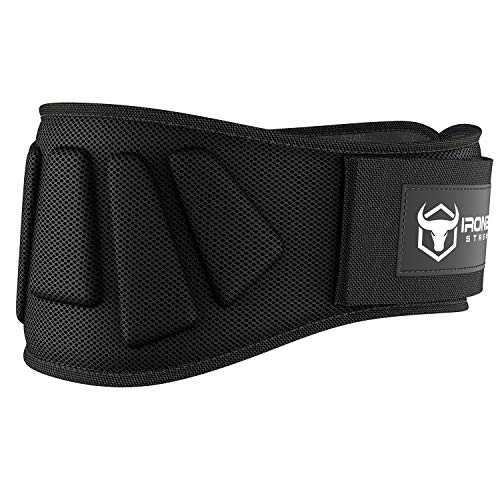
- 6-inch support with contoured fit
- Auto-lock fastening for security
- Neoprene, nylon, and mesh for breathability
Best For: Lifters who want a secure, breathable belt for heavy training
Heavy-Duty Support Strap – 4-Inch Nylon Belt with 3-Inch Support Strap
If you want nylon weightlifting belts that lean toward sturdy, classic support, this Harbinger model is built for heavier lifting sessions. Its 4-inch body and extra-wide 3-inch support strap are designed to give strong lower back and abdominal support, while the thick nylon web aims to stay comfortable and durable through regular training.
Best For: Lifters who want a traditional, supportive nylon belt for heavier squats, deadlifts, and general strength work.
Pros:
- 4-inch design with an extra-wide 3-inch support strap for added support
- 346-count nylon stitching runs the full belt length for stabilization
- Heavy-gauge steel roller buckle makes tensioning straightforward
- Thick nylon web is built for comfort, durability, and muscle warmth
Cons:
- Uses a buckle closure, so it is less quick to remove than hook-and-loop designs
- Support is fixed by size rather than infinitely adjustable
- Best suited to lifters who prefer a firmer, more traditional feel
Overall, this is a practical pick if you want a straightforward nylon belt with a focus on stability and durability. The construction details suggest a dependable training belt for lifters who value reinforced support over fast on-off convenience.
Quick-Lock Competition Fit – Self-Locking Nylon Belt for Competition Lifts
Among nylon weightlifting belts, this Element 26 model stands out for its self-locking buckle and competition-ready 4-inch profile. The premium nylon is designed to be breathable and pliable, so it can conform to your core for consistent pressure without a break-in period.
Best For: Lifters who want fast adjustments, competition-approved sizing, and a flexible nylon feel for squats, deadlifts, and Olympic lifts.
Pros:
- Self-locking metal buckle engages automatically under load
- Infinitely adjustable design helps dial in pressure more precisely
- Breathable nylon does not retain sweat like some other materials
- Meets requirements for sanctioned Olympic lifting competitions and functional fitness events
Cons:
- Hook-and-loop closure may not appeal to lifters who prefer a traditional buckle
- 4-inch straight profile may feel less rigid than thicker leather-style belts
- Best fit is dependent on getting the right waist size and adjustment range
This is a strong option if you want a nylon belt that prioritizes speed, adjustability, and competition use. It should appeal especially to lifters who want reliable support with less bulk and no break-in period.
Reinforced Steel Buckle – 4-Inch Nylon Belt with Steel Roller Buckle
If you are comparing nylon weightlifting belts and want a reliable, no-frills option, this Harbinger version offers the same 4-inch support concept with a reinforced build. Its thick nylon web, 346-count stitching, and steel roller buckle are aimed at keeping the belt comfortable while helping stabilize your core during heavier lifts.
Best For: Lifters who want a durable 4-inch nylon belt with a traditional buckle and reinforced stitching.
Pros:
- 4-inch width is paired with an extra-wide 3-inch support strap
- 346-count nylon stitching helps stabilize the belt body
- Heavy-gauge steel roller buckle simplifies tensioning
- Thick nylon web is built for comfort, durability, and warmth
Cons:
- Buckle system is slower to adjust than quick-lock designs
- Support is size-based rather than infinitely adjustable
- Best suited to lifters who prefer a more traditional construction
For lifters who value reinforcement and a familiar buckle setup, this belt keeps the formula simple and functional. It is a sensible choice for heavier training if you want durable nylon support without extra features.
Large Quick-Adjust Fit – Large Self-Locking Nylon Belt for Heavy Training
This Element 26 model is another strong entry in nylon weightlifting belts, with a focus on secure locking and easy adjustment. The 4-inch nylon construction is designed to conform to your core, while the self-locking buckle and reinforced stitching support heavier squats, deadlifts, and Olympic-style movements.
Best For: Lifters who want a large-size nylon belt with quick release, competition approval, and a comfortable flexible feel.
Pros:
- Self-locking buckle is designed to engage automatically under load
- Infinitely adjustable fit helps fine-tune pressure during lifts
- Breathable premium nylon is built not to retain sweat
- Competition-approved for sanctioned Olympic lifting and functional fitness events
Cons:
- Hook-and-loop closure may not be the top choice for users wanting a traditional buckle
- 4-inch profile may feel less rigid than thicker training belts
- Best for lifters whose waist size falls within the large sizing range
As a large-size option, this belt keeps the same practical strengths that make the line appealing: security, adjustability, and portability. It is a good fit if you want a nylon belt that moves easily between training and meet use.
Heavy-Duty Support Pick – Harbinger 4-Inch Nylon Weightlifting Belt
If you want nylon weightlifting belts built for heavier lifts, the Harbinger 4-Inch Nylon Weightlifting Belt is a straightforward option with a wide 3-inch support strap, thick nylon webbing, and a uniform 4-inch profile. It focuses on stability, comfort, and durability without extra bulk.
Best For: Lifters who want firm lower-back and abdominal support for heavier training sessions.
Pros:
- Extra-wide 3-inch support strap for lower back and abdominal support
- 346-count nylon stitching runs the full belt length for added stability
- Heavy-gauge steel rollerbuckle makes tensioning simple
- Thick, flexible nylon webbing helps maintain comfort and muscle warmth
Cons:
- Only available in four waist sizes, so fit depends on careful measuring
- Bulkier support design may feel more restrictive than lighter belts
This is a practical choice if you prioritize support and durability over a minimalist feel. The design is geared toward heavier lifts and steady bracing, with a simple buckle system that should be easy to adjust.
Competition-Ready Pick – Element 26 Self-Locking Weight Lifting Belt
Among nylon weightlifting belts, the Element 26 Self-Locking Weight Lifting Belt stands out for its self-locking buckle and uniform 4-inch profile. It is built from 100% premium nylon with a full metal buckle and is designed for athletes who want a secure feel during functional training and Olympic-style lifting.
Best For: Athletes who want a secure, competition-approved belt for functional fitness and Olympic lifting.
Pros:
- Self-locking buckle is designed to stay secure and release quickly
- 100% premium nylon construction with a full metal buckle
- Uniform 4-inch profile for consistent intra-abdominal pressure
- Competition approved for Olympic lifting and functional fitness
Cons:
- No padded inserts or mesh coverings, which some users may prefer
- Only one listed color and a single size option in the supplied details
If you want a belt built around secure locking and competition use, this one is a strong fit. Its simple, performance-focused design avoids unnecessary extras and is backed by a lifetime warranty.
Wide Coverage Pick – Rogue 5" Nylon Weightlifting Belt
The Rogue 5″ Nylon Weightlifting Belt is a simple, wide-format option for lifters who want more coverage from a nylon weightlifting belt. With a 5-inch profile, buckle closure, and nylon build, it offers a more substantial feel than narrower designs.
Best For: Lifters who prefer a wider 5-inch belt for added coverage during training.
Pros:
- 5-inch width provides broad coverage
- Nylon construction keeps the design lightweight
- Buckle closure for straightforward use
Cons:
- Limited supplied details make feature comparison harder
- Only one size range is listed in the notes
This belt is a sensible pick if you know you want a wider nylon design and prefer a simple build. It keeps the feature set minimal, which may appeal to lifters who just want coverage and ease of use.
Premium Back Support Pick – Schiek Model 2004 Nylon Lifting Belt
If you want nylon weightlifting belts with a strong focus on lower-back support, the Schiek Sports Model 2004 is built around stability and a snug, adjustable fit. Its 4.75-inch nylon design and one-way buckle system make it a practical option for gym sessions where you want dependable support without a bulky feel.
Best For: Lifters who want a secure nylon belt for weight training, powerlifting, and bodybuilding with easy adjustment.
Pros:
- 4.75-inch nylon construction for lower back support
- One-way buckle system for quick, customized adjustments
- Designed to support core stability during heavy lifts
- Made for adult gym use with a tough build
Cons:
- Small size may not suit everyone
- Narrower than some 6-inch belts
The Schiek Model 2004 is a straightforward choice if support and fit control matter most. It is best suited to lifters who want a sturdy nylon belt that focuses on back support and quick tightening rather than maximum width.
Comfort-Focused Stability Pick – DMoose 6-Inch Adjustable Lifting Belt
Among nylon weightlifting belts and nylon-blend training belts, this DMoose option stands out for its mix of neoprene and nylon, plus a wide 6-inch back support area. It is aimed at lifters who want stability for squats, deadlifts, and intense workouts while still keeping the belt comfortable for longer sessions.
Best For: Men and women who want a supportive training belt with a secure hook-and-loop fit and extra comfort.
Pros:
- 6-inch back support for stability on heavy lifts
- Premium neoprene and nylon materials for durability and flexibility
- Breathable foam core adds cushioning during longer workouts
- Hook-and-loop closure helps achieve a snug, secure fit
Cons:
- Best suited to medium size in this listing
- Hook-and-loop styles may not appeal to lifters who prefer a buckle system
This belt is a solid fit for lifters who value comfort as much as support. The contoured design, breathable core, and wide back panel make it practical for repeated training sessions and compound movements.
Auto-Lock Value Pick – 6-Inch Nylon Auto-Lock Lifting Belt
If you are shopping for nylon weightlifting belts with a strong lock-in feel, this 6-inch model is built to keep the waist secure under load. Its contoured shape, nylon and neoprene build, and ratchet-style auto-lock fastening make it a practical choice for lifting, cross training, and powerlifting.
Best For: Lifters who want a lightweight, breathable belt with a reliable auto-lock closure.
Pros:
- 6-inch front and rear support for the back and stomach
- Auto-lock fastening system for secure pressure under heavy lifts
- Neoprene, nylon, and mesh construction for comfort and breathability
- Contoured and tapered shape improves movement freedom
Cons:
- Sizing requires careful waist measurement
- May be less minimal than a simple nylon strap belt
This belt is a good fit if you want dependable support without giving up mobility. The combination of a secure closure, breathable materials, and a shaped profile makes it useful for demanding gym routines.
How We Picked the Best Nylon Weightlifting Belts
We looked for belts that balance support, comfort, and practicality. The strongest picks typically offer secure locking hardware, enough lumbar coverage for bracing, and materials that hold up under repeated training. We also favored models with quick on-and-off use, since that matters for busy gym sessions and mixed training styles.
Quick Comparison: What Matters Most
When comparing Nylon Weightlifting Belts, the most important differences are belt width, closure style, padding, and adjustability. Wider belts can feel more supportive, while slimmer or more flexible designs may be better for high-rep work, CrossFit-style training, and athletes who want less restriction.
Key Buying Factors for Nylon Weightlifting Belts
Width and Back Coverage
A wider belt generally gives more surface area for bracing, especially during heavy squats and deadlifts. Many lifters prefer around 4 to 6 inches of support, but the best choice depends on torso length and how much mobility you need.
Closure and Locking System
Look closely at the fastening system. Auto-lock, self-locking, and hook-and-loop designs are fast and convenient, but the best version should still feel secure under load. A belt that slips or loosens mid-set is a bad fit, even if it feels comfortable at first.
Comfort and Flexibility
One reason lifters choose Nylon Weightlifting Belts is comfort. Padding, inner lining, and a more flexible construction can make them easier to wear for longer sessions. If you train dynamically, comfort and freedom of movement may matter as much as absolute rigidity.
Fit and Sizing
Proper sizing is essential. A belt that is too large may fail to tighten enough, while one that is too small can limit breathing and bracing. Check the manufacturer’s size range carefully, and make sure it allows room for both a snug working fit and natural torso expansion.
Who Should Buy Which Nylon Weightlifting Belts?
Choose a more supportive, wider belt if you prioritize heavy compound lifts and want a stable brace. Choose a lighter, more adjustable design if you do mixed workouts, machine work, or functional fitness. Beginners often do best with a comfortable, easy-to-use belt they’ll actually wear consistently, while experienced lifters may prefer a model that feels more structured under load.
In short, the best Nylon Weightlifting Belts are the ones that match your training style, torso shape, and comfort preferences. Focus on secure closure, the right width, and a fit that supports your bracing without getting in the way.
