
If you want a simple tool for focused pressure on forearms, wrists, calves, or legs, the Arm & Leg Massager Roller is built around that use case.
This review looks at where the product is strong, where it is more limited, and whether it fits your recovery routine.
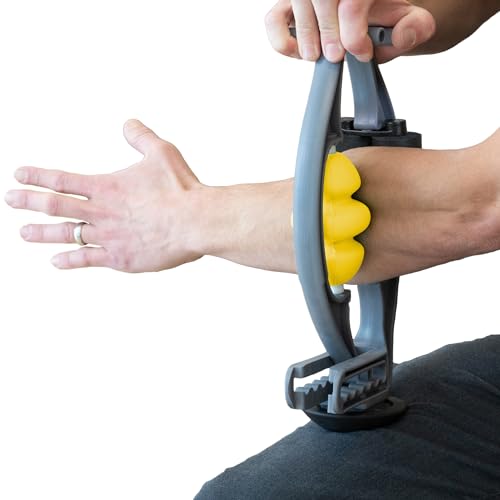
Arm & Leg Roller Review Summary
The Arm & Leg Massager Roller makes the most sense for buyers who want a portable, manual way to target tight spots instead of a larger massage device.
The listing positions it as a recovery tool for golfers elbow, tennis elbow, carpal tunnel, tendonitis, and general muscle tightness, so it is best understood as a focused pressure roller rather than a broad full-body massager.
What stands out is the product’s narrow but practical design goal.
It is meant to apply deep, controlled pressure with a simple squeeze, which should appeal to people who want to work on specific muscle areas at home, at the gym, or while traveling.
That makes it a good fit for athletes, desk workers with forearm tension, and anyone who prefers hands-on control over intensity.
At the same time, this is not a do-everything recovery device.
The benefit is precision, not automation or wide coverage.
If you want something for calves, forearms, wrists, and feet in a compact format, the Arm & Leg Massager Roller review comes down to whether that targeted approach is enough for your needs.
Review Scorecard
| Category | Score | Why it matters |
|---|---|---|
| Targeted pressure control | 9/10 | The squeeze-driven design is made for precise pressure on small, tight areas. |
| Portability | 9/10 | The compact form is clearly meant for travel, gym bags, and easy storage. |
| Recovery versatility | 8/10 | The listing supports use on forearms, wrists, calves, legs, and feet. |
| Condition-specific fit | 8/10 | It is aimed at common overuse problems like tennis elbow and tendonitis. |
| Ease of use | 8/10 | Manual operation keeps setup simple and puts pressure control in your hands. |
| Broad coverage | 5/10 | It is less suited to buyers who want large-area massage or automation. |
Key Features and Specifications of Arm & Leg Roller
The product is marketed as a muscle roller for arms and legs with a focus on deep tissue-style pressure and myofascial release.
The listing emphasizes use for golfer’s elbow, tennis elbow, carpal tunnel, tendonitis, inflammation support, soreness reduction, flexibility, and faster recovery.
Key facts from the listing:
- Designed for forearms, wrists, calves, legs, and feet
- Compact and portable for home, gym, or travel
- Uses simple squeeze-based pressure control
- Intended to help target specific points and stubborn knots
- Built around deep tissue and myofascial release language
- Positioned for athletes and recovery-focused users
The main value here is not complexity.
It is the ability to deliver concentrated pressure in a small format.
That matters if you already know where the tightness is and do not need a large device to cover wide muscle groups.
The listing also describes the roller as ergonomically designed and easy to take anywhere.
That combination suggests a tool meant to stay within reach, which is often what makes recovery products useful in real life.
A device that is simple enough to keep in a bag or desk drawer is more likely to get used consistently.
Pros and Cons of Arm & Leg Roller
Pros
- Highly targeted pressure for tight or overworked spots
- Portable design that works well outside the home
- Useful across multiple areas like forearms, wrists, calves, and legs
- Manual control lets the user adjust pressure naturally
- Good fit for repetitive-use discomfort such as tennis elbow or forearm strain
Cons
- Not a full-body massage device
- Manual use may feel limiting if you want passive recovery
- Best for specific spots, not broad muscle coverage
- Effect depends on user technique, since pressure is self-applied
The strongest advantage is clarity of purpose.
The product knows what it is for, and that focus is useful.
The main drawback is the same thing: if your needs are broader than localized relief, this tool may feel too specialized.
Who Should Buy Arm & Leg Roller?
The Arm & Leg Massager Roller is a good fit for buyers who want a compact recovery tool for localized muscle tightness.
It makes the most sense for athletes, gym users, runners, racket-sport players, and office workers who carry tension in the forearms or wrists.
It is also a sensible option if you like to manage recovery yourself and prefer a manual tool you can use anywhere.
Because the design is portable and straightforward, it fits people who want something practical rather than high-tech.
You should probably skip it if you want automatic massage, broad coverage across large muscle groups, or a device that does the work for you.
If your main priority is convenience with minimal effort, a different recovery product may be a better match.
How the Arm & Leg Roller Fits Recovery Routines
Forearm and Wrist Work
The listing repeatedly emphasizes forearms and wrists, which makes this roller especially relevant for gripping sports, typing fatigue, and repetitive strain routines.
The advantage is precision: you can focus on the exact area that feels tight instead of treating the whole arm as one zone.
Calves and Lower Legs
Because the product is also marketed for calves and legs, it can serve as a simple lower-body recovery tool after runs, walks, or long training sessions.
That makes it more versatile than a single-joint accessory, even though it still stays in the targeted category.
Portable Between Sessions
The compact design matters because recovery tools only help if you actually use them.
Being able to keep the Arm & Leg Massager Roller at the gym, in a work bag, or in a travel kit increases the chance it becomes part of a routine rather than a one-time purchase.
Precision Over Coverage
This product is strongest when you already know where the issue is.
It is not trying to replace massage guns, heated devices, or larger rollers.
Instead, it offers a simpler way to apply focused pressure to small or stubborn areas where broad tools can be awkward.
Alternatives to Arm & Leg Roller
If you want a more established handheld massage option, look at Theragun Prime or Hyperice Hypervolt.
Those are better if you want powered percussion rather than manual pressure.
For buyers who want simpler rolling tools, muscle roller sticks are worth comparing.
They can cover larger muscle areas more quickly, though they usually feel less precise for small forearm or wrist work.
If your focus is recovery for legs and calves, calf massagers or foam rollers may make more sense.
Those options are broader, but they are not as specialized for the arm-and-forearm use case this product targets.
Is Arm & Leg Roller Worth It?
Yes, if you want a portable, manual, targeted pressure tool for forearms, wrists, calves, legs, and similar problem areas.
The Arm & Leg Massager Roller is worth considering when your priority is precise recovery support rather than broad, hands-off massage.
It is less compelling if you want powered therapy, full-body coverage, or a device that works with minimal user effort.
For the right buyer, though, the focused design is the point, and that makes it a practical addition to a recovery toolkit.
