
Choosing the best balance board for elderly users means prioritizing controlled movement, dependable grip, and a design that matches current mobility and confidence levels. The right board can support balance practice, ankle mobility, and gentle strength work without making every session unnecessarily difficult.
Our roundup includes simple rocker boards, adjustable wobble trainers, and mobility-focused options, so you can compare different approaches before buying. Always use a stable support nearby and follow medical advice when balance or joint concerns are significant.
Best 10 Balance Board for Elderly Picks for 2026
Reliable Wood Stability
Amazon Basics Wobble Balance Board
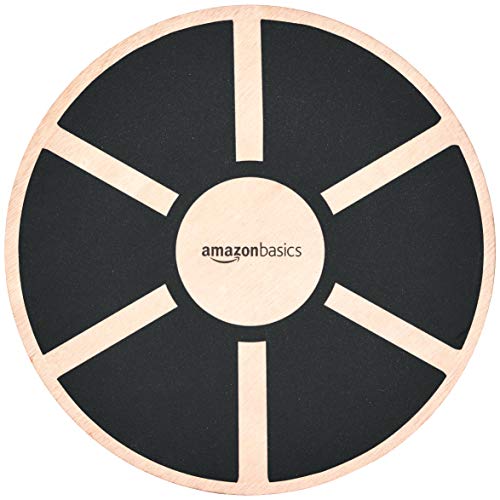
- Solid wood platform supports up to 265 pounds
- Non-slip surface for balance and core exercises
- Compact design for home or rehab use
Best For: Adults seeking a traditional wobble board for supervised balance practice
Lightweight Rehab Pick

- Weighs only 1.25 pounds
- Raised-circle texture helps resist slipping
- Designed for balance, mobility, and lower-body exercises
Best For: Portable basic training in homes, clinics, gyms, or offices
Controlled Directional Challenge
StrongTek Wooden Balance Board

- 360-degree wobble trains multidirectional stability
- Cross base offers a more controlled feel
- Textured wood platform supports up to 350 pounds
Best For: Experienced users progressing beyond basic rocker exercises
Adjustable Mobility Trainer
3-in-1 Slant and Balance Board
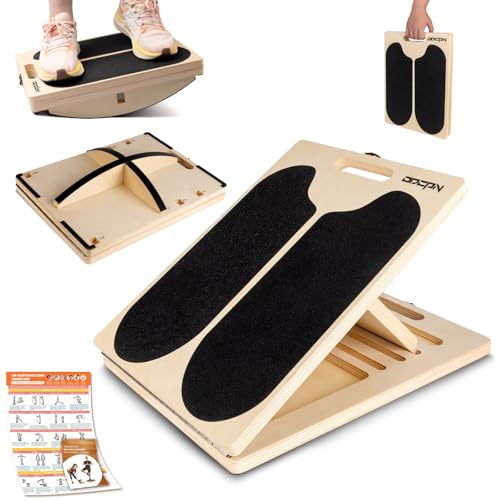
- Combines calf stretching with 180- and 360-degree balance
- Six adjustable slant angles from 20 to 45 degrees
- Includes non-slip surfaces, panels, poster, and instructions
Best For: Mobility-focused users wanting stretching and balance in one board
Best Overall
Wooden Wobble Board for Gentle Balance Practice

- Preassembled plywood board supports up to 350 pounds
- Anti-slip and floor-protective pads
- Useful for therapy, posture, and core exercises
Best For: Beginners and older adults seeking simple home balance practice
Most Versatile
Sportneer 7-Mode Balance Board Set
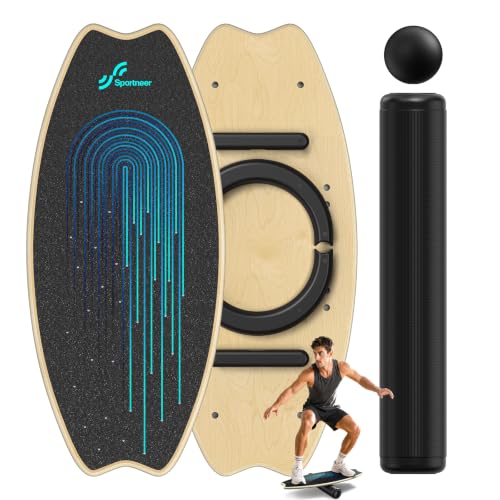
- Seven modes with adjustable magnetic stoppers
- Includes roller and solid rubber ball
- Supports up to 450 pounds with a non-skid surface
Best For: Progressive training for active users with established balance
Best for Ankle Mobility
StrongTek Single-Leg Balance Trainer

- Focused one-foot ankle and stability training
- Foldable design with carry bag
- Non-slip pads and included exercise guide
Best For: Compact, supported ankle mobility practice
Gentle Wooden Pick

- Mild tilt for beginners and light therapy work
- Textured grip with silicone floor-friendly edge
- 350-pound capacity and compact no-assembly design
Best For: Older adults and beginners seeking gentle home balance practice
360-Degree Training Pick
ProsourceFit Wooden Balance Board

- 360-degree rotation for multidirectional stability work
- Textured non-slip surface and 300-pound capacity
- Lightweight design with limited lifetime warranty
Best For: Older adults seeking adaptable stability training, not rehabilitation
Stability-Focused Pick
Wooden Wobble Board for Adults

- Designed for beginners, elderly users, and balance concerns
- Reinforced base supports up to 350 pounds
- Anti-slip pads protect floors and reduce workout noise
Best For: Gentle home or office balance and posture practice
Reliable Wood Stability – Amazon Basics Wobble Balance Board
For shoppers comparing a balance board for elderly users, this solid-wood wobble trainer offers a straightforward platform for standing balance practice, posture work, coordination exercises, and core training. Its textured, non-slip surface is intended for use on a dry, non-slip floor.
Best For: Adults who want a traditional wobble board for home workouts, rehabilitation settings, or supervised balance practice.
Pros:
- Supports up to 265 pounds.
- Non-slip surface helps provide a secure grip.
- Can be used for standing balance, planks, push-ups, and targeted strengthening.
- Compact 15.75-by-15.75-inch footprint with a 1-year limited warranty.
Cons:
- Must be used on a dry, non-slip surface rather than a wet or smooth floor.
- Its wobble design may require support or supervision for users with limited stability.
This is a practical, conventional balance trainer with a solid wood top and useful weight capacity. For older adults, use should be matched to individual ability and performed with appropriate support.
Lightweight Rehab Pick – CanDo Economy Balance Board
This lightweight CanDo board is a simple option for shoppers seeking a balance board for elderly users who need portable balance, coordination, ankle, or lower-body exercises. Its raised-circle texture is designed to help make the plastic surface slip-resistant.
Best For: Home users, rehabilitation centers, or offices needing a light, portable board for basic balance training.
Pros:
- Weighs just 1.25 pounds for easy transport.
- Textured surface with raised circles helps resist slipping.
- Supports balance, coordination, range-of-motion, and lower-body strengthening work.
- Suitable for home, gym, rehabilitation, or standing-desk use.
Cons:
- Product notes do not specify a maximum user weight.
- The economy plastic design may offer fewer stability and durability details than heavier wood alternatives.
The CanDo is appealing when portability and basic functionality matter most. Because the supplied specifications do not list a weight limit, confirm suitability before use, particularly for older adults requiring a higher-capacity platform.
Controlled Directional Challenge – StrongTek Wooden Balance Board
For those comparing a balance board for elderly users who are ready for more than a basic rocker, this StrongTek model adds controlled 360-degree movement. Its cross-style base provides a larger floor contact area, while the textured top helps keep feet secure during balance practice.
Best For: Adults with an established balance routine who want progressive ankle control, coordination, and core-stability training.
Pros:
- 360-degree directional wobble creates a more dynamic challenge.
- Cross base is designed to be more approachable than a traditional round-base board.
- Non-slip textured surface and solid wooden construction.
- Supports up to 350 pounds.
Cons:
- More challenging than a basic rocker board and may not suit beginners.
- The supplied notes do not list a warranty.
This is a useful middle step between a basic rocker and a round-base wobble board. For older adults, its greater range of motion makes gradual progression and nearby support especially important.
Adjustable Mobility Trainer – 3-in-1 Slant and Balance Board
This multifunctional option combines calf stretching with 180-degree directional balance and 360-degree rotation, making it a versatile balance board for elderly users working on mobility and stability. Six slant angles allow the stretch component to be adjusted from gentler to more intensive positions.
Best For: Adults seeking one compact board for calf stretching, ankle mobility, recovery work, and progressive balance practice.
Pros:
- Combines slant-board stretching with 180- and 360-degree balance modes.
- Offers six adjustable angles from 20 to 45 degrees.
- Non-slip PVC sandpaper surface and EVA base are designed for secure footing and floor protection.
- Includes a training poster, instructions, detachable panels, and a 1-year warranty.
Cons:
- Its multiple modes and rotating options may be more complex than a basic balance board.
- The product notes list both a 460-pound design capacity and a 300-pound maximum recommendation; the lower figure should be followed.
- Stretching and balance modes still require controlled use appropriate to the user’s ability.
This is the most versatile choice in the group, particularly for users who value calf mobility alongside balance training. Its adjustable setup is useful for progression, but older adults should begin conservatively and follow the included guidance.
Best Overall – Wooden Wobble Board for Gentle Balance Practice
For shoppers comparing a balance board for elderly users, this wooden wobble board offers a straightforward option for balance, posture, and core exercises. Its anti-slip pads, preassembled design, and stated 350-pound capacity make it practical for home rehabilitation or supported standing practice.
Best For: Beginners, older adults, physical therapy exercises, and standing-desk movement.
Pros:
- Anti-slip pads help grip the floor and reduce movement during exercise.
- High-quality plywood construction supports up to 350 pounds.
- Arrives assembled and includes scratch- and noise-reducing protective pads.
- Can support balance, coordination, posture, and core-strength routines.
Cons:
- The wobble design may still require chair or counter support for beginners.
- Its relatively compact surface may not suit users seeking a wide training platform.
This is the most approachable choice of the three for users who want a simple, ready-to-use board rather than a multi-mode challenge system. As with any balance equipment, older adults should begin near stable support and use it according to their mobility level.
Most Versatile – Sportneer 7-Mode Balance Board Set
For someone seeking a balance board for elderly users with room to progress, the Sportneer set provides seven challenge modes through adjustable magnetic stoppers. It includes a board, roller, and ball, although its more dynamic setup is better suited to users who already have dependable balance or can exercise with assistance.
Best For: Active users, progressive balance training, and people who want multiple exercise configurations.
Pros:
- Seven modes and four removable magnetic stoppers allow difficulty adjustments.
- Includes a balance board, roller, and solid rubber ball.
- Birch construction has a stated 450-pound maximum weight recommendation.
- Matte surface provides a non-skid grip with bare feet or shoes.
Cons:
- The roller-and-ball setup may be too challenging for some older beginners.
- At 31.5 inches long and 10.6 pounds, it is less compact than simpler boards.
- It offers more equipment and setup than users wanting basic supported practice may need.
The Sportneer stands out for adjustability and variety, but its advanced modes should be introduced gradually. It is a stronger fit for an active older adult or a supervised routine than for someone needing the gentlest possible starting point.
Best for Ankle Mobility – StrongTek Single-Leg Balance Trainer
This compact StrongTek ankle mobility board takes a more focused approach than a full-size wobble board. For a balance board for elderly users, its single-leg format can support controlled foot, ankle, and coordination practice, while the foldable design makes it convenient for home, office, or gym use.
Best For: Targeted ankle mobility, compact storage, and users progressing from chair-supported exercises.
Pros:
- Single-leg design focuses practice on ankle stability and movement control.
- Textured foot pads and a floor-gripping base support controlled motion.
- Folds compactly and includes a drawstring carry bag.
- Exercise guide and chair-supported starting option accommodate different levels.
Cons:
- Its small 11.5-by-4.3-inch format provides less standing area than a full wobble board.
- Single-leg training may feel demanding without a chair, wall, or other support.
- It is designed for focused ankle work rather than broad, two-foot balance exercises.
The StrongTek is the most portable and specialized option here. Its guided, foldable design is useful when ankle mobility is the priority, but users should start with support and progress only as their stability allows.
Gentle Wooden Pick – Juoe Wooden Balance Board
For shoppers comparing a balance board for elderly users, the Juoe Wooden Balance Board is a beginner-friendly option with a mild tilt and a textured standing surface. Its compact, no-assembly design suits controlled rocking, light physical therapy work, or brief standing-desk breaks.
Best For: Beginners, older adults seeking light balance practice, families, and gentle home exercises.
Pros:
- Mild tilt is designed for beginners and light physical therapy balance work.
- Textured surface and silicone non-slip edge support grip on several floor types.
- One-piece hardwood plywood construction supports up to 350 pounds.
- Compact 17.5-by-13.5-inch size stores easily and requires no assembly.
Cons:
- Not intended for aggressive tricks or advanced balance training.
- Long barefoot standing may be uncomfortable without a yoga mat.
Its gentle rocking motion and stable, floor-friendly base make this a practical starting point, though users with significant balance concerns should begin cautiously and use appropriate support.
360-Degree Training Pick – ProsourceFit Wooden Balance Board
The ProsourceFit Wooden Balance Board offers 360-degree rotation for multidirectional stability work. As a balance board for elderly users, it can be adaptable for older adults, but its manufacturer notes that it is not recommended for rehabilitation, injury recovery, or high-risk balance training.
Best For: Older adults and other users comfortable with adaptable stability exercises on a secure, non-slip floor.
Pros:
- 360-degree rotation supports movement in multiple directions.
- Textured grip surface helps reduce slipping in shoes or barefoot.
- Lightweight, portable design weighs about 3 pounds.
- Supports users up to 300 pounds and includes a limited lifetime warranty.
Cons:
- Not recommended for rehabilitation, injury recovery, or high-risk balance training.
- Requires a non-slip floor for optimal performance.
- Multidirectional movement may be more demanding than a mild-tilt board.
This is the more dynamic choice in the group, making it suitable for controlled stability training rather than users who need a rehabilitation-specific or especially gentle platform.
Stability-Focused Pick – Wooden Wobble Board for Adults
This wooden wobble board is designed with a reinforced bottom and full-surface anti-slip pads, making it a practical balance board for elderly users who want beginner-oriented balance, coordination, or posture practice. It also works for home physical therapy exercises and standing-desk breaks.
Best For: Beginners, older adults with balance concerns, and users wanting a sturdy board for controlled home or office use.
Pros:
- Specifically described as suitable for beginners, elderly users, and people with balance issues.
- Double reinforcement supports a stated capacity of up to 350 pounds.
- Full-surface anti-slip pads provide grip during workouts.
- Bottom and edge padding helps protect floors and reduce workout noise.
Cons:
- Its 16-by-13-inch platform is smaller than a typical full-size standing surface.
- The notes do not specify a warranty or detailed tilt range.
With reinforced construction and anti-slip padding on both the top and bottom, this model emphasizes controlled, floor-friendly use. It is a sensible option for gentle practice, provided the user exercises within their comfort level.
How We Picked the Best Balance Board for Elderly Users
We focused on the features that matter most for safe, manageable home use: non-slip surfaces, solid construction, predictable movement, useful weight capacity, and designs that allow gradual progression. We also considered whether each board is better suited to basic rocking, ankle mobility, standing practice, or more advanced multidirectional training.
Because balance ability varies widely, no single board is ideal for everyone. A simpler rocker can be a better starting point than a freely rotating wobble board, particularly for users who are rebuilding confidence or working with limited stability.
Quick Comparison
| Best For | Look For | Most Suitable Design |
|---|---|---|
| Beginners | Controlled motion and a broad platform | Basic rocker board |
| Ankle mobility | Angled surface and single-leg support options | Mobility or slant board |
| Progressive training | Multiple modes or adjustable difficulty | Multi-mode wobble board |
| Standing-desk use | Reliable grip and manageable movement | Low-profile wooden board |
| Physical therapy support | Stable construction and predictable response | Therapy-oriented balance trainer |
Key Buying Factors for a Balance Board for Elderly Users
Stability and Movement Range
Start with the least challenging movement that still feels useful. Rocker boards generally limit motion to one direction, while 360-degree wobble boards demand more control. A board with adjustable modes can be valuable, but only if the user can begin at its easiest setting.
Surface Grip and Support
A textured, non-slip platform is essential, but it does not replace a safe setup. Place the board on a firm, level, nonslip floor and keep a countertop, sturdy rail, or another stable support within reach. Avoid using it on thick rugs or unstable surfaces.
Capacity, Size, and Construction
Check the stated weight limit and platform dimensions rather than assuming all wooden boards are equivalent. A wider surface may feel more reassuring, while a compact design can be easier to store. Solid wood or reinforced construction is preferable for repeated use.
Adjustability and Intended Exercise
Some boards emphasize core and balance training; others are designed for calf stretching or ankle mobility. Choose according to the main goal, and avoid paying for advanced features that will not be used. Beginners may benefit more from simplicity than from rollers, balls, or multiple challenge settings.
Who Should Buy Which Balance Board for Elderly?
Choose a basic rocker board for a cautious beginner who wants straightforward side-to-side practice. An ankle mobility or slant board is a better match for someone focused on calf flexibility and controlled foot positioning. Users who already have good stability may prefer a 360-degree or multi-mode model for progression.
For therapy-related use, prioritize predictable movement, grip, and compatibility with instructions from a physical therapist. Anyone experiencing frequent falls, dizziness, significant joint pain, or neurological symptoms should consult a healthcare professional before using a balance board. The best Balance Board for Elderly users is ultimately the one that can be used consistently, safely, and at an appropriate challenge level.
