
A balance board can add core work, stability training, mobility exercises, and active standing to a home routine without requiring much floor space. The right design depends on how much challenge you want, where you will use it, and how easily it needs to store.
We compared 10 compact balance boards across construction, movement style, grip, weight capacity, and versatility to help you choose a stable option for a small apartment, home office, or limited-space gym.
Best 10 Balance Boards for Small Spaces Picks for 2026
Compact Core Trainer
Amazon Basics Wood Wobble Board
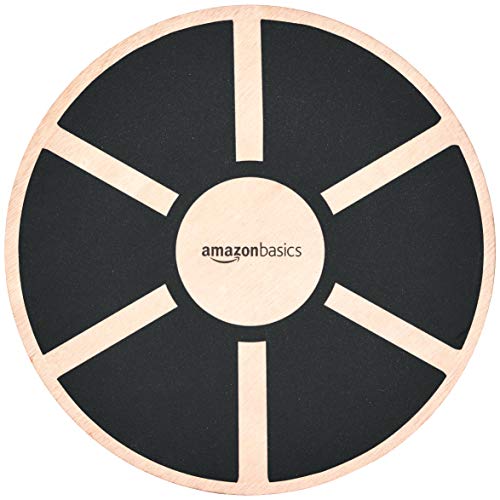
- 15.75-inch square wood design
- Supports up to 265 pounds
- Non-slip surface for varied exercises
Best For: Compact home balance and core workouts
High-Capacity Rocker
StrongTek Wooden Balance Board
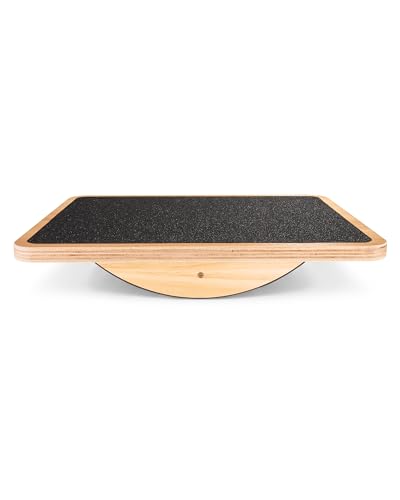
- Compact 17.5-by-13.5-inch rocker
- Supports up to 350 pounds
- Textured grip for home or desk use
Best For: Portable balance training for kids and adults
Dynamic Desk Trainer

- 15.75-inch portable circular design
- 360-degree rotation with 15-degree tilt
- Supports up to 300 pounds
Best For: Multidirectional workouts and standing desks
Family-Friendly Rocker

- Compact 17.5-by-13.5-inch design
- Supports up to 350 pounds
- Mild tilt for beginners and families
Best For: Gentle home balance work and family play
Compact Ankle Specialist
StrongTek Single-Leg Balance Board

- Foldable, lightweight design for tight storage
- Non-slip pads and floor-gripping base
- Focused ankle mobility and balance training
Best For: Ankle-focused workouts in small spaces
Everyday Wobble Trainer
Professional Wooden Balance Board

- Portable for home, office, or gym use
- Anti-slip surface with floor protection pads
- Rated for loads up to 350 pounds
Best For: Compact balance, therapy, and core exercises
Adjustable Roller Trainer

- Three stopper positions for adjustable difficulty
- 15-ply wood board supports up to 300 pounds
- Roller design supports sport and core training
Best For: Progressive balance and board-sport conditioning
Desk-Friendly Stability
Wooden Wobble Board with Ankle Support

- 350-pound capacity with reinforced construction
- Anti-slip, anti-scratch floor-protective pads
- Assembled for desk, therapy, and core use
Best For: Standing-desk users and controlled home balance training
Compact Multi-Use Pick

- 350-pound maximum weight recommendation
- Non-slip surfaces and floor-protective base pads
- Portable, compact, and ready without assembly
Best For: Beginners and portable home, office, or travel workouts
360-Degree Training
ProsourceFit Wooden Wobble Board

- 360-degree rotation for multidirectional training
- 15.75-inch diameter and about 3 pounds
- Textured grip surface with limited lifetime warranty
Best For: Portable general fitness and standing-desk stability work
Compact Core Trainer – Amazon Basics Wood Wobble Board
For shoppers comparing balance boards for small spaces, this Amazon Basics model offers a straightforward wood design with a 15.75-inch square footprint. Its non-slip top supports core, coordination, posture, and balance exercises without taking up much room.
Best For: Adults wanting a compact board for home workouts, planks, push-ups, standing balance poses, or targeted strengthening.
Pros:
- Compact 15.75 by 15.75-inch footprint suits smaller workout areas.
- Solid wood top supports up to 265 pounds.
- Non-slip surface helps provide a secure grip during exercise.
- Suitable for several balance and core-strengthening exercises.
Cons:
- Designed for use on non-slip, dry surfaces rather than wet or smooth floors.
- Its fixed wobble-board design may offer less movement variety than a 360-degree trainer.
This is a practical, space-conscious choice for basic balance training and home strength work. The wood construction and simple format make it easy to store flat between sessions.
High-Capacity Rocker – StrongTek Wooden Balance Board
This StrongTek board is a useful option among balance boards for small spaces, measuring 17.5 by 13.5 inches and weighing 4.7 pounds. Its rocker format supports balance, conditioning, rehabilitation, and even movement breaks at a standing desk.
Best For: Kids and adults who want a portable rocker board with a textured surface and a higher stated weight capacity.
Pros:
- Narrow 17.5 by 13.5-inch footprint is convenient for compact rooms and offices.
- Supports users up to 350 pounds.
- Textured surface provides a secure grip with a gentle feel for bare feet.
- Can be used at home, in a gym, while traveling, or at a standing desk.
Cons:
- Its rocker design may be less suitable for users seeking a full 360-degree wobble.
- At 4.7 pounds, it is heavier than some lightweight plastic alternatives.
With its compact rectangular profile and sturdy hardwood plywood construction, the StrongTek is well suited to small-space training. It also provides a useful way to add gentle movement to standing-desk routines.
Dynamic Desk Trainer – Yes4All Plastic Wobble Board
For balance boards for small spaces with more dynamic movement, the Yes4All plastic trainer has a 15.75-inch diameter and built-in handles. It rotates 360 degrees, tilts up to 15 degrees, and can fit into home gyms, offices, or other compact areas.
Best For: Adults seeking a portable wobble board for core drills, standing-desk movement, and multidirectional balance practice.
Pros:
- Compact 15.75-inch diameter fits easily in smaller workout or office spaces.
- 360-degree rotation and 15-degree tilt enable varied movement drills.
- Heavy-duty plastic supports up to 300 pounds.
- Handles make the board easier to carry between rooms or locations.
Cons:
- Plastic construction may appeal less to shoppers who prefer wood.
- Its 4-inch height may require more storage clearance than lower rocker boards.
This is the most movement-oriented choice in the group, combining a compact footprint with circular and directional exercises. The handles and standing-desk compatibility add flexibility for small-space routines.
Family-Friendly Rocker – Juoe Wooden Balance Board
The Juoe wooden rocker is a compact pick for shoppers looking at balance boards for small spaces and shared family use. Measuring 17.5 by 13.5 inches, it is intended for kids and adults, with a mild tilt suited to beginners, light training, and controlled rocking.
Best For: Families, beginners, and adults seeking a gentle balance board for sensory play, warm-ups, desk breaks, or light physical therapy work.
Pros:
- Compact 17.5 by 13.5-inch size stores easily in a small home.
- One-piece hardwood plywood design supports up to 350 pounds.
- Textured standing surface and silicone non-slip edge support controlled use.
- Suitable for kids, adults, light therapy work, and family play.
Cons:
- The mild tilt is intended for beginners rather than advanced tricks.
- Not recommended for aggressive tricks or prolonged barefoot standing.
- A yoga mat may be preferable for comfort during longer standing sessions.
Juoe emphasizes approachable rocking rather than intense instability, making it a sensible shared option for smaller homes. Its floor-friendly edge and flat storage design add practicality for everyday family use.
Compact Ankle Specialist – StrongTek Single-Leg Balance Board
For balance boards for small spaces, this compact single-leg trainer focuses on ankle mobility and controlled footwork without requiring a large workout area. Its lightweight, foldable design is easy to store at home, take to the office, or carry to the gym.
Best For: Focused ankle mobility, foot strength, balance practice, and compact storage.
Pros:
- Compact 11.5-by-4.3-inch footprint and foldable two-panel design.
- Textured foot pads and a floor-gripping base support controlled movement.
- Includes a carry bag and exercise guide for portable, structured training.
- Supports up to 300 pounds.
Cons:
- Designed for single-foot practice rather than full-board balance exercises.
- Its specialized format may be less suitable for users seeking advanced whole-body routines.
This is a practical pick when storage space is limited and ankle-focused training is the priority. Beginners can use chair support, while experienced users can practice independently.
Everyday Wobble Trainer – Professional Wooden Balance Board
This compact wobble board is a useful option for balance boards for small spaces, with a portable design suited to home, office, gym, physical therapy, and standing-desk use. It supports foundational balance work as well as exercises such as squats, planks, and push-ups.
Best For: Compact balance training, physical therapy exercises, core work, and office use.
Pros:
- Portable design makes storage and transportation convenient.
- Anti-slip surface helps support secure practice.
- Protection pads are designed to help prevent floor damage.
- Supports up to 350 pounds.
Cons:
- The listed dimensions include a 17-inch height measurement, so verify the actual setup space before storing it.
- It may offer less adjustable challenge than a board with removable stoppers or a configurable roller.
Choose this model if you want one compact wooden board for balance, coordination, rehabilitation, and bodyweight exercises. Its higher stated weight capacity is also useful for shoppers who want extra support margin.
Adjustable Roller Trainer – 3-in-1 Wooden Balance Set
Among balance boards for small spaces, this 3-in-1 set offers adjustable difficulty in a relatively compact package, though its roller setup needs more open floor area during use. Removable stoppers provide 11-, 16-, and 22-inch riding options, or they can be removed for advanced practice.
Best For: Users who want adjustable balance training for board-sport conditioning and core strength.
Pros:
- Removable stoppers create three distance settings or an advanced open setup.
- 15-ply pressed wood board supports up to 300 pounds.
- Emery grip paper and a thick TPE-covered roller help limit slipping and provide smooth use.
- Useful for surfing, snowboarding, skiing, skateboarding, and other sports.
Cons:
- At about 29.53 inches long, it needs more active floor space than a single-leg board.
- The roller format may be more challenging for beginners than a fixed wobble board.
- Its listed weight is about 3.9 kg, making it less lightweight for frequent transport.
This set is the most versatile choice of the three for progression and sport-specific practice. It can work in a small home when stored compactly, but plan for clear floor space whenever the roller is in use.
Desk-Friendly Stability – Wooden Wobble Board with Ankle Support
This compact wooden wobble board is a practical pick for shoppers comparing balance boards for small spaces. Its assembled design, floor-protective pads, and under-desk suitability make it easy to use at home or in an office without adding much setup.
Best For: Standing-desk users, physical therapy exercises, core training, and beginners seeking a stable wooden board.
Pros:
- Supports up to 350 pounds and uses reinforced bands for added stability.
- Anti-slip and anti-scratch pads help grip the floor while reducing wear and noise.
- Arrives fully assembled and is suitable for balance, posture, coordination, and core exercises.
Cons:
- Its 16.45-by-12.99-inch footprint may provide less multidirectional movement than a round board.
- At 1.95 kg, it is not the lightest option for frequent travel.
Choose this model if easy setup, floor protection, and desk use matter most. It offers a sturdy, multifunctional platform for controlled balance and strengthening work in a compact area.
Compact Multi-Use Pick – 350-LB Wooden Balance Trainer
For shoppers seeking balance boards for small spaces, this wooden trainer emphasizes portability and no-assembly convenience. Its compact form works in a home, office, gym, or travel setup, while the anti-slip surfaces support several bodyweight exercises.
Best For: Beginners, seniors, standing-desk users, and anyone wanting a portable board for balance, posture, ankle, knee, and core conditioning.
Pros:
- Supports up to 350 pounds with wood construction.
- Anti-slip top and non-slip base pads promote stability and help protect floors.
- Ready to use out of the box and suitable for planks, squats, push-ups, and balance practice.
Cons:
- The supplied details do not specify the board’s exact dimensions.
- Its yellow color may not suit every room or office setup.
This is a flexible choice when storage and transport are priorities. Its no-assembly design and broad exercise compatibility make it especially convenient for limited-space routines.
360-Degree Training – ProsourceFit Wooden Wobble Board
This round ProsourceFit board is a strong option for balance boards for small spaces when multidirectional movement is important. Its 15.75-inch diameter and roughly 3-pound weight make it easy to store or carry, while 360-degree rotation expands exercise variety.
Best For: Older adults, general fitness users, athletes, and standing-desk users who want portable stability and core training.
Pros:
- 360-degree rotation supports movement in every direction for balance and core work.
- Textured, non-slip grip surface works with shoes, bare feet, or hands.
- Compact 15.75-inch design weighs about 3 pounds and includes a limited lifetime warranty.
Cons:
- It is not recommended for rehabilitation, injury recovery, or high-risk balance training.
- The notes recommend placing it on a non-slip floor for optimal performance.
- Its 300-pound maximum recommendation is lower than the two 350-pound alternatives.
Consider this model if you want a small, portable board with true rotational movement. It is best suited to general stability and coordination training rather than recovery-focused use.
How We Picked the Best Balance Boards for Small Spaces
We focused on practical features that matter when choosing Balance Boards for Small Spaces: compact dimensions, manageable storage, useful movement range, surface traction, construction, and stated weight capacity. We also considered whether each board suits beginners, advanced balance work, physical-therapy-style exercises, standing desks, or general home workouts.
Because product names and specifications vary, check the current listing for exact measurements, materials, maximum user weight, and included accessories before buying. A board that looks compact may still need extra clearance while in use.
Quick Comparison
| Best For | Look For | Why It Matters in a Small Space |
|---|---|---|
| Beginners | Rocker motion and non-slip surface | Easier to control and store |
| Advanced training | 360-degree wobble or interchangeable bases | More exercise variety without extra equipment |
| Standing desks | Low-profile design and stable grip | Fits under or near a workstation |
| Mobility work | Single-leg or angled platform | Targets ankles and lower-leg control |
| Shared households | Durable wood or reinforced plastic | Handles repeated use and varied users |
Key Buying Factors for Balance Boards for Small Spaces
Footprint and Storage
Measure the available floor, closet, and shelf space before ordering. Round boards can be easy to tuck away, while models with handles may be simpler to carry but require additional clearance. Leave enough room around the board to step off safely.
Movement Style
Rocker boards generally provide a predictable side-to-side challenge and are a sensible starting point. 360-degree wobble boards allow movement in every direction and can deliver more demanding balance work. Convertible sets are useful if multiple people need different difficulty levels.
Grip and Stability
Prioritize a textured or non-slip standing surface and a base that will not slide easily on your flooring. Even with anti-slip features, use the board on a clean, dry surface and avoid placing it on loose rugs unless the manufacturer permits it.
Capacity and Construction
Wooden boards often offer a solid, durable feel, while plastic designs may be lighter and easier to move. Compare the listed weight limit with the user’s body weight and account for dynamic movement. A higher capacity is not a substitute for proper technique.
Who Should Buy Which Balance Boards for Small Spaces?
Choose a basic rocker board if you are new to balance training, want gentle ankle and core work, or need an easy-to-store option. Choose a 360-degree wobble board if you already have balance experience and want a greater challenge for stability training.
Choose a board with handles or a portable design if you plan to move it between rooms or use it near a standing desk. Choose a mobility-focused single-leg board for targeted ankle exercises, but follow professional guidance for rehabilitation needs. For households with varied users, a durable, higher-capacity model or 3-in-1 set offers the most flexibility.
Whichever model you select, begin beside a stable support, progress gradually, and stop if you experience pain, dizziness, or loss of control.
