
A balance board can add instability to simple exercises, helping you train coordination, ankle control, core engagement, and body awareness without taking up much space.
We selected 10 balance boards under $100, including basic wooden rockers, adjustable roller models, app-connected trainers, and options designed for standing desks or rehabilitation routines.
Best 10 Balance Boards Under 100 Picks for 2026
Best Budget Classic
Amazon Basics Wood Wobble Board
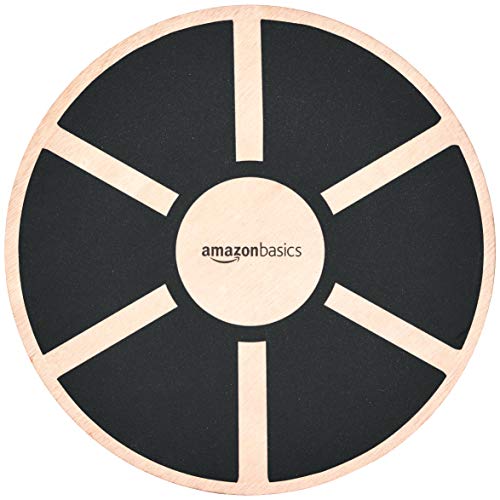
- Solid wood platform supports up to 265 pounds
- Non-slip surface for varied balance exercises
- Compact design with a 1-year limited warranty
Best For: Simple home, gym, or rehabilitation balance training
Best Adjustable Trainer
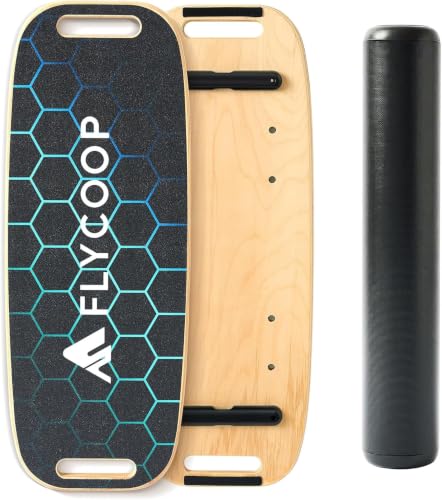
- Three modes adjust the movement range
- Includes roller for dynamic balance training
- Non-slip wood board supports up to 300 pounds
Best For: Progressive training and board-sport balance practice
Best High-Capacity Rocker
StrongTek Wooden Balance Board
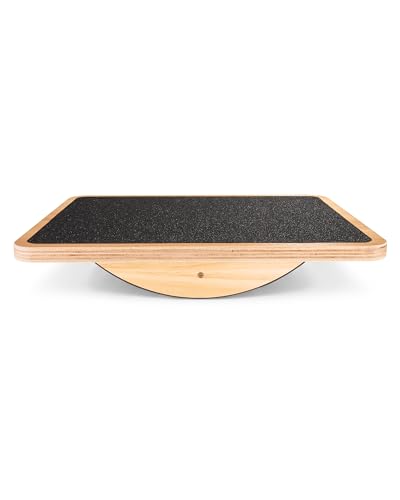
- Supports kids and adults up to 350 pounds
- Textured, slip-resistant surface for secure footing
- Compact rocker design with a 30-day guarantee
Best For: Sturdy low-impact conditioning and balance practice
Best All-Around Wooden Pick

- Supports core, posture, and stability exercises
- Anti-slip design helps protect floors
- Portable and ready to use without assembly
Best For: Beginners, seniors, and home or office workouts
Best Heavy-Duty Wobble Board
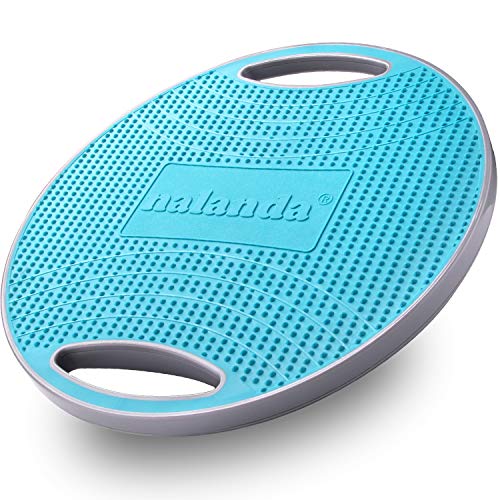
- 660-pound weight recommendation
- Large platform with 360-degree rotation
- Washable TPE surface and dual handles
Best For: Families and challenging full-body balance workouts
Best for Rehab and Standing Desks

- Supports physical therapy and posture work
- Reinforced plywood rated to 350 pounds
- Anti-slip pads and no assembly required
Best For: Gentle training, rehabilitation, and desk use
Best Beginner Balance Board

- Mild tilt for approachable practice
- 350-pound capacity for family use
- Non-slip, compact, no-assembly design
Best For: Beginners, kids, and light home balance training
Best Versatile Rocker Board
Professional Wooden Balance Board

- Handles balance and core exercises
- 350-pound maximum weight recommendation
- Anti-slip surface with floor-protection pads
Best For: Adults, rehabilitation, and progressive home workouts
Best Adjustable Balance Trainer

- Three height settings for varied intensity
- 360-degree rotation with roller setup
- 441-pound capacity and included storage rack
Best For: Adults pursuing adjustable, surf-style, and core training
Best Budget Classic – Amazon Basics Wood Wobble Board
If you want a straightforward option among balance boards under 100, this Amazon Basics wood wobble board focuses on foundational balance, coordination, posture, and core exercises. Its square platform and non-slip surface suit home workouts, gyms, and rehabilitation settings.
Best For: Adults seeking a simple, compact board for core, balance, and stability exercises.
Pros:
- Solid wood top supports up to 265 pounds.
- Non-slip surface helps provide a secure grip.
- Works for push-ups, planks, standing poses, and targeted strengthening.
- Backed by an Amazon Basics 1-year limited warranty.
Cons:
- Offers a single wobble-board setup rather than adjustable training modes.
- Should be used only on dry, non-slip surfaces.
This is a practical pick if you prefer a no-frills wood trainer with a moderate weight capacity and familiar exercise-board format.
Best Adjustable Trainer – 3-Mode Roller Balance Board
For shoppers comparing balance boards under 100, this wood roller board stands out for its adjustable stoppers and three training modes. You can vary the movement range as your balance improves, then use the included roller for more dynamic stability work.
Best For: Adults who want progressive balance training for fitness or board-sport preparation.
Pros:
- Adjustable stoppers provide three training modes.
- Includes a roller for dynamic wobble and stability exercises.
- Full-coverage non-slip surface supports foot control.
- Pressed-wood construction is rated for up to 300 pounds.
Cons:
- The listed Basic Set is a long, narrow 29 × 11-inch board rather than a square wobble platform.
- Additional accessories depend on the selected set configuration.
Its adjustable design makes it more versatile than a fixed rocker, especially for users who want to gradually increase challenge or train for surfing, skating, skiing, and similar activities.
Best High-Capacity Rocker – StrongTek Wooden Balance Board
This StrongTek board is a compelling choice among balance boards under 100 if you want a portable rocker with a high stated weight capacity. Its textured surface, compact dimensions, and low-impact design work for conditioning, rehabilitation, standing-desk use, and everyday balance practice.
Best For: Kids and adults who need a sturdy rocker board for home, office, gym, or travel.
Pros:
- Supports up to 350 pounds.
- Textured surface provides a secure, comfortable grip for bare feet.
- Compact 17.5 × 13.5 × 3-inch design is easy to transport.
- 30-day money-back guarantee is included.
Cons:
- The basic rocker format may offer less dynamic movement than a 360-degree wobble setup.
- It weighs 4.7 pounds, making it heavier than some lightweight trainers.
Choose this model when stability and capacity matter more than app features or a highly technical training system. It is a versatile, conventional rocker for gradual balance work.
Best Interactive Option – GoBalance App-Enabled Board
If traditional exercise boards feel repetitive, this app-enabled option adds interactive play to the balance-board experience. Among balance boards under 100, the GoBalance Play is designed for teens and adults who want Bluetooth feedback, customizable challenges, and family-friendly activity.
Best For: Families and users motivated by interactive games, progress feedback, and app-guided balance practice.
Pros:
- Free app includes 12 interactive games and individualized profiles.
- Bluetooth connectivity works with iOS and Android mobile devices.
- Lightweight 1.4-pound plastic design is easy to carry.
- Supports up to 330 pounds while targeting balance, coordination, and core strength.
Cons:
- Requires a compatible mobile device to use the app and interactive features.
- The board cannot connect directly to a TV; casting or screen mirroring is required.
- Plastic construction may appeal less to shoppers seeking a traditional wood board.
The GoBalance Play is best when engagement is a priority. Its games and real-time feedback can make regular practice more approachable, though the connected experience depends on using a phone or tablet.
Best All-Around Wooden Pick – Wooden Balance Board Trainer
If you want balance boards under 100 for versatile home workouts, this wooden rocker board covers core training, posture work, and stability practice. Its anti-slip surface, non-slip base, and 350-pound weight recommendation make it practical for exercises such as squats, planks, and push-ups.
Best For: Beginners, seniors, and adults seeking a portable balance trainer for home, office, or standing-desk use.
Pros:
- Supports balance, core strength, posture, and coordination exercises.
- Anti-slip surface and padded base help improve stability while protecting floors.
- Requires no assembly and is compact enough for storage or travel.
Cons:
- Its 350-pound maximum recommendation is lower than some heavy-duty wobble boards.
- Wood construction may require more care than a washable plastic design.
This is a straightforward choice for everyday conditioning, especially if you want one board that can move between a workout area, office, and standing desk.
Best Heavy-Duty Wobble Board – NALANDA Core Trainer
Among balance boards under 100, the NALANDA stands out for its large platform, 360-degree rotation, and 660-pound weight recommendation. The textured TPE surface and dual handles support a broad range of balance, lower-body, and upper-body exercises.
Best For: Families and adults who want a high-capacity wobble board for varied balance, squats, planks, push-ups, and coordination training.
Pros:
- Large 16.34-inch platform with a 24.5-degree section angle challenges balance.
- Supports up to 660 pounds and accommodates kids and adults.
- Textured, non-skid TPE surface is washable and includes a massage-style texture.
- Dual handles add versatility for push-up and upper-body exercises.
Cons:
- The more challenging wobble action may be less suitable for users seeking gentle stability practice.
- Plastic construction may appeal less to shoppers who prefer wood.
Choose this model when capacity, exercise variety, and easy cleaning matter more than a traditional wooden feel. Its included 12-month warranty and lifetime after-service add reassurance.
Best for Rehab and Standing Desks – Wooden Wobble Board
For shoppers comparing balance boards under 100 for gentle conditioning, this wooden wobble board combines physical-therapy-focused use with standing-desk convenience. Reinforced plywood, anti-slip pads, and a 350-pound capacity support balance, ankle, posture, and core work.
Best For: Beginners, children, older users, and office workers seeking balance practice, rehabilitation support, or movement during desk time.
Pros:
- Designed for physical therapy, rehabilitation, posture improvement, and core training.
- Double reinforcement bands strengthen the plywood structure.
- Anti-slip and anti-scratch pads help reduce slipping, floor wear, and noise.
- Arrives assembled and can be used under a desk to reduce prolonged sitting fatigue.
Cons:
- The 350-pound weight recommendation may not suit every user.
- Its wooden design is not described as washable like the NALANDA’s TPE surface.
This is a practical pick when low-impact balance work and office use are priorities. The ready-assembled design also keeps setup simple for home rehabilitation routines.
Best Beginner Balance Board – Juoe Wooden Wobble Board
If you want balance boards under 100 for family use, the Juoe Wooden Balance Board offers a mild, approachable tilt for kids, beginners, adults, and light physical therapy work. Its compact hardwood design fits easily in a home, office, or gym.
Best For: Beginners, kids, family balance practice, sensory play, and light home training.
Pros:
- Supports up to 350 pounds for kids and adults.
- Textured standing surface and silicone non-slip edge improve grip across multiple floor types.
- Compact, no-assembly design works well in small spaces and standing-desk breaks.
Cons:
- Mild tilt may feel too easy for advanced users.
- Not designed for aggressive tricks or prolonged barefoot standing.
This is a practical starter board rather than a high-intensity trainer. Its stable feel, floor-friendly base, and family-oriented design make it a sensible choice for everyday balance practice, though a yoga mat may improve comfort during longer sessions.
Best Versatile Rocker Board – Professional Wooden Balance Board
Among balance boards under 100, this professional wooden wobble board stands out for combining beginner-friendly balance work with more demanding exercises. It can support physical therapy, standing-desk movement, push-ups, squats, and planks.
Best For: Adults seeking one board for balance practice, rehabilitation exercises, core training, and progressive workouts.
Pros:
- Supports up to 350 pounds.
- Suitable for balance, coordination, proprioception, and core-strength exercises.
- Anti-slip surface and protective pads help improve stability and protect floors.
- Compact and portable for home, office, or gym use.
Cons:
- The adult-focused design may be less suitable for young children.
- Supplied notes do not specify adjustable difficulty levels.
This board is a flexible middle ground for users who want more exercise options than basic rocking. Its compact wooden construction and floor-protection features make it easy to keep available for short training sessions or rehabilitation routines.
Best Adjustable Balance Trainer – VEVOR 2-in-1 Wobble Board
For shoppers comparing balance boards under 100, the VEVOR 2-in-1 trainer offers a more advanced setup with a roller, 360-degree rotation, magnetic stoppers, and three height settings. It is designed for adjustable balance and core training at home or in an office.
Best For: Adults who want adjustable difficulty for core workouts, surf-style training, physical therapy, or daily coordination practice.
Pros:
- Three height levels let users vary training intensity.
- 360-degree rotation supports varied balance and coordination exercises.
- Supports up to 441 pounds and uses multi-layer solid wood construction.
- Includes a roller, magnetic stoppers, and storage rack.
Cons:
- Its 28-inch length takes more storage space than compact rocker boards.
- The broader feature set may be more than beginners need.
This is the most feature-rich option in the group for users who want to progress beyond simple rocking. Adjustable height, rotation, and included accessories make it a strong fit for varied training, while the compact overall design still allows convenient storage.
How We Picked the Best Balance Boards Under 100
We focused on practical features that affect safety, versatility, and long-term value. Our selections represent different training styles and experience levels, from simple rocker boards to 360-degree wobble platforms and roller-based designs. We also considered weight capacity, surface traction, adjustability, construction materials, portability, and whether each board suits exercise, physical therapy, desk use, or family activities.
Because balance training is highly individual, the best option is not necessarily the most advanced model. A stable rocker may be more useful for a beginner than a highly mobile roller board, while experienced users may prefer a board with multiple modes or a wider range of movement.
Quick Comparison
| Best For | Look For | Typical Design |
|---|---|---|
| Beginners | Wide deck and controlled motion | Rocker or fixed wobble board |
| Core and fitness training | 360-degree movement and durable construction | Wooden wobble platform |
| Advanced practice | Roller compatibility and adjustable stops | Board-and-roller system |
| Physical therapy | Non-slip surface and predictable response | Low-profile balance trainer |
| Standing desks | Compact size and comfortable traction | Small rocker or wobble board |
| Motivation and family use | Games, sensors, or multiple difficulty levels | App-enabled or adjustable model |
Key Buying Factors for Balance Boards Under 100
Board Style and Movement
Rocker boards move mainly forward and backward and are generally easier to control. Wobble boards allow movement in several directions, increasing the challenge. Roller boards can provide the greatest range of motion, but they require more space, concentration, and confidence.
Surface Grip and Stability
Look for a textured, rubberized, or otherwise slip-resistant standing surface. A broad deck and stable contact points can make learning easier, while aggressive movement or a narrow platform may be better suited to experienced users. Always use the board on a clean, level surface.
Weight Capacity and Construction
Check the stated weight limit rather than assuming all wooden boards are equivalent. Plywood or hardwood construction can offer a solid feel, but the finish, joints, stopper design, and roller quality also matter. Leave a sensible margin below the maximum capacity for dynamic exercises.
Adjustability and Storage
Adjustable stoppers or multiple modes let one board accommodate different skill levels. If storage space is limited, measure the board and any included roller before buying. A compact rocker is easier to keep near a desk or workout area.
Who Should Buy Which Balance Boards Under 100?
Choose a basic rocker or low-profile wobble board if you are new to balance training, want gentle core work, or need a convenient standing-desk accessory. These designs are also easier to control during slow physical-therapy exercises, although anyone recovering from an injury should follow professional guidance.
Choose an adjustable board with stoppers if multiple people will use it or you want to increase difficulty gradually. Roller-based models are better for users who already have balance experience and want a more demanding workout. If motivation is the main challenge, an app-enabled board with interactive games may make regular practice more enjoyable.
For any option, begin beside a sturdy support, avoid exercising on slippery flooring, and keep movements controlled. Balance boards can complement strength and mobility work, but they should not replace a clinician’s rehabilitation plan or proper safety precautions.
