
When bending your big toe hurts, a rigid carbon fiber insert can help limit motion inside your shoe. The right choice depends on where you need support, how the insert fits, and whether your shoe has room for it.
These 10 options include full-length plates and Morton’s extensions in different sizes and thicknesses. Use the guide below to narrow down the style that makes sense for your footwear and needs.
Best 10 Carbon Fiber Insoles for Toe Pain Picks for 2026
Best Full-Length Pair
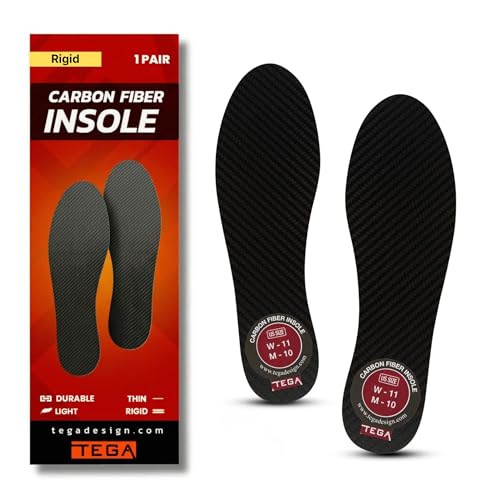
- Two rigid inserts per package
- Thin 1.3 mm 3K carbon fiber
- Sizing based on removable insole length
Best For: Two-foot support in sneakers or sports shoes
Best Single-Foot Option
Morton's Extension Carbon Fiber Insert

- One insert for either foot
- Limits big-toe movement
- Worn beneath a removable shoe insole
Best For: One-sided support without buying a pair
Best for Athletic Shoes

- Pair of flat 1.2 mm plates
- Fits under existing insoles or orthotics
- Designed for athletic shoes, not heels
Best For: Adding stiffness to both sneakers or hiking boots
Best Big-Toe Extension Pair

- Right and left extensions included
- Designed to limit big-toe joint motion
- Thin, lightweight 3K carbon fiber
Best For: Big-toe support in both shoes or keeping a spare
Compact Pair
FAKILO 233mm Carbon Fiber Insoles

- Two reversible plates
- Slim 1.3mm rigid design
- Fits under removable insoles
Best For: Smaller-size sneakers and athletic shoes
Longer Plate Pair
255mm Rigid Carbon Fiber Inserts

- Approximately 1.2mm thick
- Limits forefoot bending
- Sized for longer removable insoles
Best For: Firm support in walking shoes or work boots
Flat-Plate Option
245mm Carbon Fiber Insole Pair
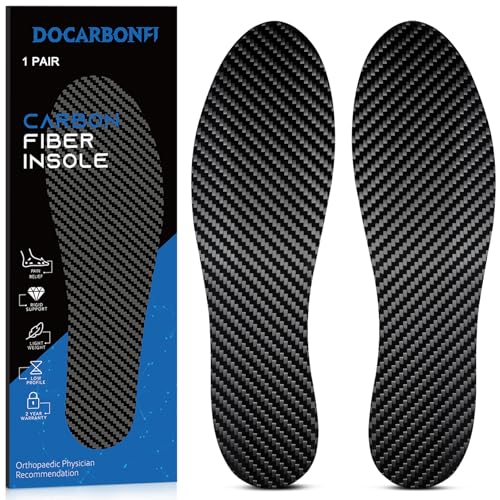
- Two reversible plates
- Thin 1.3mm flat design
- Measure carefully: size guidance varies
Best For: Athletic shoes with removable insoles
Everyday Shoe Fit
1.3mm Rigid Carbon Fiber Insoles

- Full-length 1.3mm plates limit forefoot bending.
- Match size to your original insole length.
- Requires removable insoles and adequate shoe room.
Best For: Everyday shoes needing firm forefoot motion control
Big-Toe Motion Control
1.5mm Morton's Extension Carbon Fiber Insoles

- Rigid 1.5mm plates limit big-toe bending.
- Sizing follows original insole length.
- Fits roomy shoes with removable insoles.
Best For: Firm control of big-toe joint motion
Shorter-Plate Sizing
255mm Morton's Extension Orthotics

- Rigid 1.5mm carbon fiber limits toe bending.
- Choose ¼–½ inch shorter than your original insole.
- Designed to sit beneath a soft shoe insole.
Best For: Buyers able to verify the 255mm plate fit
Best Full-Length Pair – TEGA Carbon Fiber Insoles
If you want carbon fiber insoles for toe pain in both shoes, this TEGA pair offers thin, rigid plates designed to limit bending. The 1.3 mm inserts are made from 3K carbon fiber and are intended for use in sneakers and sports shoes.
Best For: Shoppers who want a matching pair of rigid inserts for activities such as walking, hiking, or sports.
Pros:
- Sold as a pair, so both feet are covered.
- Thin, lightweight construction adds stiffness without an arch profile.
- Size guidance is based on the length of your removable shoe insoles.
Cons:
- No built-in arch support.
- Rigid construction may not suit someone seeking a cushioned insole.
Measure your existing insoles before ordering. This is a practical choice when your priority is limiting shoe flex rather than adding padding.
Best Single-Foot Option – Morton's Extension Carbon Fiber Insert
For shoppers comparing carbon fiber insoles for toe pain on just one side, this Morton’s extension comes as a single rigid insert. It is designed to restrict big-toe movement and can be worn in either the right or left shoe.
Best For: Someone who needs one insert for a single foot rather than a pair.
Pros:
- Works in either a right or left shoe.
- Thin, stiff design targets big-toe motion.
- Fits beneath the shoe’s removable insole.
Cons:
- Only one insert is included.
- Must be sized about ¼–½ inch shorter than the removable shoe insole.
The listed 23.5 cm option corresponds to women’s size 8 or men’s size 7. Check the fit in your shoe and follow your doctor’s advice on whether a rigid insert is appropriate.
Best for Athletic Shoes – Carbon Fiber Foot Plate Pair
These carbon fiber insoles for toe pain come as a pair of flat, 1.2 mm rigid plates. They are designed to add stiffness to shoes and limit foot motion, with suggested uses ranging from daily walking to hiking and sports.
Best For: People who want rigid plates for both athletic shoes and prefer to keep their existing removable insoles on top.
Pros:
- Includes two carbon fiber plates.
- Thin, lightweight construction fits beneath an original insole or orthotic.
- Intended for sneakers, hiking boots, and other athletic shoes.
Cons:
- Not intended for dress shoes or high heels.
- Plates need to be about ¼–½ inch shorter than the shoe’s removable insoles.
Choose this pair for a stiffer feel in roomy athletic footwear, and check plate length against your removable insoles before ordering.
Best Big-Toe Extension Pair – Morton's Extension Orthotics
Among carbon fiber insoles for toe pain, this pair stands out for its Morton’s extension design, which is intended to limit motion at the big-toe joint. The thin 3K carbon fiber inserts are supplied as one right and one left piece.
Best For: Shoppers seeking big-toe joint restriction in both shoes, or one insert plus a spare.
Pros:
- Includes right- and left-foot extensions.
- Targets big-toe joint motion rather than general cushioning.
- Thin, lightweight carbon fiber construction.
Cons:
- Not a soft or cushioned insole.
- Requires measuring your removable shoe insole to select a size.
The listed option is women’s size 8 or men’s size 7. If limiting big-toe bend is your main goal, compare its size guidance with your current insoles before buying.
Compact Pair – FAKILO 233mm Carbon Fiber Insoles
For shoppers comparing carbon fiber insoles for toe pain, this FAKILO pair offers a slim, rigid layer designed to reduce excessive toe and forefoot movement. The listed 233mm size corresponds to women’s 7–7.5 or men’s 6–6.5, but measure your removable shoe insole before ordering.
Best For: People who want a pair of thin plates for compatible sneakers or athletic shoes.
Pros:
- Includes two plates that can be used on either foot.
- 1.3mm carbon fiber construction adds rigid support without much bulk.
- Designed to limit pressure and excess movement around the toes and metatarsal joints.
Cons:
- Must sit beneath your existing insoles rather than replace them.
- Not recommended for dress shoes or high heels.
Choose this option if the 233mm length gives you the recommended ¼–½ inch clearance beneath your shoe’s removable insole; fit matters as much as stiffness here.
Longer Plate Pair – 255mm Rigid Carbon Fiber Inserts
These carbon fiber insoles for toe pain are rigid plates intended to limit forefoot bending, not cushioned inserts for everyday softness. The listed 255mm size is associated with men’s 9–9.5 or women’s 10–10.5; check the plate against your removable shoe insole rather than relying on shoe size alone.
Best For: Buyers seeking stiff under-insole support in sneakers, walking shoes, work boots, or athletic footwear.
Pros:
- Approximately 1.2mm thick to limit added bulk.
- Reversible plates can fit either foot.
- Designed to restrict toe motion for conditions such as turf toe and hallux rigidus.
Cons:
- Not a cushioned comfort insole.
- Requires a removable shoe insole for the recommended placement.
The key buying decision is whether you want firm motion restriction. For fit, the maker recommends a plate ¼–½ inch shorter than your removable insole.
Flat-Plate Option – 245mm Carbon Fiber Insole Pair
This pair of carbon fiber insoles for toe pain uses a flat, stiff plate design to help curb toe overextension while fitting beneath your existing insoles. The listing gives a 245mm length, but its stated shoe-size ranges differ, so measuring your removable insoles is the safer way to choose.
Best For: Wearers of sneakers or sports shoes who want thin, firm plates beneath their regular insoles.
Pros:
- Includes two plates; each can be flipped for either foot.
- 1.3mm construction is thin and lightweight.
- Flat plate provides minimal flexibility to help limit excessive toe movement.
Cons:
- Not intended for dress shoes or high heels.
- Conflicting shoe-size guidance makes checking the 245mm length especially important.
The maker recommends choosing a plate roughly 0.4–0.6 inches shorter than your removable insole. Measure before buying, particularly if your shoe size falls near either listed range.
Everyday Shoe Fit – 1.3mm Rigid Carbon Fiber Insoles
If you need carbon fiber insoles for toe pain but want to keep wearing everyday shoes, this pair adds a rigid 1.3mm plate beneath each removable insole. The full-length design limits big-toe and forefoot bending during walking.
Best For: People seeking firm forefoot motion control in roomy sneakers, walking shoes, work shoes, or boots with removable insoles.
Pros:
- Full-length plates limit bending around the big toe and metatarsals.
- Size selection uses the measured length of your original insole, with no subtraction required.
- Slim, lightweight 3K twill-weave carbon fiber fits beneath the original insole.
Cons:
- Requires a flat footbed and enough room in the shoe.
- May not fit narrow, pointed-toe, high-heel, or fixed-insole footwear.
Choose this 1.3mm option when forefoot stiffness and straightforward sizing matter most. For injury or post-op use, check with a healthcare professional.
For shoppers comparing carbon fiber insoles for toe pain centered on the big-toe joint, this pair uses rigid, full-length 1.5mm plates to limit bending around the first MTP joint and forefoot.
Best For: People seeking a firmer walking option for big-toe joint sensitivity associated with hallux rigidus or limitus, turf toe, or first MTP arthritis.
Pros:
- Rigid 1.5mm construction helps control big-toe and forefoot motion.
- Measure your original insole heel to toe to find the listed fit range; no length subtraction is needed.
- Lightweight 3K twill-weave carbon fiber sits under a removable shoe insole.
Cons:
- Needs a flat footbed and sufficient toe-box space.
- Not suited to many narrow, pointed-toe, high-heel, or fixed-insole shoes.
This is the thicker of the two full-length options listed here, with a stated focus on big-toe motion control. Consult a healthcare professional before using it for an injury or after surgery.
These 255mm carbon fiber insoles for toe pain are sold as a pair and use rigid 1.5mm plates to restrict big-toe movement. Unlike the other pairs here, the seller directs you to choose a plate ¼–½ inch shorter than your original insole.
Best For: Shoppers who want a 255mm rigid plate for compatible sneakers, hiking boots, or athletic shoes and can check the shorter-plate sizing requirement.
Pros:
- Rigid carbon fiber limits big-toe bending beneath the shoe’s soft insole.
- Thin 1.5mm construction adds stiffness without much bulk.
- Listed for sneakers, hiking boots, and several types of athletic shoes.
Cons:
- Requires more careful sizing: the plate should be ¼–½ inch shorter than the original insole.
- Not intended for high heels or flip-flops.
The key buying check is length: measure the insole you already own before choosing this 255mm pair, then place the plates underneath the soft insoles as directed.
How We Picked the Best Carbon Fiber Insoles for Toe Pain
We compared these 10 Carbon Fiber Insoles for Toe Pain by the details that matter most when shopping: plate shape, stated rigidity or thickness, sizing, whether the listing includes one insert or a pair, and the conditions each product is marketed for. The selections include full-length plates and Morton’s extensions, giving you options for broader forefoot support or more targeted big-toe motion control. Product claims are not a substitute for clinical evidence or a personal fit assessment.
Quick Comparison: Full-Length Plates Vs. Morton’s Extensions
A full-length rigid plate runs beneath much of the foot and is designed to reduce bending through the shoe’s forefoot. It may suit shoppers who want a larger supported area or who plan to move the insert between compatible shoes. A Morton’s extension concentrates rigid support beneath the big toe and first metatarsal, making it a more targeted shape when big-toe bending is the main concern. Neither style is automatically more comfortable: the shoe, insert length, and your tolerance for stiffness all matter.
Check the package quantity before comparing prices. Several options are sold as pairs, while one selected Morton’s extension is listed as a single piece.
Key Buying Factors for Carbon Fiber Insoles for Toe Pain
Match the Shape to the Pain Location
For a painful big-toe joint, ask a clinician whether a Morton’s extension or a broader plate fits your situation. For injuries such as turf toe or a fracture, follow your treatment plan rather than choosing a plate based on a product’s condition list alone. A rigid insert may restrict motion, but it does not replace a prescribed boot, post-op shoe, or other immobilization.
Measure Before You Order
Use the seller’s length measurement when available, not just a men’s or women’s shoe-size label. The listed options include size-specific plates and lengths such as 23.5 cm and 255 mm. Confirm that the insert will sit flat in your shoe without curling at the heel or pressing against the toe box. Avoid trimming a carbon fiber plate unless its manufacturer explicitly says it is trimmable.
Check Shoe Space and Stiffness
Rigid carbon fiber adds a firm layer, not plush cushioning. Shoes with removable factory insoles and adequate depth are often easier to fit; a tight shoe may crowd the toes once the plate is added. The selected products include stated thicknesses of 1.3 mm and 1.5 mm, but thickness alone does not tell you how a plate will feel or flex. Check the product’s placement instructions, then test the fit while walking indoors before committing to extended wear.
Who Should Buy Which Carbon Fiber Insoles for Toe Pain?
Choose a full-length pair if you want matching inserts for both shoes and broader underfoot coverage. Look at a Morton’s extension if your clinician recommends targeted support under the big toe; double-check whether you are ordering one piece or two. If you are recovering from an injury, prioritize your clinician’s guidance on rigidity, footwear, and activity limits over a listing’s “post-op alternative” wording. If you have numbness, worsening pain, or pressure points, stop using the insert and seek professional advice.
