
If you want more accurate workout data without the discomfort of a chest strap, a heart rate armband can be a smart upgrade. It sits higher on the arm, stays out of the way, and pairs easily with popular running apps and watches.
Below, we’ve rounded up 10 strong options for runners who want reliable heart rate tracking, better comfort, and practical features like Bluetooth, ANT+, and long battery life.
Best 10 Heart Rate Armband for Runners Picks for 2026
Wahoo FIT Wrist-Ready Heart Monitor
Wahoo TICKR FIT Heart Rate Armband

- Bluetooth Smart and ANT+ connectivity
- Tracks heart rate, calories, and workout time
- Two adjustable bands for a secure fit
Best For: Runners who want easy app/device pairing and real-time metrics
COROS Arm-Worn Run Monitor
COROS Heart Rate Monitor Armband

- Soft, breathable band for comfort
- Bluetooth-only with up to 3 devices
- 38-hour battery and auto wear detection
Best For: Runners who want comfort and long battery life
Zone-Tracking Run Armband
COOSPO HW807 Heart Rate Monitor

- ±1 BPM optical heart rate accuracy
- Bluetooth 5.0 and ANT+ support
- HR zone LEDs and 20-hour battery
Best For: Runners who want zone tracking and broad compatibility
Polar Comfort-First Arm Sensor
Polar Verity Sense Heart Rate Armband

- Upper arm, forearm, or goggle-clip wear
- Bluetooth and ANT+ with two Bluetooth connections
- One-button use and session recording
Best For: Runners who want flexible wear options and broad connectivity
Auto-Wear Dual-Device HR
Powr Labs Rechargeable Armband
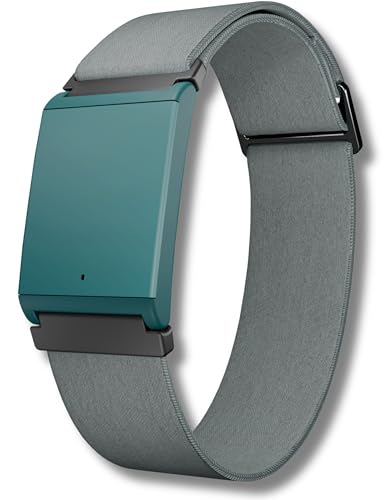
- Auto-wear detection for quick start-up
- Dual Bluetooth and ANT+ with up to 3 devices
- Light silicone strap built for comfort
Best For: Runners who want easy setup and broad app compatibility
Comfort-First Swim-to-Run HR

- Multiple wear options on arm or goggles
- One-button operation for simple use
- Dual Bluetooth plus unlimited ANT+ connections
Best For: Runners who want comfort and flexible placement
Zone Training HR

- ±1 BPM optical tracking with calorie data
- 5-color zone display and HRV support
- Bluetooth 5.0, ANT+, and vibration alerts
Best For: Runners who want zone guidance and safety alerts
Precision Training Pick

- Optical sensor tested up to ±1 bpm accuracy
- Bluetooth and ANT+ for wide app compatibility
- 20+ hour rechargeable battery with IP67 resistance
Best For: Runners wanting a dependable, app-ready training armband
Recovery-Focused Choice

- HRV mode captures RRi data for recovery insights
- Bluetooth and ANT+ compatibility with many devices
- IP68 waterproof design with 24-hour battery life
Best For: Runners who want training data plus recovery tracking
Value Dual-Mode Option
COOSPO HW706 Armband HR Monitor

- Patented optical sensor with real-time tracking
- Bluetooth 4.0 and ANT+ for broad compatibility
- 25+ hour rechargeable battery with IP67 protection
Best For: Runners wanting an affordable, compatible armband
Wahoo FIT Wrist-Ready Heart Monitor – Wahoo TICKR FIT Heart Rate Armband
If you want a heart rate armband for runners that pairs easily with the apps and devices you already use, the Wahoo TICKR FIT is a straightforward option. It uses Bluetooth Smart and ANT+ for broad compatibility, and the optical sensor tracks heart rate, calories, and workout time in real time.
Best For: Runners who want simple app and device connectivity with real-time workout metrics.
Pros:
- Bluetooth Smart and ANT+ support for smartphones and GPS devices
- Tracks heart rate, calorie burn, and workout duration in the Wahoo app
- LED indicator gives visible connection status
- Includes two adjustable bands for a more secure fit
Cons:
- Only one sensor style is described, so it may not suit users wanting advanced extras
- Battery life is solid, but not the longest in this group
Overall, the TICKR FIT is a practical pick if you value wide compatibility and a comfortable arm strap during intense runs. It keeps the focus on core training metrics without adding much complexity.
COROS Arm-Worn Run Monitor – COROS Heart Rate Monitor Armband
For runners who want a comfortable heart rate armband for runners with long battery life, the COROS Heart Rate Monitor focuses on ease of wear and reliable workout data. It uses Bluetooth only, can connect to up to three devices at once, and automatically powers on and off when worn.
Best For: Runners who want a soft, easy-to-wear armband with multi-device Bluetooth support.
Pros:
- Soft, breathable fabric band feels more comfortable than a chest strap
- Bluetooth-only design can pair with up to three devices at once
- Built-in wear detection auto powers on and off
- Strong battery life with 38 hours of full operation
Cons:
- Not compatible with ANT+
- Designed for sports and activity tracking, not daily heart rate monitoring
The COROS model is a good fit if comfort and convenience matter more than cross-platform radio options. It keeps setup simple while still giving runners accurate workout heart rate data and quick recharging.
Zone-Tracking Run Armband – COOSPO HW807 Heart Rate Monitor
If you want a feature-packed heart rate armband for runners, the COOSPO HW807 adds zone indicators and broad app compatibility to the usual workout tracking basics. Its optical sensor claims ±1 BPM accuracy, and Bluetooth 5.0 plus ANT+ support helps it work with phones, watches, bike computers, and fitness equipment.
Best For: Runners who want heart rate zone feedback and broad compatibility across apps and devices.
Pros:
- ±1 BPM optical heart rate monitoring for real-time training data
- HR zone LED indicators plus HRV support
- Bluetooth 5.0 and ANT+ compatibility with many apps and devices
- IP67 waterproof rating and 20-hour battery life
Cons:
- Not recommended for swimming
- Battery life is shorter than some competing arm monitors
For runners who like visible zone feedback and wide device support, the HW807 is easy to recommend. It aims to balance accuracy, compatibility, and practicality in a compact training accessory.
Polar Comfort-First Arm Sensor – Polar Verity Sense Heart Rate Armband
Polar Verity Sense - Optical Heart Rate Monitor Armband - ANT+, Dual Bluetooth, Gray, S-L
Check Price On AmazonThe Polar Verity Sense is a versatile heart rate armband for runners who want comfort and flexibility in where they wear the sensor. It can sit on the upper arm, forearm, or even clip to goggles, and it supports both Bluetooth and ANT+ connections.
Best For: Runners who want a comfortable, flexible armband with strong device compatibility.
Pros:
- Can be worn on the upper arm, forearm, or clipped to goggles
- Bluetooth and ANT+ support with two simultaneous Bluetooth connections
- Simple one-button operation
- Can record a session and transfer data later
Cons:
- More placement options may be unnecessary for users who want a simple fixed fit
- No battery runtime is highlighted in the supplied notes
Verity Sense stands out for runners who want flexibility without giving up compatibility. It is a practical choice if you like the option to track in real time or save sessions for later syncing.
Auto-Wear Dual-Device HR – Powr Labs Rechargeable Armband
If you want a heart rate armband for runners that feels easy to live with on daily runs and longer training blocks, the Powr Labs Rechargeable Heart Rate Armband is built around convenience and steady tracking. It uses an optical sensor, auto-wear detection, and dual Bluetooth/ANT+ connectivity so you can start moving, connect to multiple devices, and keep your workout data flowing without extra steps.
Best For: Runners who want a lightweight, comfortable armband with multi-device compatibility and simple everyday use.
Pros:
- Auto-wear detection activates when it touches your skin, so setup stays quick.
- Dual Bluetooth and ANT+ support can connect to up to 3 devices at once.
- Ultralight, soft-touch silicone strap is designed to stay put without bouncing or pinching.
- Works with major platforms like Peloton, Wahoo, Strava, Zwift, Garmin Connect, and Apple Health.
Cons:
- It is an optical armband, not a chest strap, so runners who prefer that format may not want it.
- The product notes focus on compatibility and comfort more than advanced training metrics.
This is a practical pick if you want a runner-friendly armband that is easy to wear, easy to connect, and priced as a no-frills alternative to higher-cost options.
Comfort-First Swim-to-Run HR – Polar Verity Sense Armband
Polar Verity Sense - Optical Heart Rate Monitor Armband - ANT+, Dual Bluetooth, Black, S-L
Check Price On AmazonThe Polar Verity Sense is a heart rate armband for runners who value comfort, simple controls, and flexible wear options. You can place it on the upper or lower arm, wear it snug under tight clothing, or even clip it to goggles, while dual Bluetooth and ANT+ support help it work across a wide range of devices and apps.
Best For: Runners who want a compact, comfortable monitor with strong versatility and easy operation.
Pros:
- Comfort-focused design keeps the wrist free and can be worn in multiple positions.
- One-button operation makes it straightforward to use before workouts.
- Supports live heart rate broadcasting, two Bluetooth channels, and unlimited ANT+ connections.
- Can track and then transfer data later, adding flexibility for different training setups.
Cons:
- Its premium versatility may be more than some runners need for basic tracking.
- It is compact, so users who want more onboard features may prefer a different model.
If you want a well-known option that emphasizes comfort and flexible connectivity, this is one of the easiest armbands to fit into a runner’s training routine.
Zone Training HR – COOSPO HW9 Armband Monitor
The COOSPO HW9 is a heart rate armband for runners who want zone guidance, calorie tracking, and long battery life in one lightweight sensor. Its optical HRM design includes a 5-color LED zone indicator, HRV support, vibration alerts for high heart rate, and Bluetooth 5.0 plus ANT+ compatibility for use with apps, watches, and bike computers.
Best For: Runners who want training-zone feedback and extra safety alerts during workouts.
Pros:
- Optical sensor is rated for ±1 BPM accuracy and includes calorie tracking.
- 5-color LED zone indicator helps you see intensity at a glance.
- Supports Bluetooth 5.0 and ANT+, including two simultaneous Bluetooth connections.
- Long battery life, fast charging, and vibration warnings add convenience for frequent training.
Cons:
- Requires a button press to power on and off, so it is not fully automatic.
- The app-based max heart rate customization may be more setup than some casual runners want.
This model stands out if you want a runner-focused armband that does more than basic pulse tracking and helps you stay in the right intensity range.
Precision Training Pick – moofit HW401 Arm HR Monitor
If you want a heart rate armband for runners that focuses on straightforward training data, the moofit HW401 is built around real-time optical tracking, dual Bluetooth/ANT+ connectivity, and a rechargeable design. It’s made for everyday running and cross-training, with IP67 sweat and water resistance and compatibility with popular apps like Wahoo, Strava, and Polar Beat.
Best For: Runners who want a simple, app-friendly armband for steady training and long sessions.
Pros:
- Optical sensor is tested for accuracy up to ±1 bpm.
- Bluetooth and ANT+ support works with many apps and fitness devices.
- Rechargeable battery delivers 20+ hours of continuous use.
- IP67 resistance helps during sweaty runs and rainy workouts.
Cons:
- Not suitable for swimming.
- Battery life is solid, but shorter than some competitors.
Overall, the HW401 is a practical pick if you want reliable heart rate tracking without a chest strap and value broad app compatibility. Its strengths are accuracy, easy pairing, and enough battery life for regular training blocks.
Recovery-Focused Choice – Scosche Rhythm+ 2.0 Armband
The Scosche Rhythm+ 2.0 is a heart rate armband for runners who want more than basic heart rate tracking. In addition to real-time workout monitoring, it adds HRV mode for RR interval data, plus Bluetooth and ANT+ connectivity, so it can fit into both training and recovery workflows.
Best For: Runners who want a wearable monitor with recovery insights and strong device compatibility.
Pros:
- Captures HRV and RRi data for deeper recovery analysis.
- Bluetooth and ANT+ pairing works with watches, apps, and gym equipment.
- Up to 24 hours of battery life supports long training stretches.
- IP68 waterproof rating and lightweight strap suit hard workouts.
Cons:
- More feature-rich than a basic running armband, which may be more than some need.
- Only a 1-year limited warranty.
If you care about monitoring both effort and recovery, this model stands out for its HRV support and stable connectivity. It’s a strong fit for runners who split time between structured training, indoor sessions, and post-run recovery tracking.
Value Dual-Mode Option – COOSPO HW706 Armband HR Monitor
For runners looking for a heart rate armband for runners with broad compatibility and a straightforward setup, the COOSPO HW706 covers the basics well. It uses a patented optical sensor, supports Bluetooth 4.0 and ANT+, and works with popular platforms like Strava, Polar Beat, Peloton, and Garmin-compatible gear.
Best For: Runners who want a budget-friendly dual-mode armband for phones, watches, and training apps.
Pros:
- Patented optical sensor provides real-time heart rate tracking.
- Bluetooth 4.0 and ANT+ support wide device compatibility.
- Rechargeable battery offers 25+ hours of use per charge.
- IP67 waterproofing handles sweat and rainy runs.
Cons:
- Not suitable for swimming.
- Package details note 2 straps, but the overall design remains basic.
The HW706 is appealing if you want broad app support and long battery life without stepping up to a more premium monitor. It’s a practical training companion for runners who value flexibility across phones, bike computers, and watches.
How We Picked the Best Heart Rate Armband for Runners
We focused on the features that matter most for running: consistent optical heart rate tracking, secure fit, sweat resistance, easy pairing, and battery life that can handle regular training. We also prioritized models that work well with common platforms and devices, so a Heart Rate Armband for Runners is easy to use on day one.
Quick Comparison
For most runners, the best choice depends on how you train. If you want broad compatibility, look for Bluetooth and ANT+ support. If you value long sessions or frequent workouts, battery life matters. If you run in heat or rain, water resistance and a stable arm fit should move higher on your list. If you use training apps or bike computers as well as running watches, dual-band models are usually the safest bet.
Key Buying Factors for a Heart Rate Armband for Runners
Accuracy and Sensor Quality
Optical sensors have improved a lot, but some models handle interval work, steady-state runs, and arm movement better than others. Look for a monitor known for stable readings and fast response during pace changes.
Connectivity
Bluetooth is essential for most runners, while ANT+ adds flexibility for watches, treadmills, and gym equipment. If you train across multiple devices, dual connectivity is a strong advantage.
Comfort and Fit
The best armband should feel snug without pinching. Lightweight materials, adjustable straps, and a secure non-slip design help prevent shifting during long runs or tempo workouts.
Battery Life and Charging
Runners who train several times a week should consider how often they want to recharge. Longer battery life is especially useful for marathon training blocks and busy schedules.
Durability and Sweat Resistance
Look for at least basic water and sweat resistance, especially if you run outdoors year-round. An IP-rated design is a good sign for everyday training reliability.
Who Should Buy Which Heart Rate Armband for Runners?
If you want the simplest setup, choose a model with strong Bluetooth support and a comfortable fit. If you use multiple devices or train with a watch plus app, go for a dual Bluetooth and ANT+ option. If you prioritize all-day training convenience, choose a monitor with longer battery life and auto-wear detection. For runners who want the most dependable data during workouts, a higher-end optical sensor is usually worth the extra cost.
In short, the right Heart Rate Armband for Runners comes down to your training style, device ecosystem, and comfort preferences. Pick the model that matches those needs, and you’ll get more useful data without adding unnecessary hassle.
