
If you want to train sprint mechanics, acceleration, and explosive starts, a hip resistance belt for running drills can be a simple, effective tool. The right setup helps add load without changing your movement too much.
Below, we break down 10 top options for athletes who want better speed work, cleaner resistance training, and a more practical fit for drills.
Best 10 Hip Resistance Belt for Running Drills Picks for 2026
Acceleration Kit
Multi-Sport Speed and Strength Trainer
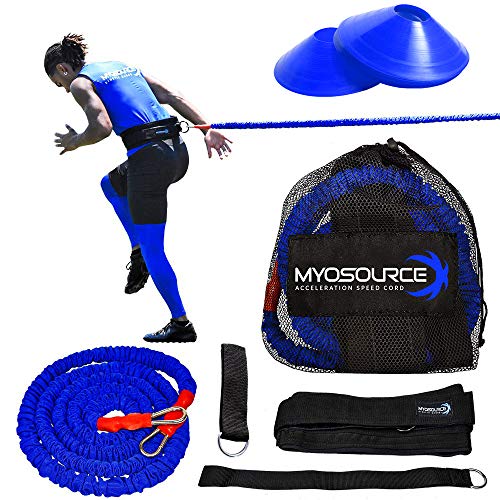
- 360 D-ring supports multi-direction drills
- Three belt sizes for better fit options
- Includes cones, anchor strap, and hand strap
Best For: Athletes wanting a flexible speed-drill kit for solo or partner training
Explosive Rope
Heavy-Resistance Speed Trainer
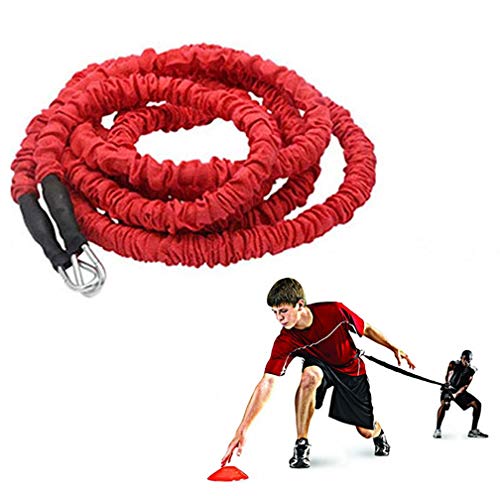
- Up to 80 lbs of resistance for hard training
- Works solo on an anchor or with a partner
- Built for speed, stamina, and strength work
Best For: Athletes who want heavier resistance for explosive running drills
Reactive Cord
Adjustable Running Resistance Belt

- Belt-based design for running and speed drills
- Can train solo or with a partner
- Includes two resistance levels and training downloads
Best For: Runners wanting a true waist-belt resistance trainer
360 Trainer
Padded Resistance Running Band

- 360° waist design for multi-angle resistance
- Adjustable Velcro fit with plush padding
- Includes app access and storage bag
Best For: Athletes who want a comfortable, app-supported running resistance band
Partner-Controlled Sprint Belt
Power Systems Bullet Belt for resistance running drills

- Pop and Rip feature for controlled resistance and release
- Variable Velcro closure for different athlete levels
- Includes steel D-ring, PVC handles, and carry bag
Best For: coach-led sprint and over-speed training
Neoprene Pull Belt
Weighted waist belt for sled and tire pulling drills

- 6.5mm neoprene for soft, sturdy support
- Two back D-rings for pulling strap attachment
- Adjustable buckle fits 30 to 41 inch waists
Best For: sled pulls, tire pulls, and speed-agility work
Elastic Resistance Runner
YNXing elastic resistance trainer for sprint and agility drills
- Elastic cord extends up to 3x its original length
- Partner use or anchored solo training options
- Up to 80 lbs resistance for power and agility work
Best For: partnered sprints or anchored speed drills
Budget-friendly padded belt
Neoprene Padded Gym Pulley Strap with Rings
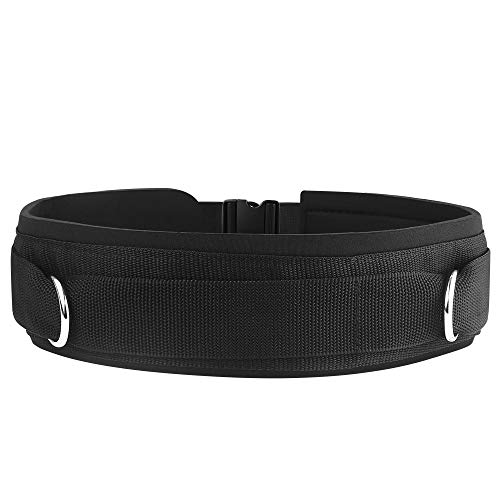
- Adjusts from 25 to 41 inches
- 5.5mm neoprene padding for comfort
- Two movable rings for attachments
Best For: Athletes and coaches doing speed and agility drills
Quick-release training belt
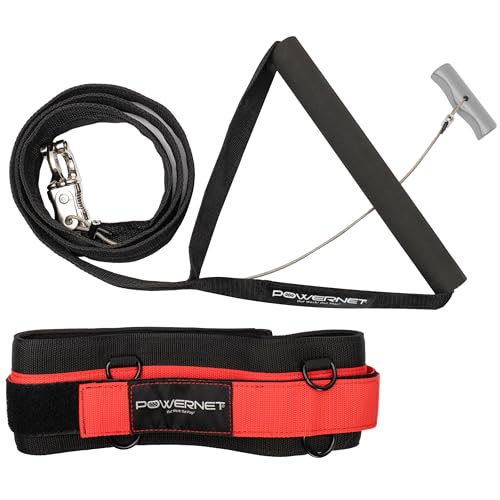
- Quick-release aluminum handle
- Adjustable hook-and-loop waist strap
- Made for partner speed and agility drills
Best For: Coaches and athletes doing partner-based sprint training
Acceleration Kit – Multi-Sport Speed and Strength Trainer
If you want a hip resistance belt for running drills that also supports broader speed work, this acceleration kit is built for multi-direction training. It pairs an adjustable waist belt with a speed cord, anchor strap, hand strap, and cones, so you can work on acceleration, deceleration, and re-acceleration with or without a partner.
Best For: Athletes who want a versatile running drill setup for solo or partner speed sessions across multiple sports.
Pros:
- Includes a 360 D-ring that moves with the direction of resistance for multi-direction drills.
- Comes with three belt sizes for a more comfortable fit across different waist ranges.
- Supports solo anchor work or partner-resisted training.
- Includes agility cones for quick-feet and drill setup work.
Cons:
- Only one resistance level is listed.
- Best suited to training drills rather than simple belt-only use.
This is a strong pick if you want one kit that covers running acceleration and general agility work. The included accessories make it more flexible than a basic belt, especially for athletes who train in multiple directions.
Explosive Rope – Heavy-Resistance Speed Trainer
This hip resistance belt for running drills is more of a heavy-duty resistance rope than a belt-focused kit, but it still fits athletes who want stronger resistance for speed, stamina, and power work. The rope extends up to three times its original length and can be used with a partner or attached to a stable grounded object for solo training.
Best For: Runners and field athletes who want a heavier resistance rope for power-focused sprint and agility training.
Pros:
- Offers up to 80 lbs of resistance strength for demanding drills.
- Can be used with a partner or anchored to a stable object.
- Designed to build speed, strength, agility, and overall balance.
- Available in multiple original lengths.
Cons:
- Not a traditional waist-belt system.
- Product details show a single resistance level listing.
If your priority is strong resistance rather than a belt-centered running setup, this is a practical training option. It is especially relevant for athletes who want a simple, high-resistance tool for explosive work.
Reactive Cord – Adjustable Running Resistance Belt
For buyers searching for a hip resistance belt for running drills, this Kbands setup is a close match because it combines an adjustable belt with a resistance cord, anchor strap, and hand strap. It is designed for speed, agility, stamina, acceleration, and explosiveness, and it can be used with or without a partner.
Best For: Runners who want a belt-based resistance trainer for solo or partner sprint drills.
Pros:
- Adjustable belt includes a slidable metal D-ring for attaching the cord.
- Can be used solo with a fence or pole, or with a partner.
- Comes with two resistance levels and heavy tension support.
- Includes digital training downloads for added guidance.
Cons:
- Belt sizing is limited to three waist ranges.
- Best for structured training rather than casual use.
This is the most belt-centered option in the group, and it is aimed squarely at running and speed development. The ability to train alone or with a partner makes it especially useful for consistent drill work.
360 Trainer – Padded Resistance Running Band
This hip resistance belt for running drills uses a 360° waist band design made for speed, agility, and explosive acceleration work. It features an adjustable Velcro fit, plush padding, and a durable build, so it is aimed at athletes who want comfort along with resistance during intense sessions.
Best For: Athletes who want a padded waist band for speed training, solo drills, or partner work.
Pros:
- 360° waist design supports running resistance from multiple angles.
- Adjustable Velcro system helps create a snug fit.
- Plush padding is included for added comfort during training.
- Comes with app access and a storage bag.
Cons:
- Only one resistance level is listed.
- Product details do not list separate belt sizes.
This option stands out if comfort matters as much as resistance. The padded build and app access make it appealing for athletes who want a more guided training experience.
Partner-Controlled Sprint Belt – Power Systems Bullet Belt for resistance running drills
If you want a hip resistance belt for running drills that gives a coach real control, this Power Systems Bullet Belt is built around partner-guided resistance and a pop-and-rip release. The variable Velcro closure lets you adjust the challenge, while the 54-inch nylon build and free-swivel steel D-ring are made for speed, agility, and over-speed work.
Best For: Coaches and athletes who want partner-controlled resistance runs with a quick release into over-speed drills.
Pros:
- Pop and Rip design helps control both resistance duration and release timing.
- Variable Velcro closure adjusts resistance for athletes at different levels.
- 54-inch nylon belt includes a free-swivel steel D-ring and PVC handles.
- Carry bag is included for easier transport and storage.
Cons:
- Designed as a partner-controlled system, so solo use is more limited.
- Only one resistance level is listed.
- Best suited to drill work rather than general casual training.
This is a practical option if your training setup depends on a coach or partner dialing in resistance for sprint mechanics and explosive release work. The included carry bag also makes it easier to keep with the rest of your field training gear.
Neoprene Pull Belt – Weighted waist belt for sled and tire pulling drills
This weighted training waist belt is a straightforward hip resistance belt for running drills when your focus is sled pulls, tire pulls, or parachute-style resistance work. The 6.5mm neoprene belt is meant to feel soft yet sturdy, and the double metal buckle plus two back D-rings give you a simple setup for attaching pulling straps.
Best For: Athletes who want a comfortable waist belt for pulling sleds, tires, or resistance gear in speed and agility sessions.
Pros:
- 6.5mm neoprene construction aims to balance comfort and support.
- Two back D-rings make it easy to attach pulling straps.
- Adjustable buckle fits waists from 30 to 41 inches.
- Useful for speed, resistance, strength, and agility training.
Cons:
- Primarily a pulling belt, not a dedicated sprint-release trainer.
- No resistance level system is listed.
- Fit range is limited to the stated waist sizes.
If your drills center on resisted runs through sleds or tires, this belt keeps the design simple and supportive. It is a solid match for athletes who need an adjustable pulling harness rather than a more complex resistance system.
Elastic Resistance Runner – YNXing elastic resistance trainer for sprint and agility drills
For athletes looking for a hip resistance belt for running drills with more stretch-based loading, this YNXing trainer pairs belts with an elastic cord system. It is designed for partner resistance or anchored solo work, and the cord can extend up to three times its original length to add challenge to sprint, jump, and agility sessions.
Best For: Runners and multi-sport athletes who want elastic resistance for partnered sprints or anchored solo drills.
Pros:
- Elastic cord can extend up to 3x its original length.
- Designed for partner use or connection to a stable grounded object.
- Supports training for strength, power, agility, and balance.
- Listed resistance capacity goes up to 80 lbs.
Cons:
- Less of a traditional waist-belt-only setup since it uses belts and cord.
- Resistance depends on stretching a cord system rather than a fixed belt feel.
- Best performance appears to rely on proper setup and training space.
This trainer is a good fit if you want a more dynamic resistance tool for speed work and explosive movement patterns. The option to train with a partner or anchor point gives it flexibility for different drill setups.
Budget-friendly padded belt – Neoprene Padded Gym Pulley Strap with Rings
If you want a hip resistance belt for running drills that feels simple and sturdy, this padded waist belt is built around cable and resistance training. The neoprene padding and adjustable webbing make it a practical pick for speed, agility, and kickback-style work, especially when you need a belt that can move from one athlete to another.
Best For: Athletes and coaches who need an adjustable, padded belt for speed, agility, and resistance drills.
Pros:
- Adjusts to waists from 25 to 41 inches.
- 5.5mm neoprene padding adds comfort during training.
- Two movable rings make it easy to attach cable kickbacks and resistance trainers.
- Built for strength, speed, and agility training.
Cons:
- More of a basic pulley strap than a specialized running harness.
- No quick-release handle included.
Overall, this is a straightforward training belt for athletes who want padded support and simple attachment points without extra features. It fits well into general speed and resistance routines where adjustability matters.
Quick-release training belt – PowerNet Tension Trainer
This hip resistance belt for running drills is designed for athletes who want partner-based speed and agility work with fast transitions. The PowerNet Tension Trainer combines an adjustable belt, padded handle, and quick-release aluminum clasp, making it a strong fit for drill-heavy training sessions across multiple sports.
Best For: Coaches, trainers, and athletes running partner drills for speed, agility, and explosive conditioning.
Pros:
- Quick-release aluminum handle helps open the clasp fast during drills.
- Hook-and-loop strap adjusts to fit all ages.
- Padded handle adds comfort while training.
- Useful for basketball, football, baseball, softball, soccer, and running.
Cons:
- More specialized for partner training than solo use.
- Designed around a belt-and-handle system rather than a simple strap.
For teams and coaches building repeated acceleration and reaction drills, this trainer offers the most convenience of the three. Its quick-release setup and broad sport support make it especially practical for structured field and court sessions.
Supportive dual-loop belt – Soft Neoprene Padded Belt with 2 Movable Rings
If you’re comparing a hip resistance belt for running drills, this LOOEEL option stands out for its supportive feel and dual-loop setup. It uses thick neoprene padding, an adjustable buckle, and two movable loops to connect resistance trainers or elastic ropes for speed, agility, and strength work.
Best For: Athletes who want a comfortable, supportive belt for resistance work, agility drills, and general lower-body training.
Pros:
- Adjusts for waist sizes from 25 to 41.5 inches.
- 5.5mm neoprene padding helps with comfort.
- Two movable loops support cable and resistance trainer attachments.
- Closed buckle design is intended to provide strong waist support.
Cons:
- Does not include a quick-release handle.
- Best suited to resistance and support work rather than a dedicated sprint-system design.
This is a solid all-around belt for athletes who want extra support during demanding training. The dual-loop layout adds flexibility for different drills, while the padded build helps it stay comfortable across longer sessions.
How We Picked the Best Hip Resistance Belt for Running Drills
We focused on products that are relevant for sprint work, acceleration drills, and resistance running use. Priority went to adjustable fit, secure belt construction, usable resistance range, and training versatility for solo or partner-assisted work.
We also considered comfort, hardware quality, quick setup, and whether the product makes sense as a Hip Resistance Belt for Running Drills rather than a general-purpose fitness accessory.
Quick Comparison
Think of these options in three groups: speed cords and bungee trainers for dynamic sprint sessions, padded belt-and-ring systems for cable or pulley training, and pulling straps or harness-style tools for sled work. Your best choice depends on whether you want overspeed/overslow resistance, gym-based cable resistance, or heavier towing work.
Key Buying Factors for a Hip Resistance Belt for Running Drills
Fit and Stability
A belt should sit securely on the hips without sliding, twisting, or digging in. Padding and adjustable sizing matter if you plan to use it for repeated sprint sets.
Resistance Type
Bungee cords and elastic ropes are better for acceleration and reactive speed work. Sled straps and harness-style attachments are better for stronger load progression. Choose the style that matches your training goal.
Release and Safety
If you train with a partner or anchor, look for quick-release hardware and strong attachment points. This is especially important during fast accelerations or direction changes.
Training Surface and Use Case
Some products are designed for turf, track, or outdoor sprint work, while others are made for cable machines and gym stations. Make sure the belt matches where you actually train.
Who Should Buy Which Hip Resistance Belt for Running Drills?
Sprinters and field athletes usually benefit most from adjustable bungee-style systems that support acceleration drills and change-of-pace work. Coaches and teams may prefer more durable, versatile setups that can handle repeated use.
If you want a gym-friendly option, padded waist belts with rings are better for cable resistance work. If your priority is heavier towing, sled straps and pull harnesses are the more practical choice. For most athletes shopping for a Hip Resistance Belt for Running Drills, the best option is the one that stays secure, feels comfortable, and matches the exact drill you do most often.
