
Manual curved treadmills deliver a harder-working, more natural-feeling run without relying on electricity. They’re popular for sprint intervals, conditioning, and users who want a self-powered cardio machine that keeps pace with their effort.
Below, we’ve rounded up 10 strong options for different training goals, from home-friendly picks to commercial-grade models with added resistance and digital feedback.
Best 10 Manual Curved Treadmills Picks for 2026
Commercial Sprint Training Pick
SB Fitness CT700 Curved Treadmill

- 8 resistance levels for harder training
- 66.5" x 19" track with no max speed
- Self-generated design with digital tracking
Best For: Athletes and serious trainers
High-Capacity Home Trainer
DELAVIN Sturdy Curved Manual Treadmill

- 4 resistance levels for varied training
- 62.9 x 18.9-inch curved belt
- 440-lb capacity with non-electric use
Best For: Home or commercial users needing a sturdy, high-capacity treadmill
Balanced Training Option
SB Fitness CT400 Curved Treadmill
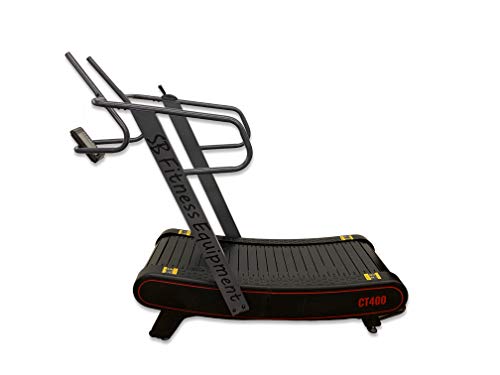
- 3 resistance levels for simple progression
- Flexible slats add shock absorption
- Bluetooth and digital display included
Best For: Mixed cardio and sport-specific training
Space-Saving Home Choice
Foldable Non-Electric Curved Treadmill

- Foldable handrails for easier storage
- No speed limit and self-propelled use
- LED display with anti-slip rubber tracks
Best For: Users who need a foldable treadmill for home or office
Heavy-Duty Home Trainer
Manual Curved Treadmill with 8-Level Resistance

- 8 resistance levels for varied workouts
- Wide curved belt with cushioning
- LCD tracks key workout data
Best For: Home users wanting a sturdy, adjustable manual curved treadmill
Commercial-Grade Runner
Self-Propelled Curved Treadmill with 8 Resistance Levels

- Self-powered curved belt for natural pacing
- Supports up to 660 lbs
- LED display tracks workout metrics
Best For: High-capacity home gyms and commercial settings
Quiet Endurance Choice
Curved Manual Treadmill with 6-Level Resistance

- 5-layer belt for added shock absorption
- 6-level metal resistance knob
- Steel frame supports up to 400 lbs
Best For: Runners who want a quieter, low-maintenance curved treadmill
Heavy-Duty Pick
Curved Manual Treadmill, 8 Resistance Levels

- 8 resistance levels for walking to sprint work
- 51.2" x 16.5" belt fits users up to 6'3"
- Heavy-duty steel frame with LED tracking
Best For: Taller users and intense home interval training
Commercial-Style Choice
Non-Electric Curve Treadmill, 4 Resistance Levels

- 63" x 19" belt gives extra running room
- 4 resistance levels for jogging to sprint work
- 450-lb capacity with self-powered operation
Best For: Buyers wanting a wide deck and commercial-grade support
Feature-Rich Value
2026 Manual Curved Treadmill with Digital Display
- LCD tracks pace, calories, speed, and heart rate
- 8 resistance levels with metal adjustment hardware
- Curved belt and transport wheels suit home use
Best For: Users who want training data and adjustable resistance
Commercial Sprint Training Pick – SB Fitness CT700 Curved Treadmill
If you want a manual curved treadmill built for hard training, the SB Fitness CT700 is aimed at sprint work, HIIT, and sport-specific sessions. Its self-generated design, 8 resistance levels, and large curved track make it a strong fit for users who want quick pace changes and a more demanding workout without a max speed limit.
Best For: Athletes and serious home or commercial users who want sprint-focused training, sled-push-style effort, and a spacious running deck.
Pros:
- 8 resistance levels add challenge for stronger conditioning sessions.
- 66.5-inch by 19-inch track gives plenty of room for running and safety.
- Self-generated power and no maximum speed support intense intervals.
- Digital display tracks time, distance, speed, calories, and total miles.
Cons:
- At 308 pounds, it is heavy and not meant for easy moving.
- The commercial-style build may be more machine than casual walkers need.
Overall, the CT700 stands out among manual curved treadmills for users who care most about performance, resistance, and room to move. It is a serious training tool rather than a basic cardio machine.
High-Capacity Home Trainer – DELAVIN Sturdy Curved Manual Treadmill
The DELAVIN manual curved treadmill is designed for users who want a tougher, non-electric workout with simple speed control. With 4 resistance levels, a wide curved belt, and a high weight capacity, it suits walking, jogging, sprinting, and HIIT while keeping setup focused on straightforward training.
Best For: Home, gym, hotel, or rehab users who want a sturdy manual curved treadmill with a high capacity and low-maintenance feel.
Pros:
- 4 resistance levels help vary workout intensity.
- 62.9 x 18.9-inch curved belt is wide and designed for better running comfort.
- Non-electric operation keeps it energy-free and simple to use.
- 440-pound weight capacity and alloy steel frame support heavy-duty use.
Cons:
- Maximum speed is listed at 12 mph, so it is less extreme than some performance models.
- At 286 pounds, it is still a substantial machine.
For buyers comparing manual curved treadmills, this model offers a practical mix of comfort, strength, and easy pace changes. It is especially appealing if you want a durable, non-motorized option without needing complex controls.
Balanced Training Option – SB Fitness CT400 Curved Treadmill
The SB Fitness CT400 is a self-generated manual curved treadmill built for versatile workouts rather than top-end complexity. It supports running, walking, sport-specific training, and HIIT, while the 3 resistance levels and shock-absorbing slats give it a balanced feel for everyday conditioning.
Best For: Users who want a lighter commercial-style manual curved treadmill for mixed cardio and training sessions.
Pros:
- Self-generated power supports calorie-burning workouts without electricity.
- 3 resistance levels provide simple workout progression.
- Flexible track slats are designed to add shock absorption.
- Bluetooth connectivity and digital display add useful tracking features.
Cons:
- 60-inch deck is smaller than the CT700’s larger running area.
- 375-pound weight recommendation is lower than some heavy-duty competitors.
The CT400 is a good middle-ground choice in manual curved treadmills if you want versatility and easier handling than the largest commercial models. It keeps the training focus on movement, resistance, and feedback rather than extra complexity.
Space-Saving Home Choice – Foldable Non-Electric Curved Treadmill
This manual curved treadmill is built for home users who want a non-motorized machine with a compact, foldable design. It offers a no-speed-limit setup, anti-slip rubber tracks, and a curved running path that encourages a forward lean while reducing joint stress compared with more rigid running surfaces.
Best For: Home or office users who want a foldable manual curved treadmill for running and sprint training with easier storage.
Pros:
- Foldable handrails help save space when the treadmill is not in use.
- No speed limit allows users to set their own pace.
- Anti-slip rubber tracks add safety and grip.
- LED display shows time, calories, speed, distance, and more.
Cons:
- Track size is listed as 15.75 x 51.2 inches, which is shorter than some larger curved treadmills.
- Maximum weight capacity is 350 pounds, lower than the heaviest-duty options.
For shoppers prioritizing storage and simple manual operation, this foldable model is a practical alternative to larger curved treadmills. It is best suited to users who value compact design as much as workout variety.
Heavy-Duty Home Trainer – Manual Curved Treadmill with 8-Level Resistance
If you want manual curved treadmills that can handle everything from steady walking to fast interval work, this model is built around simplicity and control. Its motorless design uses your movement to drive pace, while the 8 resistance levels and curved belt help tailor effort for cardio, fat burning, and higher-intensity sessions.
Best For: Home or office users who want a sturdy, non-electric curved treadmill with adjustable resistance and easy speed control.
Pros:
- 8 adjustable resistance levels for walking, jogging, sprinting, and HIIT-style training
- Wide 66.5 x 27.1-inch curved running belt with shock absorbers for a more comfortable stride
- Manual, button-free speed control that responds quickly to your movement
- LCD display tracks time, distance, speed, calories, and heart rate
Cons:
- Manual design means workout effort comes entirely from the user
- Large footprint may require dedicated space
- Heavy-duty build is less convenient to move than lighter fitness equipment
This is a strong pick if you want a durable curved treadmill with straightforward operation and a wide belt for varied training styles. The combination of resistance options, cushioning, and a 440 lb capacity makes it a practical choice for consistent home or gym use.
Commercial-Grade Runner – Self-Propelled Curved Treadmill with 8 Resistance Levels
Among manual curved treadmills, this self-propelled model focuses on natural pacing, heavy-duty support, and easy monitoring. It uses a non-electric curved belt, 8 adjustable resistance levels, and a smart display to support walking, jogging, sprinting, and interval training without needing a power outlet.
Best For: Home gym users, runners, and commercial spaces that want a high-capacity non-electric treadmill with simple setup.
Pros:
- Self-powered curved design gives you direct control over pace
- 8 resistance levels help adjust workout intensity
- 27.2-inch wide belt and 66.5-inch running area offer comfortable room to move
- LED display tracks time, distance, pace, calories, speed, and heart rate
Cons:
- Very heavy unit at about 370 lbs, so it is not easy to reposition often
- Large footprint may not suit small rooms
- No assembly is a plus, but the size still demands a committed space
If your priority is a manual curved treadmill with commercial-style stability and a very high weight capacity, this one stands out. It is a practical choice for serious training environments where durability and workout control matter most.
Quiet Endurance Choice – Curved Manual Treadmill with 6-Level Resistance
If you are comparing manual curved treadmills for harder conditioning work, this model leans into joint comfort, quiet operation, and instant pace changes. The self-powered design, 6-level metal resistance knob, and shock-absorbing belt make it well suited for HIIT, sprint intervals, and steady training at home or in light commercial spaces.
Best For: Runners and fitness users who want a quieter curved treadmill with a shock-absorbing belt and strong frame support.
Pros:
- 5-layer shock-absorbing belt helps reduce impact during training
- Instant speed response with a 6-level metal resistance knob
- Curved deck supports natural running form for walking, sprints, and intervals
- Commercial-style steel frame supports up to 400 lbs
Cons:
- Heavy 316 lb unit is not ideal if you need frequent repositioning
- Manual operation requires continuous user effort
- Only basic metrics are listed in the supplied details, so monitor features appear limited compared with some competitors
This is a solid option if you value a mechanically simple treadmill with quick resistance changes and a quieter feel. The blend of shock absorption, sturdy construction, and low-maintenance design makes it a compelling training tool for regular use.
Heavy-Duty Pick – Curved Manual Treadmill, 8 Resistance Levels
If you want manual curved treadmills that feel stable at harder efforts, this model stands out with its heavy-duty steel frame, 51.2″ x 16.5″ running surface, and 8 resistance levels. It is built for walking, sprinting, and HIIT-style intervals, while the curved belt and rubber deck are designed to reduce impact compared with a flat, motorized treadmill.
Best For: Taller users, interval training, and home gym buyers who want a sturdy self-powered treadmill with simple resistance control.
Pros:
- 8 resistance levels with an easy side-mounted tension knob
- Large 51.2″ x 16.5″ belt supports users up to 6’3″
- Curved, rubberized running surface helps reduce joint stress
- LED display tracks time, distance, speed, and calories
Cons:
- Very heavy at 418.5 pounds, so moving it will still take effort
- Heart rate tracking requires a compatible chest strap or watch sold separately
This is a strong choice if your priority is a durable, no-outlet treadmill for serious cardio work. The tradeoff is size and weight, but the payoff is a stable platform with straightforward adjustability.
Commercial-Style Choice – Non-Electric Curve Treadmill, 4 Resistance Levels
Among manual curved treadmills, this self-powered model focuses on a roomy running area and commercial-grade stability. The 63″ x 19″ belt gives you more space for natural stride changes, and the 4 resistance levels make it easy to move from light jogging to harder sprint sessions without needing any electricity.
Best For: Home gym users who want a wider running surface, high weight capacity, and a straightforward motorless design.
Pros:
- Wide 63″ x 19″ belt offers generous room for different stride lengths
- 4 adjustable resistance levels cover jogging, sprinting, and HIIT
- Self-powered design needs no outlet and keeps operation quiet
- Commercial-grade steel frame supports up to 450 pounds
Cons:
- Only 4 resistance levels, so fine-tuning is less granular than on some rivals
- Larger footprint may be harder to fit in smaller rooms
This is a practical option if you want a manual curved treadmill with a bigger deck and a heavy-duty feel. It is especially appealing for users who value stability and simple training adjustments over extra bells and whistles.
Feature-Rich Value – 2026 Manual Curved Treadmill with Digital Display
If you are comparing manual curved treadmills for home or gym use, this model leans heavily into training features and convenience. It combines an LCD display, 8 resistance levels, and a self-powered curved deck, giving you a versatile setup for cardio, intervals, and anaerobic sessions without needing electricity.
Best For: Buyers who want more workout tracking and resistance control in a compact, self-powered curved treadmill.
Pros:
- LCD display tracks time, distance, pace, calories, speed, and heart rate
- 8 resistance levels with a more durable metal adjustment system
- Curved belt and shock-absorbing rubber surface help reduce impact
- Built-in transport wheels make moving and storage easier
Cons:
- Weight capacity is 440 pounds, slightly below some competitors
- Product details list an unusual max speed spec, so shoppers may want to focus on resistance and tracking instead
Overall, this is a well-rounded pick for users who want a non-electric treadmill with more built-in feedback than a basic model. The added workout modes and upgraded resistance hardware make it especially appealing for structured training.
How We Picked These Manual Curved Treadmills
We focused on the features that matter most for a self-powered running machine: frame stability, belt quality, resistance settings, console feedback, user capacity, and overall suitability for repeated training. We also looked at whether a model is better for sprint work, general cardio, or heavier-duty use.
Quick Comparison
In general, higher resistance settings and sturdier frames suit athletes and intense interval training, while simpler models with fewer settings can be a better fit for steady cardio, walking, or smaller spaces. If you want the most workout control, choose a model with clear resistance adjustment and a readable display.
Key Buying Factors for Manual Curved Treadmills
Resistance Levels
More resistance levels give you finer control over workout intensity. For Manual Curved Treadmills, this is especially important if more than one person will use the machine or if you want to progress from warm-ups to hard sprints on the same unit.
Running Surface and Belt Feel
A curved belt should feel smooth, secure, and responsive underfoot. Look for a non-slip surface, enough running width for comfortable foot strike, and cushioning or shock absorption if you plan on longer sessions.
Frame Strength and Capacity
Because the user powers the belt, the frame needs to stay stable during fast strides. Higher weight capacities and commercial-grade construction usually indicate better durability, especially if the treadmill will see frequent use.
Display and Workout Feedback
Digital monitors are useful for tracking time, speed, distance, calories, or other session data. They are not essential, but they can help you stay consistent and measure progress.
Space and Placement
Measure carefully before buying. Some Manual Curved Treadmills are compact enough for home gyms, while others are built for larger training rooms and require more floor space.
Who Should Buy Which Manual Curved Treadmills?
If you want intense conditioning and interval training, choose a sturdier model with more resistance levels and a solid display. If you’re shopping for a home gym, prioritize size, foldability, and a user-friendly setup. For commercial facilities or shared spaces, look for heavier frames, higher capacity, and durable components that can handle frequent sessions.
For most buyers, the best choice is the model that balances resistance, comfort, and durability for the way you actually train. Manual Curved Treadmills are simple by design, but the right feature mix can make a big difference in everyday performance.
