
In 2026, the landscape of running technology is set to change dramatically. If you’re looking to enhance your running technique, the right sensors can provide real-time insights that make a difference. These devices track metrics like cadence and stride length, helping you refine your form. But with so many options available, how do you choose the best one? Let’s explore some of the top contenders that could elevate your training experience.
Garmin HRM 600

The Garmin HRM 600 is the ideal choice for dedicated runners seeking precise heart rate monitoring and dynamic running metrics. With real-time heart rate and HRV data sent directly to your compatible Garmin devices, you’ll always stay informed during your workouts. It even tracks your heart rate during swims, syncing seamlessly afterward. The added running dynamics metrics, like stride length and ground contact time, help you refine your form. Plus, it records workouts when you can’t wear a watch, syncing everything to the Garmin Connect app. Comfortable and machine-washable, it has up to two months of battery life, making it perfect for your training.
Best For: The Garmin HRM 600 is best for dedicated runners and swimmers who seek accurate heart rate monitoring and advanced running metrics to enhance their performance.
Pros:
- Real-time heart rate and HRV data delivered to compatible Garmin devices, ensuring accurate monitoring during workouts.
- Tracks heart rate during swims and syncs data after saving workouts, making it versatile for various activities.
- Comfortable and machine-washable strap with a long battery life of up to two months, providing convenience for regular use.
Cons:
- Requires compatible devices for full functionality, which may limit use for those without Garmin products.
- Additional metrics like running dynamics are only available with compatible smartwatches, potentially restricting access to some features.
- No built-in display, necessitating a connected device for viewing data in real-time during workouts.
Garmin Running Dynamics Pod – 010-12520-00

For runners looking to refine their technique without the bulk of a heart rate monitor, the Garmin Running Dynamics Pod – 010-12520-00 is an excellent choice. This compact pod clips onto your waistband, weighing less than 5 ounces, and operates seamlessly with compatible Garmin devices. It provides six vital metrics, including cadence and ground contact time, to help you analyze your running form. With a replaceable battery lasting up to a year, you won’t have to worry about frequent changes. Plus, its waterproof design guarantees durability in any weather, making it a reliable training companion for serious runners.
Best For: Runners seeking to improve their running form without the bulk of traditional heart rate monitors.
Pros:
- Provides six essential running metrics to enhance performance analysis.
- Lightweight and compact design ensures comfort during runs.
- Waterproof construction allows for use in all weather conditions.
Cons:
- Limited compatibility with non-Garmin devices.
- Requires a compatible device for data display and analysis.
- Battery life may be shorter with more frequent use or additional features.
Fitbit Inspire 3 Health & Fitness Tracker
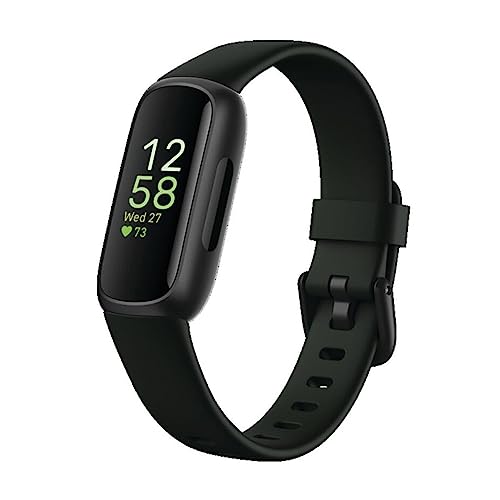
Looking to elevate your running game? The Fitbit Inspire 3 is your perfect companion. With 24/7 heart rate monitoring and a daily Readiness Score, you can track your performance and optimize your workouts. It supports over 20 exercise modes and automatically detects your activities, keeping you focused on your run. You’ll love the stress management tools, including mindfulness sessions and a daily Stress Management Score. Plus, its sleep tracking capabilities help guarantee you’re well-rested for those long runs. Lightweight, water-resistant, and boasting a 10-day battery life, this tracker keeps you connected and motivated on your fitness journey.
Best For: Fitness enthusiasts looking for a comprehensive health and fitness tracker to monitor their performance, manage stress, and improve sleep quality.
Pros:
- 24/7 heart rate monitoring and daily Readiness Score help optimize workouts and track performance.
- Supports over 20 exercise modes and automatically detects activities for seamless tracking.
- Lightweight and water-resistant design with a long battery life of up to 10 days keeps you connected during workouts.
Cons:
- Some advanced features require a 6-month Premium membership activation within 60 days.
- The design may not appeal to everyone due to its sleek, minimalist style.
- Limited customization options for watch faces compared to other fitness trackers on the market.
WHOOP 5.0 Activity Tracker with 12 Month Membership

If you’re serious about optimizing your running performance, the WHOOP 5.0 Activity Tracker with a 12-month membership is an essential tool. This sleek device tracks critical metrics like sleep, heart rate, and VO2 max, providing you with 24/7 insights to enhance your fitness and recovery. With its Healthspan feature, you can understand how your daily habits affect your long-term health. Plus, the 14+ days of battery life and wireless charging mean you won’t have to interrupt your routine. By utilizing WHOOP’s extensive data, you can build effective routines that elevate your running game to new heights.
Best For: Runners and fitness enthusiasts looking to optimize their performance and recovery through continuous health monitoring.
Pros:
- Continuous Monitoring: Tracks various health metrics 24/7, including sleep, heart rate, and VO2 max.
- Health Insights: Provides personalized recommendations for sleep, strain, and recovery based on individual data.
- Long Battery Life: Offers 14+ days of battery life with wireless charging for seamless wear.
Cons:
- Subscription Requirement: The 12-month membership is necessary for full access to features, adding an ongoing cost.
- Limited Display: Lacks a traditional screen for instant feedback, relying on a mobile app for data visualization.
- Initial Cost: The upfront price may be higher compared to other fitness trackers on the market.
Garmin Forerunner 165 Running Smartwatch

The Garmin Forerunner 165 Running Smartwatch is an excellent choice for runners who want advanced tracking capabilities without the bulk. With its 1.2-inch colorful AMOLED touchscreen, this lightweight watch provides built-in GPS for accurate pace and distance tracking. Enjoy wrist-based heart rate monitoring, smart notifications, and Garmin Pay for seamless payments. Plus, it offers personalized workouts and over 25 activity profiles. You’ll love the safety features like incident detection and assistance messaging. With a battery life of up to 11 days in smartwatch mode, the Forerunner 165 keeps you connected and informed on every run.
Best For: Runners seeking a lightweight smartwatch with advanced tracking features and personalized workout plans.
Pros:
- Built-in GPS for accurate pace and distance tracking.
- Wrist-based heart rate monitoring eliminates the need for additional sensors.
- Safety features like incident detection and assistance messaging enhance outdoor activity security.
Cons:
- Limited battery life of 19 hours in GPS mode may not suffice for ultra-long runs.
- Garmin Pay availability may be restricted in certain regions.
- The 1.2-inch display may be considered small for those who prefer larger screens.
Garmin HRM Pro Plus

For serious runners seeking precise heart rate data and performance metrics, the Garmin HRM Pro Plus stands out as an essential tool. This premium heart rate strap delivers accurate, real-time heart rate and variability data through ANT+ and Bluetooth. It’s lightweight and features a tool-free battery door for easy access, lasting up to a year. Compatible with various Garmin devices and apps, it automatically syncs your activity data. Plus, it tracks running dynamics like stride length and ground contact time, enhancing your performance. With its comfortable strap, you’ll barely notice you’re wearing it while you run.
Best For: Serious runners who need precise heart rate data and performance metrics for optimizing their training.
Pros:
- Accurate real-time heart rate and variability data transmitted via ANT+ and Bluetooth technology.
- Lightweight and comfortable design allows for ease of wear during extended activities.
- Automatically syncs data with compatible Garmin devices and apps, streamlining your fitness tracking.
Cons:
- May require compatible devices for full functionality, limiting use for some users.
- Initial setup may be complex for those unfamiliar with heart rate monitors and connectivity.
- Battery replacement needed after a year, which can be inconvenient for some users.
Polar H10 Heart Rate Monitor Chest Strap
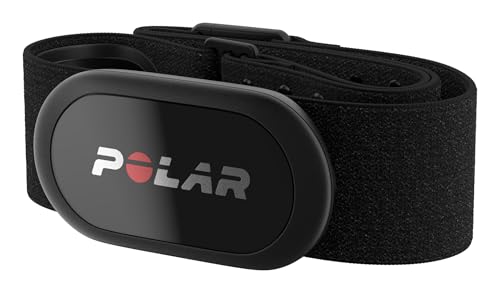
Looking for a heart rate monitor that combines accuracy and comfort? The Polar H10 Heart Rate Monitor Chest Strap is your solution. With its waterproof design and improved electrodes, you’ll enjoy a snug fit and reliable readings. It connects via Bluetooth, ANT+, and 5 kHz, allowing simultaneous connections to multiple devices. Thanks to its internal memory, you can store hours of data effortlessly. Recognized for top precision, it’s Polar’s most accurate heart rate sensor yet. Plus, it comes with a 2-year warranty and a long-lasting battery. Elevate your running experience with this must-have tool for tracking your heart rate!
Best For: Athletes and fitness enthusiasts seeking a highly accurate and comfortable heart rate monitor for a variety of workouts.
Pros:
- Highly accurate: Recognized as Polar’s most precise heart rate sensor, ensuring reliable readings.
- Versatile connectivity: Supports Bluetooth, ANT+, and 5 kHz connections, allowing simultaneous use with multiple devices.
- Comfortable design: Features improved electrodes and a snug fit with silicone dots for enhanced comfort during workouts.
Cons:
- Size limitations: Available only in sizes M-XXL, which may not fit all body types.
- Battery replacement: Requires a CR2025 button cell battery, which may need to be replaced over time.
- Price point: Higher than some basic heart rate monitors on the market, which may deter budget-conscious buyers.
Nike+ Standalone Sensor – One – Red

Designed for runners who want to enhance their training, the Nike+ Standalone Sensor – One – Red offers seamless run tracking for time, distance, pace, and calories burned. Simply place the sensor under the sockliner of your left Nike+ ready shoe, and you’re ready to go. It syncs with devices like the Nike+ SportWatch GPS and iPhones, providing real-time feedback as you run. You can also upload your data to Nikeplus.com to monitor your progress, join challenges, and connect with friends. If you’re looking for a reliable tool to elevate your running experience, this sensor is an excellent choice.
Best For: Runners looking to enhance their training with easy tracking of time, distance, pace, and calories burned.
Pros:
- Seamlessly syncs with various Nike+ devices for real-time feedback.
- Allows for easy monitoring of progress through data uploads to Nikeplus.com.
- Compatible with most Nike+ ready shoes, making it versatile for users.
Cons:
- Requires specific Nike+ ready shoes for functionality.
- Limited to certain compatible devices, which may exclude some users.
- Internet access is necessary to utilize the full features on Nikeplus.com.
Wahoo FitnessWahoo TRACKR Heart Rate Monitor

The Wahoo TRACKR Heart Rate Monitor is an ideal choice for serious runners seeking precise heart rate data to optimize their training. With over 100 hours of battery life, you won’t have to worry about running out during long sessions. Its ANT+ and Bluetooth connectivity make syncing with smartphones and fitness equipment a breeze. Plus, the slim, soft strap guarantees a secure fit, even during intense workouts. Intuitive LED indicators keep you informed about heart rate detection, battery status, and connectivity, so you can focus on your performance without distractions. Elevate your training with the Wahoo TRACKR!
Best For: Serious runners seeking precise heart rate data to optimize their training.
Pros:
- High-capacity rechargeable battery offers over 100 hours of active battery life.
- ANT+ and Bluetooth connectivity allows easy syncing with smartphones and fitness equipment.
- Slim, soft strap ensures a secure fit during intense workouts.
Cons:
- May not be suitable for casual users who don’t require detailed heart rate data.
- Limited compatibility with some older fitness equipment that does not support ANT+ or Bluetooth.
- Requires regular charging to maintain battery life, which may be inconvenient for some users.
Garmin Forerunner 265 Running Smartwatch

If you’re serious about improving your running form, the Garmin Forerunner 265 Running Smartwatch is an excellent choice thanks to its advanced training readiness score feature. This GPS smartwatch boasts a vibrant 1.3-inch AMOLED display and weighs just 47 grams, making it comfortable for all-day wear. With over 30 built-in activity profiles, it adapts workouts based on your performance and recovery. The morning report gives insights into your sleep and recovery, helping you optimize training. Plus, its IP68 water resistance and 20-hour GPS mode guarantee durability. Stay connected with smart notifications and make payments easily with Garmin Pay.
Best For: Runners and fitness enthusiasts looking for a versatile smartwatch that provides advanced training insights and health metrics.
Pros:
- Advanced training features like the training readiness score and personalized daily workouts enhance performance.
- Durable design with IP68 water resistance and a lightweight build makes it suitable for all-day wear and various activities.
- Smart notifications and Garmin Pay offer convenience for staying connected and making contactless payments on the go.
Cons:
- Battery life in GPS mode is limited to 20 hours, which may not be sufficient for ultra-long runs or activities.
- Requires a smartphone for some features like incident detection and smart notifications, limiting standalone usage.
- Limited internal storage of 8 GB may restrict the number of apps and music that can be stored directly on the device.
Factors to Consider When Choosing a Running Form Coach Sensor
When you’re picking a running form coach sensor, consider how well it works with your existing devices. You’ll want to check which metrics it tracks, ensuring they align with your goals. Don’t forget to evaluate comfort, battery life, and how easily the data syncs to your apps.
Compatibility With Devices
Choosing a running form coach sensor can be overwhelming, especially with the variety of options available, but ensuring compatibility with your devices simplifies the process. First, check that the sensor pairs seamlessly with your existing smartwatches and fitness apps for easy data transfer. Look for sensors using Bluetooth or ANT+ connectivity, as they offer broader compatibility with fitness equipment and mobile applications. It’s also beneficial to select sensors that support multiple connections simultaneously, enabling you to sync with a smartwatch and heart rate monitor at once. Additionally, consider those that automatically sync data post-workout, giving you accurate records effortlessly. Finally, verify compatibility with specific training platforms or apps to enhance your running analysis.
Metrics Tracked
Understanding the metrics tracked by running form coach sensors is essential for improving your performance. These devices typically monitor cadence, which counts the steps you take per minute, helping optimize your stride frequency. Stride length is another vital metric; it shows how far you run with each step, providing insights into your efficiency and speed. Ground contact time reveals how long each foot remains on the ground, allowing you to analyze your running mechanics and balance. Vertical oscillation measures your up-and-down movement during a run, with lower values indicating a more efficient form. Finally, the vertical ratio, calculated by dividing vertical oscillation by stride length, helps assess your overall running efficiency, with lower ratios suggesting better form and energy conservation.
Comfort and Fit
Metrics tracked by running form coach sensors can greatly enhance your performance, but comfort and fit are just as important to guarantee you can focus on your run without distractions. Look for a slim design that minimizes bulk and movement, ensuring the sensor stays securely in place. Adjustable straps or customizable sizes accommodate different body types, providing a snug fit without chafing. Choose breathable, moisture-wicking materials to enhance comfort and prevent overheating during long runs. Lightweight sensors reduce the feeling of weight, improving your overall experience. Finally, consider models with soft straps featuring silicone dots to prevent slipping and maintain contact with your skin, so you can concentrate on perfecting your running form.
Battery Life
When selecting a running form coach sensor, battery life often emerges as a key consideration. You want a device that lasts long enough to meet your training demands without constant interruptions for charging or battery replacement. Some sensors offer impressive battery lives—up to a year with replaceable batteries—while others might only last a few days on rechargeable options. Think about how often and how long you’ll use the sensor; longer battery life is especially beneficial for long-distance runners or multi-day events. Additionally, check the convenience of charging methods; sensors with easy-access battery compartments or wireless charging can greatly enhance your training experience. Choosing wisely guarantees you stay focused on improving your technique.
Data Syncing
As you explore running form coach sensors, consider how well they sync data with your devices, since effective data transmission can greatly enhance your training. Look for sensors that utilize Bluetooth and ANT+ technologies for seamless connections to your smartphones and fitness equipment. This guarantees efficient data transfer, allowing real-time metrics to improve your workouts. Additionally, choose devices that automatically sync stored workout data to fitness apps after your sessions, helping you analyze performance trends over time. Compatibility with popular fitness platforms can enrich your experience by providing detailed insights and analytics. Effective data syncing also enables continuous monitoring of key metrics like cadence, stride length, and heart rate, facilitating improvements in your running form and overall performance.
Waterproof Rating
Choosing a running form coach sensor with the right waterproof rating is essential for ensuring its durability and functionality. Look for IP ratings, which indicate the level of water protection. An IPX7 rating means your device can handle immersion in water up to 1 meter for 30 minutes. This is great for heavy rain or unexpected splashes. If you’re looking for even more protection, consider an IP68 rating, which allows for submersion beyond 1 meter, typically up to 3 meters, for longer durations. This is vital if you plan to use the sensor in various weather conditions or during activities like swimming. Make sure the waterproof rating matches your activity environment to prevent malfunctions or damage.
Ease of Use
After verifying your sensor can withstand various weather conditions with the right waterproof rating, it’s time to think about how easy it is to use. Look for sensors that install quickly; you want something that clips onto your clothing without fuss. Devices that automatically turn on and off save you from manual operation, making your workouts smoother. Check for compatibility with your smartwatch or fitness apps to guarantee seamless data syncing. A user-friendly interface is essential; clear feedback on performance metrics helps you analyze your running form effortlessly. Finally, opt for lightweight and compact designs that won’t distract you during training, allowing you to focus entirely on improving your technique.
Price and Value
When it comes to selecting a running form coach sensor, price and value are essential factors that can greatly impact your training experience. You’ll find sensors ranging from under $50 to over $150, so it’s vital to balance features with your budget. Consider the investment against potential performance improvements in cadence and stride length, which can enhance your efficiency. Look for devices with long battery life and low maintenance costs, as some can last up to a year. Sensors offering extensive data analysis and feedback justify a higher price, leading to better running form. Finally, check the warranty and customer support; a longer warranty often indicates better quality and adds to the overall value of your purchase.
