
Running at dawn, dusk, or under changing cloud cover calls for eyewear that adapts fast. The right pair of running sunglasses for low light can help reduce glare, improve contrast, and keep your vision comfortable without making the road look too dark.
Below, we focus on practical features that matter most for low-visibility miles: lens adaptability, anti-fog performance, secure fit, and lightweight comfort for everyday training.
Best 10 Running Sunglasses for Low Light Picks for 2026
Adaptive Low-Light Runner
ROCKBROS Photochromic Sports Sunglasses

- Photochromic lenses shift from 83% to 16% transmittance.
- 180° wraparound lens helps reduce blind spots.
- Includes myopia frame for prescription compatibility.
Best For: Runners who want one adaptable pair for changing light
Adaptive Lens Runner
Myiaur Polarized Photochromic Sunglasses for Running

- Photochromic tint adjusts to UV intensity.
- Polarized lens helps cut road glare.
- Wrap-around frame aims for a secure fit.
Best For: Runners dealing with changing light and glare
Multi-Lens Low-Light Option
HAAYOT 5-Lens Sports Sunglasses
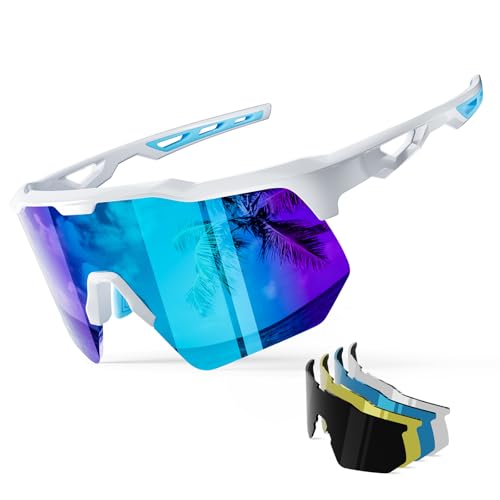
- Includes a yellow lens for night running.
- Five lenses cover many weather and light conditions.
- Very light 16.3g TR90 frame with adjustable fit.
Best For: Runners who want a dedicated low-light lens and extra versatility
Best Lightweight Pick
Lamicall 24g Polarized Sports Sunglasses

- Very light 24g TR90 frame for long runs.
- Adjustable nose pads and silicone temples for fit.
- Air holes help reduce fogging during activity.
Best For: Endurance runners who want an ultralight polarized wraparound with anti-fog airflow.
Best Open-View Pick
BEACOOL Polarized Sport Shield

- Rimless jacket design keeps the lower view open.
- Polarized REVO lenses improve clarity and contrast.
- Soft anti-slip nose pad helps during sweaty workouts.
Best For: Runners who want a lightweight, open-view sport shield with polarized protection.
Adaptive Low-Light Runner – ROCKBROS Photochromic Sports Sunglasses
If you want running sunglasses for low light that can also handle bright conditions later in the day, this ROCKBROS pair is built around photochromic lenses that shift from 83% to 16% transmittance. That makes them useful when your run starts in dim conditions and finishes in stronger sunlight, while the wide wraparound lens helps keep your view open and clear.
Best For: Runners who want one photochromic pair for changing light, with the option to add prescription lenses.
Pros:
- Photochromic lenses adapt from near-clear indoors to darker tint in bright light.
- Large 180° wraparound design gives broad coverage and fewer blind spots.
- Built-in myopia frame supports prescription lens compatibility.
- UV400 protection and impact-resistant polycarbonate help with outdoor use.
Cons:
- Prescription lenses are not included.
- Not polarized.
- May be more lens than you need if your runs are always in stable, low light.
Overall, this is a practical choice if you want a single pair that can start out workable in low light and then adjust as conditions brighten. The extra accessories and durable build also make it easy to keep in regular rotation for running and other outdoor sports.
Featherweight Vented Pick – Tifosi Intense Sport Sunglasses
For running sunglasses for low light where fog control and a lightweight feel matter, the Tifosi Intense keeps things simple and fast. Its vented lenses are designed to increase airflow and help prevent fogging, while the 23-gram frame and anti-bounce fit make it a comfortable option for steady miles.
Best For: Runners who want an ultra-light, ventilated pair that stays stable when they sweat.
Pros:
- Vented lenses increase airflow to help prevent fogging.
- Very light at 23 grams for all-day comfort.
- Hydrophilic nose pads improve grip as you sweat.
- Anti-bounce frame fit is helpful for running.
Cons:
- Lens color is AC Red, so it is not an especially clear low-light lens.
- Not polarized.
- Fit is one size fits most, so sizing flexibility is limited.
This is a strong choice if you care more about ventilation and comfort than heavy coverage or specialty low-light tinting. It is best viewed as a lightweight run-first option that handles fog and sweat well.
Secure Strap Photochromic Pair – ROCKBROS Photochromic Sports Sunglasses
These ROCKBROS sunglasses are a flexible pick for running sunglasses for low light because the photochromic lenses automatically adjust to changing conditions. The removable elastic band also adds security when you want a more locked-in fit, which can be useful on faster runs or rougher routes.
Best For: Runners who want a photochromic lens with an optional strap for extra security.
Pros:
- Photochromic lenses adjust automatically to changing light.
- Removable elastic band adds a more secure fit when needed.
- Lightweight, durable frame suits extended outdoor use.
- Non-slip nose pads improve stability during sweaty workouts.
Cons:
- Notes emphasize cycling and multi-sport use more than running-specific design.
- Only one size is listed, so checking fit matters.
- Not polarized.
If you want a running-ready pair that can be tightened down for extra security, this model stands out. The combination of adaptive lenses and an optional strap makes it more versatile than a basic sport sunglass.
Ventilated Fototec Runner – Tifosi Moab Lite Half Frame Cycling Sunglasses
If you are comparing running sunglasses for low light and want a lens that starts nearly clear, the Tifosi Moab Lite is the most directly aligned option here. Its Clarion Gold Fototec lens has a 12-50% VLT range and darkens in sunlight, while the vented design and no-slip contact points are made for active wear.
Best For: Runners who want a Fototec lens that begins lighter in low light and darkens as the sun comes out.
Pros:
- Clarion Gold Fototec lens starts nearly clear and darkens in sunlight.
- 12-50% VLT range makes it useful across changing light.
- Vented lenses help increase airflow and reduce fogging.
- Hydrophilic rubber nose pieces, ear pieces, and brow bar improve grip with sweat.
Cons:
- Medium-large fit may be too big for smaller faces.
- Not polarized.
- It is described as a cycling sunglass, even though it is also listed for running.
Among these options, this one is the strongest match if your main need is a lens that feels lighter in dim conditions before transitioning outdoors. The combination of Fototec tinting, venting, and sweat grip makes it a solid all-around training pick.
Adaptive Lens Runner – Myiaur Polarized Photochromic Sunglasses for Running
If you want running sunglasses for low light that can also handle bright midday conditions, this Myiaur pair is built around photochromic tinting that reacts to UV intensity. That makes it a practical choice for routes with shade, open road, and changing sun exposure, while the polarized lens helps reduce glare when light does pick up.
Best For: Runners who want one pair for mixed light conditions, from early starts to full sun.
Pros:
- Photochromic lenses adjust to UV light for changing run conditions.
- Polarized design cuts glare from roads and reflective surfaces.
- UV400 protection blocks 99.99% of UVA/UVB rays.
- Lightweight wrap-around frame is made for a secure, athletic fit.
Cons:
- Less specialized than a dedicated yellow lens for very low-light runs.
- Fit is described as medium, so sizing may not suit everyone equally.
This is a strong all-around option if you need adaptability more than a single fixed tint. For runners who move between dim shade and bright stretches, the photochromic approach is the main advantage.
Ultra-Light Transition Pick – ROCKBROS 24g Photochromic Sports Sunglasses
For running sunglasses for low light that can also darken when the sun comes out, this ROCKBROS model uses a fast photochromic lens with a claimed 5-second response. It starts clear enough for dawn and night use, then shifts darker under stronger UV, which makes it a flexible choice for runners who train across changing outdoor conditions.
Best For: Runners and cyclists who want an ultralight pair that transitions quickly between dim and bright light.
Pros:
- Photochromic lenses turn clear indoors or at night and darken in strong UV.
- Fast 5-second response helps with quick light changes.
- 24g TR90 frame is extremely light and built for comfort.
- Wrap-around design and rubber nose pads help keep the glasses stable and secure.
Cons:
- Non-polarized lens may be less ideal than polarized options for intense glare.
- Better suited to transition use than to a dedicated fixed low-light tint.
This pair stands out for low weight and fast adaptation rather than a specialized night-running lens. If your routes move from dawn darkness to bright daylight, it offers a simple one-pair solution.
Multi-Lens Low-Light Option – HAAYOT 5-Lens Sports Sunglasses
If your priority is running sunglasses for low light, this HAAYOT set is the most directly tailored of the group because it includes a yellow lens designed to enhance contrast for night running. The kit also gives you clear, blue, black polarized, and color lenses, so you can swap based on weather, glare, and time of day instead of relying on one fixed tint.
Best For: Runners who want a low-light lens option plus multiple interchangeable lenses for different conditions.
Pros:
- Yellow lens is specifically included for night running and contrast.
- Five interchangeable lenses cover sunny, cloudy, foggy, rainy, and glare-heavy conditions.
- Ultra-light TR90 frame weighs just 16.3g for all-day comfort.
- Adjustable soft rubber nose pads and non-slip temples help keep the fit secure.
Cons:
- Only the black lenses are polarized, not every included lens.
- More lens swapping means more parts to manage on the go.
This is the most versatile option if you want one kit that can truly handle low-light running as well as daytime training. The yellow lens is the key feature, while the rest of the set adds broad everyday utility.
Best Stability Pick – TIJN Anti-Slip Sport Sunglasses
If you want running sunglasses for low light that still stay locked in place, the TIJN wraparound pair is built around fit and stability. The non-polarized brown mirrored lenses keep vision true to life, while the panoramic spherical shape helps reduce blind spots for outdoor training.
Best For: Runners who want a secure, lightweight wraparound frame that also works for cycling, hiking, and other mixed-sport use.
Pros:
- Triple anti-slip design with non-slip temple tips, adjustable nose pads, and flexible CP arms.
- Ultra-light TR90 frame and shatterproof PC lenses for all-day comfort.
- Wraparound HD spherical lenses help widen coverage and reduce blind spots.
- Helmet- and visor-compatible arms make it easy to pair with headwear.
Cons:
- Non-polarized lenses may not suit buyers who specifically want polarized glare filtering.
- Mirror coating and brown lens tint are geared more toward sporty style than a dedicated low-light boost.
Overall, this is a strong choice if your priority is a stable, lightweight sport sunglass that can handle running plus other outdoor activities. It is less about specialty low-light optics and more about comfort, grip, and broad outdoor versatility.
Best Lightweight Pick – Lamicall 24g Polarized Sports Sunglasses
For running sunglasses for low light and changing outdoor conditions, the Lamicall pair focuses on clarity, comfort, and a wider field of view. The TAC HD polarized lens is made to filter stray light and improve contrast, while the 24g TR90 frame keeps the glasses easy to wear for longer sessions.
Best For: Runners and cyclists who want an ultralight, adjustable wraparound option with polarized lenses and anti-fog airflow.
Pros:
- 24g TR90 frame keeps weight very low for running and endurance use.
- Three-level adjustable nose pads and silicone temples help dial in fit.
- Air holes on both sides are designed to improve circulation and reduce fogging.
- Polarized TAC HD lenses block 99.9% of UVA/UVB and filter stray light.
Cons:
- Gray polarized lenses may not be the most specialized choice for true low-light conditions.
- Wraparound sport styling may feel more performance-focused than casual.
In practice, this model is strongest for runners who want a very light frame and dependable vision control in bright to mixed light. The included case and accessories also make it a convenient grab-and-go training option.
Best Open-View Pick – BEACOOL Polarized Sport Shield
If you are shopping for running sunglasses for low light with a sport-shield feel, the BEACOOL pair leans into wide coverage and contrast-friendly lens treatment. Its colorful HD polarized REVO lens is designed to improve clarity and reduce reflected light, while the rimless jacket frame keeps the lower field of view open.
Best For: Active runners and outdoor athletes who want a lightweight rimless build with polarized lens performance.
Pros:
- 100% UV400 protection with colorful HD polarized REVO lenses.
- Rimless jacket frame preserves a clear lower vision field.
- Soft, anti-slip rubber nose pad helps keep the glasses in place during sweat.
- Lightweight PC frame and shatterproof TAC lenses suit high-movement sports.
Cons:
- The sporty rimless design may not provide as much enclosed coverage as a full wrap frame.
- Fit sentiment is neutral, so comfort may vary by face shape.
This is a good option if you want a lightweight, visually open sport sunglass with polarized lenses and strong UV protection. It is best viewed as a versatile outdoor performance pair rather than a specialized low-light running solution.
How We Picked the Best Running Sunglasses for Low Light
We prioritized models that are useful in dim, variable conditions rather than just bright sun. That means photochromic or lightly tinted lenses, fog resistance, stable frames, UV protection, and designs that stay put during fast movement. We also considered whether each pair works well for mixed-use training, commuting, and cross-training.
Quick Comparison
For low-light runs, photochromic lenses are usually the most versatile because they adjust as conditions change. Polarized lenses can cut glare, but they are not always the best choice at very early dawn or heavily shaded routes if they darken vision too much. Ultralight frames and vented designs are especially valuable when you need clear sight and minimal distraction.
Key Buying Factors for Running Sunglasses for Low Light
Lens Type
Photochromic lenses are the top all-around choice for Running Sunglasses for Low Light because they can brighten in shade and darken when the sun appears. If you mostly run on open roads with reflective glare, polarized options may help. For mixed conditions, look for lenses that balance contrast with enough brightness to keep hazards visible.
Fit and Stability
A secure fit matters more than style. Look for wraparound coverage, non-slip nose pads, and temple grips so the glasses do not bounce on intervals or hills. If you wear a hat or headband, make sure the frame sits comfortably with both.
Fog Control and Ventilation
Low-light runs often happen in cooler air, which can increase fogging. Vented lenses, anti-fog coatings, and frames that allow airflow can keep your view clearer when your pace changes or humidity rises.
Weight and Coverage
Light frames reduce pressure during longer runs. At the same time, enough lens coverage helps shield your eyes from wind, dust, and debris. The best balance is a frame that feels barely there but still offers reliable coverage.
Who Should Buy Which Running Sunglasses for Low Light?
If you run before sunrise, after sunset, or through frequent shade, choose photochromic Running Sunglasses for Low Light first. If your routes include bright open roads or water, polarized lenses may be a better fit. If comfort is your top priority, go with the lightest frame that still has a secure grip and good ventilation. Runners who wear prescription lenses should also check for compatible frames or insert options before buying.
In short, the best choice depends on your light conditions and pace. Focus on visibility, comfort, and stability, and you will get more useful miles from every run.
