
Smart running insoles can put step counts, pressure data, and gait feedback underfoot. But a sensing mat is not necessarily a complete tracker, and feature claims do not always explain what hardware or app you need.
These seven options span coaching-focused insoles and simpler pressure-sensing accessories. Use the guide below to match the features you want with a setup you can actually use.
Best 7 Smart Running Insoles with Sensors Picks for 2026
Best Complete Running System
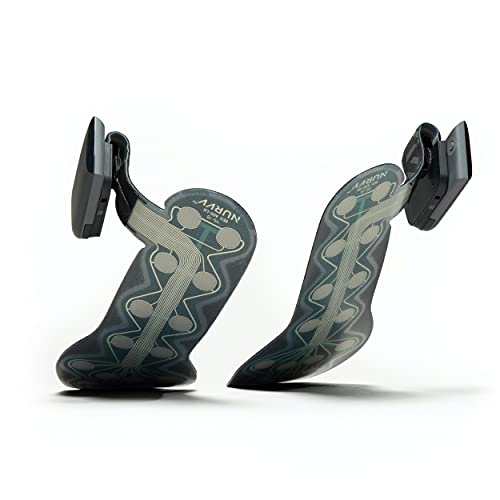
- Two insoles with 32 sensors
- Built-in GPS and app coaching
- Tracks footstrike, pronation, and cadence
Best For: Runners seeking a ready-to-use coaching system
Best Thin Integration Sensor
Weather-Protected Pressure Sensor Mat

- 0.45 mm flexible profile
- Weather-protected construction
- Listed for gait and step sensing
Best For: Custom intelligent-insole projects needing a thin sensor
Best Customizable Gait Sensor
Intelligent Pressure Sensor Insole
- Wearable-integration design
- Lists cadence and touchdown time
- Customizable sensing functions
Best For: Custom wearables focused on gait data
Best Stated Bend Durability
Smart Insole Pressure Sensor Mat
- Over one million stated pressure cycles
- Lists footstrike and contact time
- 2.54 mm profile for integration
Best For: Custom footwear projects emphasizing repeated-use gait sensing
Everyday Step Tracker

- Pressure-based step tracking
- Designed for several shoe styles
- Indoor and outdoor use
Best For: Walkers and casual runners tracking daily activity
Training Metrics Sensor
Sensing Mat for Gait Monitoring
- Lists cadence and landing metrics
- Lightweight, bendable mat
- Supports wearable customization
Best For: Runners or developers seeking detailed gait sensing
Ultra-Thin Sensor
- Stated 0.45 mm thickness
- Lists cadence and gait metrics
- Claimed one-million-cycle durability
Best For: Thin smart-insole sensor projects and gait setups
Best Complete Running System – NURVV Run Smart Insoles
Among smart running insoles with sensors, NURVV Run is the most complete ready-to-use option here: two insoles use 32 sensors to track running mechanics, while built-in GPS and the coaching app add pace, distance, and real-time guidance.
Best For: Runners who want form metrics and coaching in one connected system.
Pros:
- Tracks pronation, footstrike, step length, balance, and cadence.
- Built-in GPS measures distance; the app provides coaching indoors or outdoors.
- Supports iOS, Android, Garmin, Apple Watch, Strava, and Apple Health.
Cons:
- Listed here in medium only; confirm sizing before ordering.
- Uses two included lithium-ion batteries, so charging is part of ownership.
Choose these if you want an integrated running tracker rather than a sensor mat for a custom project. Form data may help guide training adjustments, but it cannot guarantee injury prevention.
Best Thin Integration Sensor – Weather-Protected Pressure Sensor Mat
If you are comparing smart running insoles with sensors for a wearable build, this pressure-sensing mat stands out for its stated 0.45 mm thickness and weather-protected construction. The listing describes step and calorie tracking alongside gait measures such as cadence, landing method, and knee load index.
Best For: Developers or technically inclined buyers integrating a thin sensor into an intelligent insole.
Pros:
- Thin, flexible 0.45 mm profile responds to 400 g of pressure.
- Described as weather-protected and rated for more than one million uses.
- Supports gait-related measures including posture, cadence, and landing method.
Cons:
- Listed as one pressure sensor, not a complete pair of running insoles.
- Notes specify DC 3.3 V operation but do not describe an included app or ready-to-use display.
Its thinness and stated durability make it worth considering for a custom setup. Confirm the required electronics and software before buying if you expect a standalone fitness tracker.
Best Customizable Gait Sensor – Intelligent Pressure Sensor Insole
This entry in the smart running insoles with sensors category is presented as a multipurpose sensing mat that can be integrated into wearable products. Its listed functions include step and calorie tracking plus gait measures such as cadence, touchdown time, landing method, and knee load index.
Best For: Buyers planning a customizable wearable that captures running and walking data.
Pros:
- Lists real-time running-posture, cadence, and touchdown-time monitoring.
- Customizable for different applications and wearable products.
- Described as sensitive and durable for prolonged use.
Cons:
- Listing specifies one item, not a matched pair.
- No companion app, power setup, or standalone readout is specified in the notes.
This is better suited to an integration project than to someone seeking a plug-and-play coaching insole. Check what additional components your planned setup requires.
Best Stated Bend Durability – Smart Insole Pressure Sensor Mat
For smart running insoles with sensors built around custom footwear or rehabilitation applications, this mat emphasizes gait tracking and repeated-use durability. The listing cites a 2.54 mm profile, bend resistance, and a lifespan exceeding one million pressure cycles.
Best For: Wearable-development projects prioritizing footstrike and ground-contact data.
Pros:
- Lists footstrike pattern, stride cadence, ground contact time, and knee load distribution.
- Rated in the listing for more than one million pressure cycles.
- Supports customizable integration into smart footwear applications.
Cons:
- Sold as one unit; a pair is not specified.
- No included components, companion app, or complete tracking system are described.
Consider it as a sensing component rather than a finished training accessory. The stated metrics are promising, but verify how they will be collected and displayed in your intended build.
Everyday Step Tracker – GOWENIC Smart Insole
For shoppers comparing smart running insoles with sensors, this GOWENIC model focuses on everyday step tracking. Its pressure-sensing mat is described as slim and flexible, with intended use in athletic shoes, sneakers, and casual footwear.
Best For: Walkers and casual runners who want step and movement tracking indoors or outdoors.
Pros:
- Built-in pressure sensor tracks footfalls and step count.
- Designed to fit a range of everyday and athletic shoes.
- Product notes describe step frequency, pressure distribution, and movement-rhythm feedback.
Cons:
- Requires connection to a compatible device; compatibility details are not specified.
- The listing does not specify the companion app or how data is displayed.
This is the straightforward activity-tracking option of the three, but check device compatibility before buying.
Training Metrics Sensor – Sensing Mat for Gait Monitoring
Among smart running insoles with sensors, this sensing mat is pitched toward more detailed training data. The supplied notes list step and calorie tracking alongside gait measures such as cadence, landing method, and touchdown time.
Best For: Runners interested in gait metrics or developers incorporating a pressure sensor into a wearable.
Pros:
- Listed metrics include running posture, cadence, landing method, and touchdown time.
- Described as lightweight, thin, and bendable.
- Supports customization for different wearable applications.
Cons:
- The notes describe it as a sensor for integration into wearables, so a ready-to-use insole setup is unclear.
- App, device compatibility, and data-display details are not specified.
Its appeal is the breadth of listed gait measures; confirm what hardware or software is needed to access them.
Ultra-Thin Sensor – ZNX-01 Sensing Mat
If shoe fit is your priority when comparing smart running insoles with sensors, the ZNX-01 stands out for its stated 0.45 mm thickness. This flexible pressure-sensing mat is intended for step counting and gait monitoring in smart-insole applications.
Best For: Buyers seeking a thin sensor for a smart-insole project or running-gait setup.
Pros:
- Listed thickness is 0.45 mm.
- Product notes identify running posture, landing method, cadence, and knee load index as gait measures.
- Manufacturer claims durability beyond one million sensing cycles.
Cons:
- Described as a sensing mat for smart wearables, not clearly as a complete connected insole.
- The notes do not specify the app, connection method, or compatible devices.
The thin profile is its clearest differentiator. Verify the components needed to turn its sensor readings into usable data.
How We Picked the Best Smart Running Insoles with Sensors
We compared the seven selected listings by their stated purpose: running metrics and coaching, step counting, pressure sensing, or gait monitoring. We also considered whether each appears to be a ready-to-use insole or a sensing mat that may need additional electronics. Product names alone cannot verify accuracy, injury-prevention claims, app quality, or what is included in the box, so confirm those details with the seller before purchasing.
Quick Comparison
The Run Smart Insoles listing emphasizes an app, real-time coaching, and pace, distance, time, and calorie metrics. The other six listings focus mainly on pressure sensors, step counting, and gait monitoring or analysis; several describe a sensing mat or shoe accessory rather than a complete tracking system. If you want guided workouts, start by checking the coaching option’s app and device requirements. If you want pressure or step data, compare the sensor-focused options by the actual outputs they provide, not by similar-sounding names.
Key Buying Factors for Smart Running Insoles with Sensors
Complete System or Sensor Component?
Ask whether the purchase includes a pair of insoles, one insole, or only a sensing mat. A pressure-sensing layer may require a separate controller, battery, wireless connection, or compatible app before it can display useful data. Check the package contents and setup instructions, especially for listings described as shoe accessories.
Metrics You Can Use
Step counting is different from gait analysis. If you want left-right balance, foot-strike patterns, pressure distribution, or cadence, look for those outputs explicitly in the app or product documentation. Likewise, verify how pace and distance are calculated: an insole with a “GPS” claim may rely on a connected phone rather than its own GPS hardware. Treat calorie figures and injury-risk prompts as estimates, not medical advice.
Fit, Durability, and Data Access
Check sizing, trim-to-fit guidance, thickness, and whether the sensors can be worn comfortably inside your running shoes. Review battery life, charging method, sweat protection, and whether the insole can be cleaned without damaging the electronics. Before committing, check phone compatibility, subscription costs, data export, and the return policy; a tracker is less useful if its data is hard to view or the insole changes your shoe fit.
Who Should Buy Which Smart Running Insoles with Sensors?
Choose the coaching-focused option if you want an app-led running experience and can verify its compatibility and included hardware. Consider the step-counting and pressure-sensor options if basic activity or foot-pressure data is your priority. A sensing mat makes the most sense for a buyer willing to confirm—or assemble—the rest of the tracking setup. If you need clinically reliable gait assessment or help with pain, consult a qualified professional rather than relying on consumer insole claims.
