
Winter trails can change from packed snow to exposed rock to slick ice in a single run. The right add-on traction helps you keep moving without relying on a winter-specific shoe for every outing.
These nine options cover a range of grip styles and intended uses. Match the device to your usual surface, then check how securely it fits your running shoes.
Best 9 Trail Running Shoe Traction Devices Picks for 2026
Best for Icy Climbs

- 18 stainless steel spikes
- Forefoot strap helps secure fit
- Includes puncture-proof carry bag
Best For: Icy climbs and slick descents
Lightweight Studded Pick
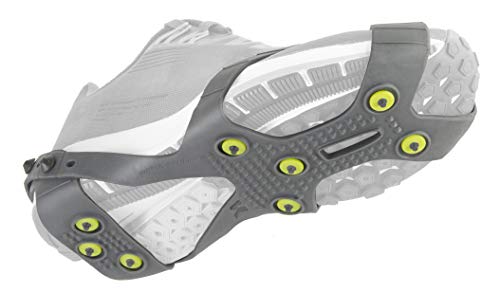
- 4.5 ounces per pair
- 16 replaceable carbide studs
- Adjustable fit for varied footwear
Best For: Lightweight road and trail traction
Best for Mixed Terrain

- 12 spikes per foot
- Tips, steps, and lugs grip varied surfaces
- Open design helps shed snow
Best For: Mixed-surface winter runs and hikes
Lightweight Trail Pick
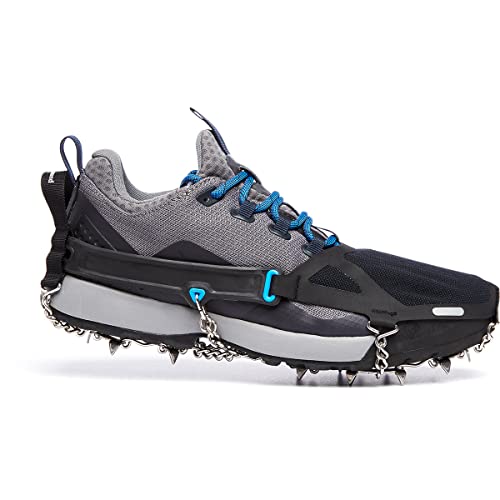
- 14 stainless-steel spikes per foot
- Snow-blocking softshell toe cover
- Packable with included carry bag
Best For: Winter trail runs and fast alpine approaches
Running-Shoe Fit Pick

- Carbide spikes plus stainless-steel coils
- Over-foot straps secure the fit
- Reflective heel and side straps
Best For: Snowy or icy running workouts
Backcountry Versatility Pick

- 12 stainless-steel spikes per foot
- Reinforced elastomer harness
- Packable with included tote sack
Best For: Trail running and winter hiking on icy terrain
Running-Focused Pick
STABILicers Run Traction Cleats
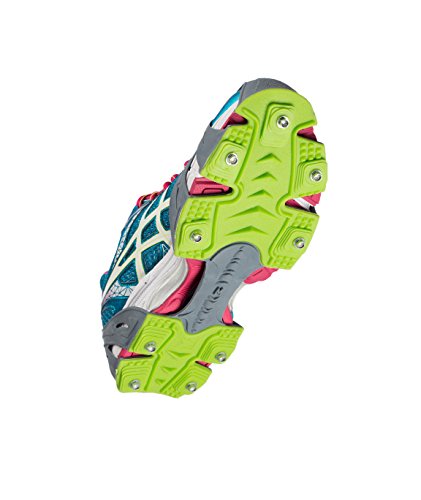
- Heel and forefoot cleat coverage
- Tension-fit running-shoe bindings
- Replaceable heat-treated cleats
Best For: Snowy or icy runs when the listed Small size fits
Adjustable Forefoot Pick
7-Point Crampon Traction Cleats
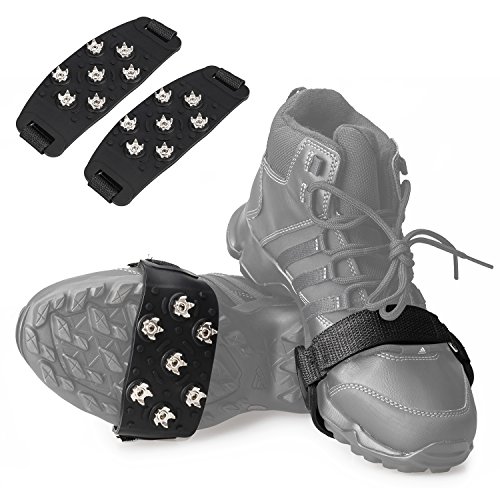
- Adjusts to footwear sizes 3.5–10.5
- Seven forefoot spikes
- Intended for low-angled snow and ice
Best For: Adjustable forefoot traction on low-angled terrain
Packable Multi-Use Pick

- Folds into an included portable bag
- Removable over-foot strap
- Medium 5–8; Large 8–11
Best For: Packable traction for mixed winter walking and trail outings
Best for Icy Climbs – Hillsound Trail Crampon Ultra
Hillsound Trail Crampon Ultra I Ice Cleat Traction System for Hiking & Trail Running (Medium)
Check Price On AmazonFor trail running shoe traction devices that can also move between hiking shoes and winter boots, the Hillsound Trail Crampon Ultra offers an aggressive option. Its 18 heat-treated stainless steel spikes include three 2/3-inch heel spikes designed to bite on icy climbs and steady slick descents.
Best For: Runners and hikers who need substantial grip on icy, variable terrain.
Pros:
- 18 stainless steel spikes provide traction, including longer heel spikes for descents.
- A forefoot Velcro strap helps keep the fit secure during technical movement.
- Double-link side chains, a reinforced toe bail, and an included puncture-proof carry bag add durability and convenience.
Cons:
- At a listed 14.9 ounces, it is heavier than the other listed options.
- Its aggressive spikes may be more traction than a runner needs for less icy outings.
Choose this model when secure footing on ice matters more than keeping your kit as light as possible.
Lightweight Studded Pick – Korkers Ultra Runner
The Korkers Ultra Runner stands out among trail running shoe traction devices for its listed 4.5-ounce-per-pair weight. Sixteen replaceable push-through carbide studs are positioned for grip on roads or trails, while an adjustable strap fits over footwear from running shoes to outdoor boots.
Best For: Runners who want lightweight, replaceable-stud traction for roads and trails.
Pros:
- Listed at just 4.5 ounces per pair.
- Sixteen carbide studs are replaceable.
- The adjustable strap offers a custom fit across a range of footwear.
Cons:
- The one-size-fits-most range is specified as women’s 6 through men’s 14, so shoppers outside it need another option.
- Replacing worn studs adds a maintenance step.
This is the weight-conscious choice here if you prefer a studded setup and value the ability to replace its traction points.
Best for Mixed Terrain – Kahtoola EXOspikes
If your winter route shifts between icy roads, frozen trails, and loose ground, the Kahtoola EXOspikes are trail running shoe traction devices built for that variety. Each foot has 12 spikes combining tungsten carbide tips, aluminum steps, and TPU lugs for different surfaces.
Best For: Winter runners and hikers moving across mixed icy, rocky, and loose terrain.
Pros:
- Three-part spike design addresses ice, uneven surfaces, and loose terrain.
- An open TPU matrix is designed to shed snow.
- The reinforced elastomer harness remains stretchy in temperatures down to -22°F (-30°C).
Cons:
- The listed large size weighs 10.4 ounces, more than the listed weight of the Korkers pair.
- Fit depends on selecting the appropriate size using the product’s sizing chart.
The EXOspikes make the most sense when your route changes underfoot and you want one traction design intended for several winter surfaces.
Lightweight Trail Pick – BLACK DIAMOND Distance Spike
For runners comparing trail running shoe traction devices, the BLACK DIAMOND Distance Spike pairs 14 stainless-steel spikes per foot with a low-bulk design for snowy and icy trails.
Best For: Winter trail running, fastpacking, and icy alpine approaches.
Pros:
- 14 stainless-steel spikes per foot grip frozen and mixed terrain.
- Softshell toe cover helps keep snow out; flexible harness secures the fit.
- Packable design includes a carry bag.
Cons:
- The listed option is Large, so check sizing before ordering.
- Its aggressive spikes may be more than you need for occasional light snow.
Choose this pair when low bulk matters but your route still calls for substantial spike coverage. The covered toe is a useful distinction for snowy outings.
Running-Shoe Fit Pick – Yaktrax Run Traction Cleats
The Yaktrax Run is one of the trail running shoe traction devices here built specifically to fit over running shoes. It combines carbide-steel spikes with stainless-steel coils for traction on snow and ice.
Best For: Runners continuing outdoor training on snowy or icy routes.
Pros:
- Spikes and coils provide all-direction traction.
- Formed toe and over-foot straps help hold the cleats in place.
- Reflective heel and side straps add visibility.
Cons:
- More components cover the shoe than a simple spike-and-chain harness.
- Check the shoe-size range for the selected size before buying.
This is the running-focused choice if a strapped fit and mixed spike-and-coil grip appeal to you. Match the cleat size to your shoes rather than relying on your usual shoe size alone.
Backcountry Versatility Pick – Kahtoola MICROspikes
Kahtoola MICROspikes Footwear Traction for Winter, Snow & Ice Trail Hiking - Red - Small
Check Price On AmazonKahtoola MICROspikes suit buyers who want trail running shoe traction devices that can also serve on winter hikes. Twelve stainless-steel spikes per foot target icy terrain, while the elastomer harness stretches over footwear.
Best For: Mixed winter outings that include trail running, hiking, or backpacking.
Pros:
- Eight forefoot and four heel spikes per foot provide traction across the sole.
- Reinforced eyelets and a toe bail strengthen key harness areas.
- Flexible chains and an included tote sack make them packable.
Cons:
- Check Kahtoola’s sizing chart to fit your chosen shoes or boots.
- The listed notes conflict on warranty length; confirm current terms before purchase.
These are a practical crossover option when your winter plans extend beyond running. Their spike layout and reinforced harness are the main reasons to consider them for varied icy trails.
Running-Focused Pick – STABILicers Run Traction Cleats
Among trail running shoe traction devices, the STABILicers Run is designed specifically to fit over running shoes on snow and ice. Its heel and forefoot cleats provide full-sole coverage without altering your stride, according to the product notes.
Best For: Runners who want traction at both the heel and forefoot on snowy or icy routes.
Pros:
- Lightweight, running-specific design with full-sole cleat coverage.
- Tension-fit bindings hold the cleats over running shoes.
- Heat-treated cleats are replaceable; replacements are sold separately.
Cons:
- The listed Small size fits only women’s 7.5–9 or men’s 6–7.5.
- Replacement cleats require a separate purchase.
This is the most running-oriented option here if the listed size fits your shoes. Check sizing before buying, since a secure fit matters as much as cleat coverage.
Adjustable Forefoot Pick – 7-Point Crampon Traction Cleats
These trail running shoe traction devices offer an adjustable fit for footwear sizes 3.5–10.5, with seven spikes positioned at the forefoot. The supplied notes describe them for walking, jogging, and crossing snowfields or icefields on low-angled slopes.
Best For: Buyers who prioritize adjustable sizing and forefoot grip for low-angled snowy or icy terrain.
Pros:
- Adjusts across the stated footwear size range of 3.5–10.5.
- Seven forefoot spikes provide traction where they are positioned.
- Listed as compatible with sports shoes, hiking shoes, and mountaineering boots.
Cons:
- Forefoot-focused spikes do not provide the full-sole cleat coverage of a heel-and-forefoot design.
- The stated application is low-angled snowfields and icefields, not steeper terrain.
Choose this option for its broad stated size adjustment, but consider whether forefoot-only coverage matches the surfaces and movements you expect on your route.
Packable Multi-Use Pick – Sfee Ice Cleats with Straps
For shoppers comparing trail running shoe traction devices that also suit everyday winter outings, these Sfee ice cleats are listed for running, hiking, and walking on snow and ice. A flexible frame, removable over-foot strap, and included portable bag make them practical to carry between uses.
Best For: Mixed winter walking and trail outings when packability and a strap-secured fit are priorities.
Pros:
- Includes a portable bag and folds down for storage.
- Rubber foot frame and removable over-foot strap help secure the fit.
- Offered in Medium for shoe sizes 5–8 and Large for sizes 8–11.
Cons:
- The stated size ranges stop at 11 and do not cover every shoe size.
- The product notes emphasize walking use as well as running, rather than a running-specific design.
This is a versatile choice if you want one portable pair for several winter activities. Match the stated size range to your footwear before relying on the straps for fit.
How We Picked the Best Trail Running Shoe Traction Devices
We looked at the traction style and intended terrain of each selected device, with an emphasis on the conditions runners actually encounter: hardpack, shallow snow, ice, and mixed trails. We also considered whether the design is aimed at running or better suited to slower hiking, how easily it can be carried when conditions change, and the importance of a secure fit. This is a buying comparison, not a claim that every model was field-tested or will suit every shoe.
Quick Comparison of Trail Running Shoe Traction Devices
Start with the surface underfoot rather than the biggest spike. For mostly firm, mixed routes with occasional slick patches, consider lower-profile options such as Kahtoola EXOspikes, Yaktrax Run, or STABILicers Run. For snow-covered trails and more persistent ice, compare the more aggressive spike-style options, including BLACK DIAMOND Distance Spike, Hillsound Trail Crampon Ultra, and Kahtoola MICROspikes. Korkers Ultra Runner and the two generic cleat listings warrant a closer look at their specific attachment systems, sizing information, and intended use before you choose them for running. None of these categories guarantees grip on every kind of ice.
Key Buying Factors for Winter Trail Grip
Match the Traction to Your Route
Shorter, lower-profile gripping elements are generally easier to live with when a route alternates between snow, dirt, and rock. Deeper metal spikes can offer more purchase on sustained snow and ice, but may feel awkward on bare ground and can be a poor choice for indoor floors or delicate surfaces. Avoid assuming that a device marketed for walking or mountaineering will stay comfortable and secure at a running cadence.
Check Fit and Retention
Use each maker’s size chart with the exact shoes you plan to wear; a bulky winter shoe may fit differently from a lightweight trail runner. The harness should hold the traction device centered beneath your foot without folding the shoe, slipping off the heel, or shifting during turns. Try it on at home and take a short test run before committing to a remote route.
Consider Weight, Wear, and Storage
If you will carry traction for only part of a run, packability matters. Check how the gripping elements attach, inspect the harness for damage, and rinse away salt or grit as directed by the maker. Replace a device that no longer sits securely or has excessively worn traction points.
Who Should Buy Which Trail Running Shoe Traction Devices?
Choose a lower-profile running-oriented option if your usual route is partly clear and you want occasional winter grip. Choose a spike-style device when snow or ice covers most of the trail and traction takes priority over smooth running on exposed surfaces. If you mainly walk or hike, a more substantial option may be appropriate, but verify its fit and terrain limits. On steep, technical, or unpredictable ice, turn around when needed: add-on traction does not replace judgment or mountaineering equipment.
