
Cold-weather camping demands more than a basic rainfly. The right tent must balance wind protection, moisture resistance, insulation, ventilation, interior space, and setup effort for the conditions you expect to face.
We selected 10 options ranging from compact four-season backpacking tents to spacious family shelters and stove-compatible hot tents, so you can match your shelter to your trip, group size, and winter camping style.
Best 10 Camping Tents for Cold Weather Picks for 2026
Best Lightweight Winter Pick
Clostnature 4 Season Backpacking Tent
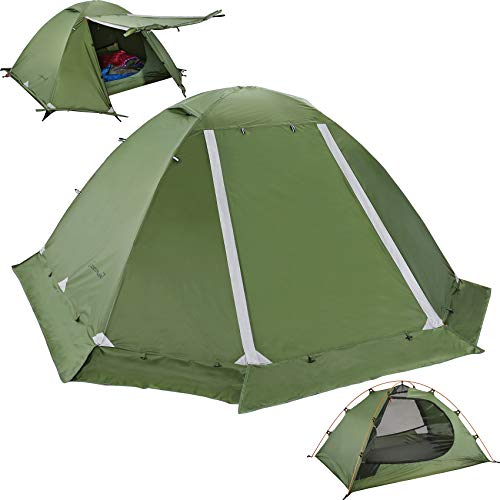
- PU 5000-coated fly and bathtub floor
- Two doors, two vestibules, and snow flaps
- 5.33-pound minimum trail weight
Best For: Two-person cold-weather backpacking
Best Value Backpacking Tent
Forceatt 2 Person Waterproof Tent

- 3000 mm waterproofing and welded floor
- Two doors, two vestibules, and aluminum poles
- 5.5-pound weight with three-minute setup
Best For: Two-person hiking and shoulder-season backpacking
Best Spacious Stove-Ready Shelter

- Roomy bell-tent design for four to seven campers
- Built-in stove jack for winter heating
- Mesh ventilation and PVC floor
Best For: Family camping, hunting, and glamping base camps
Best for Weather-Sheltered Entry

- Large full-fly vestibule adds covered storage
- WeatherTec seam construction helps resist leaks
- Pre-attached poles set up in under five minutes
Best For: Three-season campers wanting headroom and a protected entrance
Best Lightweight Backpacking Pick

- Lightweight 5.7-pound backpacking design
- Aluminum poles, guylines, and welded floor support stability
- Two vestibules and three-minute setup add convenience
Best For: Two-person hikers prioritizing portability and wind protection
Best Family Instant Tent
FanttikOutdoor 6-Person Cabin Tent

- Sets up in under 60 seconds
- Roomy 6-person cabin layout
- Water-resistant with wind-supporting guy lines
Best For: Families and car campers in cool, wet conditions
Best Lightweight Winter Backpacking Tent
BISINNA 4-Season 2-Person Tent

- Snow skirt and 4-season construction
- PU 3000mm waterproof coating
- Two doors and double-layer ventilation
Best For: Couples or solo backpackers camping in snow and cold
Best Ventilated Cold-Weather Tent
BISINNA Classic 2-Person 4-Season Tent

- 4-season snow-skirt design
- Two doors and two windows
- Freestanding aluminum-pole setup
Best For: Two-person camping with a focus on airflow and access
Best Lightweight Winter Pick – Clostnature 4 Season Backpacking Tent
For backpackers comparing camping tents for cold weather, the Clostnature 4 Season Tent offers a practical balance of weather protection, packability, and usable interior space. Its sealed polyester construction, PU 5000 coating, snow flaps, and double-layer doors are designed for four-season trips, while the minimum trail weight is listed at 5.33 pounds.
Best For: Two-person backpacking, hiking, mountaineering, and cold-weather trips where low packed weight matters.
Pros:
- Snow flaps, sealed seams, and a PU 5000-coated rain fly and bathtub floor provide substantial weather protection.
- Two doors and two vestibules improve entry and offer storage for shoes or backpacks.
- Freestanding aluminum-pole design is intended for quick setup, with a listed assembly time of about three minutes.
- Includes a pole emergency repair kit and a one-year guarantee.
Cons:
- At 6.28 pounds packed, it is not the lightest option for minimalist backpacking.
- The 45.8-inch maximum height is better suited to sleeping and sitting than standing.
- The supplied details list a 1500 mm water-resistance rating despite the product description’s stronger PU 5000 coating claim.
Choose this model when you want a compact two-person shelter with cold-weather features without moving to a much heavier base-camp tent. The dual vestibules and repair kit add useful practicality for extended trips.
Best Family Hot Tent – Inflatable Tent with Skylight and Stove Jack
This inflatable shelter stands out among camping tents for cold weather because it combines a built-in stove jack with a roomy, stand-up interior. The 420D Oxford fabric has PU3000 waterproofing, while TPU air beams allow setup with the included high-pressure pump rather than traditional poles.
Best For: Family camping, festivals, and cold-weather base camps for four to six people who want stove compatibility and standing room.
Pros:
- Built-in stove jack supports use with a wood-burning stove for heating and cooking.
- Approximately 68 square feet of floor area and a listed 79-inch maximum height provide generous living space.
- Panoramic PVC skylight includes an interior privacy curtain.
- Dual doors, mesh windows, and all-around mesh promote airflow and bug protection.
Cons:
- At 31 pounds, it is far less suitable for backpacking than the smaller aluminum-pole tents.
- Inflation requires the included high-pressure pump and dual valves, adding a setup step and equipment dependency.
- The stove jack requires careful, properly ventilated stove installation for safe use.
This is a comfort-focused option rather than a lightweight trekking tent. Its quick five-minute inflation, tall profile, and stove compatibility make it appealing for accessible campsites where warmth and interior livability take priority.
Best Value Backpacking Tent – Forceatt 2 Person Waterproof Tent
The Forceatt is a straightforward choice for shoppers seeking camping tents for cold weather that remain relatively light and quick to pitch. It uses a full-coverage rainfly, welded floor, 3000 mm waterproofing, aluminum poles, and reflective guylines for protection during wet and windy three- to four-season outings.
Best For: Two-person hiking and backpacking trips where quick setup, ventilation, and moderate pack weight are priorities.
Pros:
- Weighs 5.5 pounds and sets up in approximately three minutes.
- Two D-shaped doors and two vestibules make shared use more convenient.
- A 3000 mm waterproof rating, welded floor, and full-coverage rainfly help shield occupants from rain and wet ground.
- Large mesh window and two ceiling vents help reduce condensation.
Cons:
- The 43.3-inch interior height limits standing room.
- Its 32.67-square-foot floor area is relatively compact for two occupants with substantial winter gear.
- The notes describe it as suitable for three to four seasons rather than specifically as a dedicated heavy-snow winter tent.
For hikers who want a practical two-person shelter without a complicated setup, the Forceatt has a useful feature mix. It is especially compelling for wet, windy shoulder-season trips, while more severe winter conditions may call for a more specialized shelter.
Best Spacious Stove-Ready Shelter – Bell Tent with Stove Jack
For group trips and glamping-style camps, this bell tent offers the room and stove compatibility many buyers want in camping tents for cold weather. The Oxford-fabric shelter has mesh windows, insect-proof doors, a PVC floor, and a built-in stove jack, though the product notes recommend an additional rainfly for enhanced rain protection.
Best For: Family camping, hunting camps, festivals, and cold-season base camps for roughly four to seven people.
Pros:
- Large bell-tent layout provides standing room and space for campers and gear.
- Built-in stove jack supports wood-stove heating and cooking in cold conditions.
- Mesh windows and insect-proof doors balance ventilation with bug protection.
- Includes 12 guylines and 24 stakes for securing the large shelter.
Cons:
- The listed weight is 35.3 pounds, making it better for drive-up camping than backpacking.
- The product notes recommend an additional rainfly for stronger rain protection.
- Only one door is listed, and no warranty is specified.
This bell tent is designed around spacious, comfortable camp living rather than minimal packed weight. Its stove jack makes it attractive for cold-weather stays, but plan for a suitable campsite, careful stove installation, and added rain protection when conditions are wet.
Best for Quick Family Setups – AYAMAYA 4/6-Person Pop-Up Tent
For shoppers comparing camping tents for cold weather, the AYAMAYA stands out for its double-layer construction, vestibule, and sealed waterproof materials. Its pre-assembled poles make setup fast, while the spacious floor accommodates up to six sleeping bags.
Best For: Car campers and families wanting a roomy, quick-setup shelter with extra gear storage.
Pros:
- Double-layer design helps reduce condensation and improve air circulation.
- PU3000 polyester roof, Oxford floor, and heat-sealed seams provide strong rain protection.
- Vestibule adds storage space for shoes, equipment, or pets.
- Two doors, four mesh windows, and ground vents support airflow.
Cons:
- At 10 pounds, it is better suited to car camping than long backpacking trips.
- The 4.5-foot center height limits standing room.
- Fiberglass poles may be less robust than aluminum poles in demanding conditions.
The AYAMAYA is a practical cold-weather camping option when interior space, condensation control, and weather protection matter more than ultralight carry weight. Its vestibule and instant setup add convenience for short family trips.
Best for Weather-Sheltered Entry – Coleman Skydome 4-Person Tent
The Coleman Skydome is a sensible choice for camping tents for cold weather when a protected entrance and dependable rain handling are priorities. Its full-fly vestibule creates covered storage, while pre-attached poles simplify setup in changing conditions.
Best For: Campers who want a four-person tent with a large weather-protected vestibule and increased headroom.
Pros:
- Full-fly vestibule provides 13 x 3.5 feet of protected entry and storage space.
- WeatherTec features include welded, inverted, and taped seams to help block water.
- Nearly vertical walls provide 20% more headroom than traditional Coleman dome tents.
- Pre-attached poles allow setup in under five minutes.
Cons:
- It is rated as a three-season tent, so it is not designed specifically for severe winter conditions.
- At 13.7 pounds, it is relatively heavy for backpacking.
- Ventilation features may be more useful for balancing airflow than retaining maximum warmth.
The Skydome offers a comfortable balance of easy setup, usable headroom, and wet-weather protection. Its three-season rating makes it better for cool, rainy shoulder-season trips than heavy snow or extreme cold.
Best Lightweight Backpacking Pick – Forceatt 2-Person Hiking Tent
Among camping tents for cold weather, the Forceatt is aimed at hikers who need a compact, lightweight shelter with wind-oriented features. Its aluminum poles, welded floor, two vestibules, and included guylines support portability and stability on backpacking trips.
Best For: Two-person backpackers and mountaineering travelers who need low carry weight and quick setup.
Pros:
- Weighs about 5.7 pounds and packs to approximately 16.1 x 5.5 inches.
- Aluminum poles, four guylines, and a welded floor support windy or wet conditions.
- Two doors and two vestibules improve access and gear storage.
- Setup takes about three minutes, according to the supplied specifications.
Cons:
- The 51-inch floor width is compact for two occupants and gear.
- A maximum height of about 43 inches means limited sitting and standing space.
- The listed 600 mm water-resistance specification is less substantial than the heavier-duty ratings of some larger tents.
The Forceatt is the most portable option here and offers useful wind-management details for backcountry travel. Its compact interior and modest listed water-resistance rating make careful site selection and appropriate cold-weather sleeping gear especially important.
Best Family Instant Tent – FanttikOutdoor 6-Person Cabin Tent
For campers who prioritize fast setup and generous space, the FanttikOutdoor is a practical option among camping tents for cold weather, though its 3-season design is better suited to cool, wet conditions than heavy winter use. The pre-attached frame sets up in under 60 seconds, while the water-resistant polyester shell, tub-style floor, stakes, and guy lines provide useful protection from rain and wind.
Best For: Families or small groups wanting a roomy, quick-setup tent for cool-weather camping, especially when portability and interior space matter.
Pros:
- Sets up in under 60 seconds with pre-installed poles.
- Spacious 120-by-108-inch interior with a 66-inch center height.
- Water-resistant design includes a drainage channel, tub-style floor, stakes, and guy lines rated for winds up to 35 mph.
- Four mesh windows, floor vents, and a ceiling mesh panel support airflow.
Cons:
- It is listed as a 3-season tent, so it is not intended for serious winter conditions.
- The inner mesh roof is not waterproof; the outer rainfly must be used in rain.
- At 16.8 pounds, it is better for car camping than backpacking.
The FanttikOutdoor stands out for convenient setup and family-friendly room. For cold-weather trips, use the included outer tent correctly and keep expectations focused on cool, rainy camping rather than snow-season protection.
Best Lightweight Winter Backpacking Tent – BISINNA 4-Season 2-Person Tent
The BISINNA ZL015 is a strong fit for shoppers comparing camping tents for cold weather and backpacking. Its 4-season construction includes a snow skirt, 210T tear-resistant polyester, a PU 3000mm coating, and a double-layer design intended to help keep the interior dry and warm in snow or cold conditions.
Best For: Two-person backpacking, hiking, or bicycle trips where a compact 4-season shelter and manageable carry weight are priorities.
Pros:
- 4-season design with a snow skirt for colder conditions.
- PU 3000mm waterproof coating and tear-resistant polyester fabric.
- Freestanding aluminum-pole setup can be handled by one person.
- Two doors, two windows, and double-layer construction help with ventilation and condensation control.
Cons:
- At 6.4 pounds, it is portable but not among the lightest backpacking tents.
- The 43.3-inch peak height and 315-square-inch listed floor area provide limited living space.
- The inner and outer layers should not stick together, or condensation may soak the inner tent.
With a snow skirt, waterproof coating, and double-wall construction, this BISINNA is the more cold-weather-focused choice in the group. Its two-person capacity and 6.4-pound weight make it most practical for short backpacking trips rather than extended winter expeditions.
Best Ventilated Cold-Weather Tent – BISINNA Classic 2-Person 4-Season Tent
The yellow BISINNA Classic offers the core features to look for in camping tents for cold weather without giving up ventilation. Its snow skirt, PU 3000mm waterproof coating, aluminum poles, and double-layer polyester construction support all-season use, while two doors and two windows help reduce stuffiness and condensation.
Best For: Couples or solo campers who want a compact, freestanding 4-season tent with accessible entry points and a straightforward setup.
Pros:
- Snow skirt and 4-season design are suited to snow and cold-weather camping.
- Waterproof PU 3000mm coating and included rainfly provide wet-weather protection.
- Two doors and two windows improve access and airflow.
- Includes aluminum poles, stakes, rainfly, and carry bag.
Cons:
- At 6.4 pounds, it may feel heavy for minimalist backpacking.
- Two-person dimensions offer limited room for bulky winter gear.
- Care is needed to keep the inner and outer tent layers from touching and transferring condensation.
This version is a sensible choice when ventilation and easy access matter as much as basic winter protection. It shares the practical 4-season specifications of the other BISINNA model, with a classic freestanding layout and yellow colorway.
How We Picked These Camping Tents for Cold Weather
We focused on the features that matter most when temperatures drop and weather becomes unpredictable: season rating, waterproof construction, wind resistance, double-wall designs, pole or frame stability, ventilation, packed size, and usable interior space. We also included different tent categories because a solo winter backpacker has very different needs from a family car camper or hot-tent enthusiast.
Product descriptions and specifications were compared for capacity, setup style, weather protection, portability, and practical extras such as vestibules, stove jacks, skylights, and full-coverage rainflies. A four-season label is useful, but it does not guarantee that every tent is suitable for severe alpine storms, so always check the manufacturer’s limits.
Quick Comparison
| Best For | What to Prioritize | Likely Trade-Off |
|---|---|---|
| Solo or two-person backpacking | Low weight, compact packed size, aluminum poles | Less living space |
| Family camping | Large capacity, fast setup, vestibule space | More weight and bulk |
| Cold-weather base camps | Strong structure, wind protection, ventilation | Slower setup or heavier carry |
| Hot-tent camping | Stove jack, heat-resistant materials, chimney clearance | Requires careful ventilation and fire safety |
Key Buying Factors for Camping Tents for Cold Weather
Season Rating and Storm Protection
Choose a four-season model for regular snow, strong wind, or shoulder-season exposure. Look for a low, stable profile, robust poles, secure guy-out points, and a rainfly that reaches close to the ground. Three-season tents may work for mild cold-weather trips but are generally less suitable for snow loading and sustained storms.
Warmth, Ventilation, and Condensation
Tents do not generate heat on their own; your sleeping system, clothing, and campsite selection do most of that work. A double-wall design can reduce drafts and condensation, while adjustable vents help release humid air. Avoid sealing every opening completely, especially when using a stove or cooking equipment.
Capacity and Livability
Check the floor dimensions, peak height, vestibule area, and door layout rather than relying only on the advertised person count. For winter trips, extra room is valuable for bulky sleeping bags, boots, and layers. A two-person tent may be more comfortable for one person with substantial cold-weather gear.
Weight and Setup
Backpackers should compare packed weight, pole materials, and whether the tent can be pitched efficiently in wind or with gloves. For drive-in camping, a larger instant or inflatable shelter may be worthwhile if fast setup and interior space matter more than portability.
Who Should Buy Which Camping Tents for Cold Weather?
Choose a compact four-season backpacking tent if you hike into winter camps and need dependable protection without carrying excessive bulk. Select a family-size instant, pop-up, or dome tent for car camping, groups, and trips where setup speed and usable room are priorities. A bell tent or inflatable hot tent is better suited to stationary cold-weather camping when you want standing room and stove compatibility, but confirm that the model is designed for your stove, fuel, and ventilation plan.
Before buying, verify the packed dimensions, actual weight, floor measurements, included accessories, snow-load guidance, and return policy. The best tent is the one whose protection, capacity, and setup demands match the conditions you can realistically expect.
