
Cold ground can drain warmth from your sleeping bag faster than expected, making an insulated sleeping pad essential for winter camping and shoulder-season trips. The right pad balances insulation, comfort, packed size, weight, and inflation convenience.
We compared 10 sleeping pads for cold weather, including thick self-inflating mats, lightweight air pads, foam models, and high-R-value options. Use the guide below to narrow the list based on your climate, camping style, and comfort priorities.
Best 10 Sleeping Pads for Cold Weather Picks for 2026
Best High-Insulation Comfort
Wevelel Memory Foam Sleeping Pad

- R-value of 9.5 for strong ground insulation
- 3.1-inch 50D memory-foam cushioning
- Self-inflating design with included carry bag
Best For: Cold-weather car camping and comfort-focused trips
Best Premium Four-Season Pad
Sea to Summit Ether Light XR Pro

- ASTM-tested R-value of 7.4
- 3.9-inch Air Sprung Cell cushioning
- Only 1.6 pounds with included pumpsack
Best For: Winter backpacking and alpine expeditions
Best Lightweight Value

- 7.2 R-value for all-season insulation
- 4 inches thick and weighs 2 pounds
- Packs compactly and supports up to 330 pounds
Best For: Backpacking and lightweight all-season camping
Best Self-Inflating Family Pad
Elegear Memory Foam Sleeping Pad

- R-value of 9.5 for cold-ground protection
- 3.15-inch memory foam with 800-pound capacity
- Self-inflates in about 20 seconds after setup
Best For: Family camping, car camping, and guest use
Deep-Winter Insulation
OGERY R-Value 9.0 Sleeping Pad

- R-value 9.0 for cold-weather insulation
- 4.7-inch thickness for cushioned support
- Pump bag and durable 40D nylon included
Best For: Winter camping and four-season backpacking
Ultralight Foam Value

- Only 14 ounces
- R-value 1.7 with heat-trapping dimples
- Folding closed-cell foam needs no inflation
Best For: Ultralight backpacking and moderate cold
Certified Four-Season Comfort

- Certified listed R-value of 9
- 4-inch support with a 2.2-pound weight
- Pump sack, repair patch, and storage bag included
Best For: Four-season backpacking on cold or uneven terrain
Best High-Insulation Pick
Hikenture R6.2 Insulated Sleeping Pad

- ASTM-tested R-value of 6.2
- 3.2-inch supportive cushioning
- Includes 40L pump sack and repair patches
Best For: Cold-weather campers seeking high insulation with low weight
Best Lightweight Mummy-Style Pick
FlexRest Pro Insulated Sleeping Pad

- ASTM R-value of 4.9
- Weighs 1.4 pounds
- Tapered design fits mummy sleeping bags
Best For: Backpackers wanting compact four-season insulation
Best Self-Inflating Comfort Pick
Gear Doctors Oxylus 4.3 Self-Inflating Pad
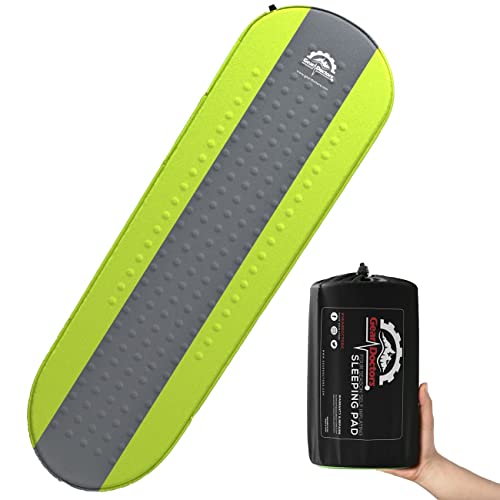
- Air-foam hybrid with R-value of 4.3
- Self-inflates for easier setup
- Durable 75D coated polyester shell
Best For: Campers who prioritize convenient setup and rugged construction
Best High-Insulation Comfort – Wevelel Memory Foam Sleeping Pad
For car campers and tent campers who prioritize warmth and cushioning, this Wevelel model is a substantial choice among sleeping pads for cold weather. Its 3.1-inch memory-foam construction, tested R-value of 9.5, and 800-pound capacity are designed for comfortable, well-insulated sleep rather than ultralight backpacking.
Best For: Cold-weather car camping, family camping, road trips, and guests at home.
Pros:
- ASTM-tested R-value of 9.5 provides strong insulation from cold ground.
- 3.1-inch, 50D memory foam offers substantial cushioning and pressure distribution.
- Self-inflates quickly with the dual-valve system and includes a carry bag.
- Quiet, skin-friendly stretch-knit surface is breathable and tear-resistant.
Cons:
- At 6.59 pounds, it is better suited to car camping than backpacking.
- Its thick foam construction may be bulkier to transport than an air pad.
This is a comfort-first pad for campers who want dependable insulation and a mattress-like feel. Choose it when pack weight matters less than thickness, warmth, and generous weight capacity.
Best Premium Four-Season Pad – Sea to Summit Ether Light XR Pro
The Sea to Summit Ether Light XR Pro is a lightweight option for shoppers comparing sleeping pads for cold weather and four-season use. Its ASTM-tested R-value of 7.4, ThermalCore insulation, and 3.9-inch Air Sprung Cell construction balance warmth, cushioning, and a pack weight of just 1.6 pounds.
Best For: Alpine expeditions, winter camping, and four-season backpacking where low weight is important.
Pros:
- R-value of 7.4 is designed for reliable four-season insulation.
- ThermalCore layers reflect infrared heat while keeping bulk and noise low.
- 3.9-inch Air Sprung Cell design supports side, back, and stomach sleepers.
- Included pumpsack and XPRESS valve simplify inflation and deflation.
Cons:
- It is positioned as a high-performance premium pad, which may not suit budget buyers.
- The nylon surface is listed as not water resistant.
This pad is a strong fit when cold-weather performance and portability need to coexist. The integrated inflation system and plush thickness add convenience for demanding trips without the weight of a bulky foam mattress.
Best Lightweight Value – Trekology UL R7 Sleeping Pad
For hikers seeking sleeping pads for cold weather without carrying a heavy mattress, the Trekology UL R7 offers a practical compromise. It weighs 2 pounds, packs to roughly the size of a water bottle, and combines a 7.2 R-value with 4 inches of cushioning for all-season use.
Best For: Backpackers and hikers who want compact insulation, generous thickness, and a 330-pound capacity.
Pros:
- 7.2 R-value provides substantial insulation against ground chill.
- 4-inch thickness helps prevent bottoming out and supports side and back sleepers.
- 2-pound weight and compact packed size suit space-conscious hikers.
- 40D ripstop nylon with TPU coating is water-resistant and supported by an anti-leak valve.
Cons:
- A pump bag is not included, so inflation requires your mouth or a separate pump bag.
- The 70.8-inch length is best suited to sleepers up to about 5 feet 11 inches.
This is an appealing middle ground between ultralight portability and winter-ready insulation. It makes sense for hikers who want a thick, supportive pad but do not need the absolute lowest possible trail weight.
Best Self-Inflating Family Pad – Elegear Memory Foam Sleeping Pad
The Elegear self-inflating pad is built for campers who want thick cushioning and strong insulation without manually inflating the mattress. Among sleeping pads for cold weather, its 9.5 R-value, 3.15-inch memory foam, and 800-pound capacity make it especially suitable for car camping and family use.
Best For: Family camping, road trips, car camping, and indoor guest use.
Pros:
- R-value of 9.5 is designed to insulate against harsh ground conditions.
- 3.15-inch, 26D memory foam distributes weight and relieves pressure points.
- Self-inflates in about 20 seconds after opening the valves, with no mouth or foot pumping.
- Includes a pillow, shoulder storage bag, and quiet stretch-knit fabric.
Cons:
- At 8.1 pounds, it is too heavy for most backpacking trips.
- The first inflation may take up to 20 minutes because the product is vacuum packed.
This Elegear model favors easy setup and mattress-like comfort over portability. It is a sensible pick for vehicle-supported trips, particularly when high insulation and a large weight capacity are more valuable than a small packed size.
Deep-Winter Insulation – OGERY R-Value 9.0 Sleeping Pad
For shoppers comparing sleeping pads for cold weather, the OGERY stands out with a listed R-value of 9.0 and an 8-layer reflective insulation structure. Its 4.7-inch thickness also adds cushioning and ground clearance for winter camping and backpacking.
Best For: Four-season camping, winter backpacking, snow camping, and alpine trips where insulation and cushioning are priorities.
Pros:
- R-value 9.0 and multi-layer reflective insulation are designed to reduce heat loss.
- 4.7-inch air-cell construction supports side, back, and combination sleepers.
- Includes a pump bag, repair-friendly airtight valve system, and durable 40D nylon with TPU coating.
- Packs compactly for backpacking, bikepacking, and mountaineering.
Cons:
- At 2.5 pounds, it is not the lightest option for minimalist backpacking.
- The 24-inch width may feel narrow for sleepers who prefer extra room.
The OGERY is a strong choice when maximum listed insulation and a thick sleep surface matter more than shaving every ounce from your pack. Its pump bag and rectangular shape add practical appeal for demanding cold-weather trips.
Ultralight Foam Value – Therm-a-Rest Z Lite Original
The Therm-a-Rest Z Lite Original is a simple, durable option among sleeping pads for cold weather, using closed-cell foam rather than an inflatable design. Its R-value of 1.7 provides some insulation, while the accordion folds make it easy to pack and carry.
Best For: Backpackers and mountaineers who want a lightweight, economical foam pad with dependable ground protection.
Pros:
- Weighs just 14 ounces for low-pack-weight trips.
- Accordion-style construction folds for straightforward packing.
- Dimples help trap heat, and the denser bottom improves durability and ground protection.
- Closed-cell foam is water resistant and does not require inflation.
Cons:
- Its R-value of 1.7 offers substantially less insulation than high-R-value winter pads.
- The 0.75-inch thickness provides less cushioning than thick inflatable models.
- At 20 inches wide, it may feel narrow for some sleepers.
The Z Lite Original is best viewed as a lightweight foam solution for moderate cold or as a durable supplemental layer. For severe winter conditions, its lower R-value may make it less suitable as a standalone pad.
Certified Four-Season Comfort – Elegear CumbreX 4-Inch Pad
The Elegear CumbreX combines a certified listed R-value of 9 with a 4-inch inflatable design, making it a compelling pick among sleeping pads for cold weather. It is built for four-season use and includes a pump sack for quick inflation without adding a separate pump.
Best For: Backpackers and campers seeking a relatively lightweight, insulated pad for snowy, rocky, or high-altitude environments.
Pros:
- Its R-value of 9 is SGS tested and ASTM F3340-22 certified according to the supplied notes.
- 4-inch thickness and distributed support cells help cushion uneven ground.
- Weighs 2.2 pounds and includes a pump sack for inflation in four to six pumps.
- 20D tear-resistant nylon, reinforced TPU, waterproofing, a repair patch, and storage bag support repeated use.
Cons:
- It is heavier than the 14-ounce foam alternative in this roundup.
- The mummy shape may provide less usable sleeping area than a rectangular pad.
The CumbreX offers a balanced mix of cold-ground insulation, cushioning, packability, and included accessories. Its certified R-value and waterproof construction make it especially appealing for serious four-season users.
Best High-Insulation Pick – Hikenture R6.2 Insulated Sleeping Pad
For shoppers comparing sleeping pads for cold weather, the Hikenture R6.2 stands out with a high ASTM-tested R-value, a 3.2-inch profile, and a lightweight inflatable design. Its included pump sack helps simplify setup on backpacking and camping trips.
Best For: Campers who prioritize strong insulation, cushioning, and low packed weight.
Pros:
- ASTM R-value of 6.2 with an aluminum film layer for heat reflection
- 3.2-inch thickness and airbag structure provide supportive cushioning
- Weighs about 1.7 pounds and includes a 40L pump-sack storage bag
- Includes repair patches and a 12-month warranty
Cons:
- Inflatable construction requires setup and care around sharp surfaces
- Its 25-inch width may feel narrow for some sleepers
The Hikenture offers the strongest stated insulation rating in this group while remaining reasonably light. It is a practical choice for cold-weather trips when warmth and comfort matter more than the absolute smallest packed size.
Best Lightweight Mummy-Style Pick – FlexRest Pro Insulated Sleeping Pad
The FlexRest Pro is a streamlined option for shoppers seeking sleeping pads for cold weather without adding much pack weight. Its ASTM R-value of 4.9, tapered mummy profile, and adjustable Vortex Valve target four-season backpacking comfort.
Best For: Backpackers who want a compact, lightweight pad that fits a mummy sleeping bag.
Pros:
- ASTM R-value of 4.9 for four-season insulation
- Light 1.4-pound construction helps minimize pack weight
- Tapered profile is designed to fit standard mummy sleeping bags
- Vortex Valve supports inflation, deflation, and pressure adjustment
Cons:
- 72-by-20-inch dimensions provide less width than the Hikenture
- Three-inch thickness is slightly less than the Hikenture’s stated profile
With a useful balance of insulation, weight, and pack-friendly shaping, the FlexRest Pro suits hikers who prefer a mummy-style sleep system. Its R-value is lower than the Hikenture’s, but the pad is also the lightest of the three listed options.
Best Self-Inflating Comfort Pick – Gear Doctors Oxylus 4.3 Self-Inflating Pad
The Gear Doctors Oxylus takes a different approach to sleeping pads for cold weather, combining air and foam in a self-inflating design. Its 4.3 R-value, 1.5-inch thickness, and simple valve setup make it appealing for campers who value easy setup and durable cushioning.
Best For: Car campers, families, and hikers who prefer self-inflating convenience over ultralight weight.
Pros:
- Hybrid air-foam construction provides a stated R-value of 4.3
- Self-inflates after unrolling and opening the valve
- 75D micro-coated polyester shell is designed to resist water, abrasion, and punctures
- Includes a lifetime replacement guarantee
Cons:
- At 35.2 ounces, it is substantially heavier than the other listed pads
- Its 1.5-inch thickness offers less cushioning than the inflatable alternatives
- Self-inflating foam construction may pack larger at 8 by 12 inches
The Oxylus is the convenience-focused choice: open the valve, let the foam expand, and fine-tune the pressure. It gives up some weight and thickness efficiency, but its hybrid construction and stated lifetime replacement guarantee can suit frequent campers and basecamp-style trips.
How We Picked the Best Sleeping Pads for Cold Weather
We focused on the features that matter most when sleeping on cold ground: insulation rating, thickness, construction, durability, packed portability, and ease of setup. R-value received particular attention because it indicates how effectively a pad resists heat loss; higher numbers generally provide better protection in colder conditions.
We also included different pad styles rather than assuming every camper wants the same design. Self-inflating pads and foam-mat hybrids can offer stability and dependable insulation, while air pads typically provide a better warmth-to-weight ratio. Comfort features such as rectangular shapes, integrated pillows, and generous thickness were also considered.
Quick Comparison
| Pad type | Best suited to | Main advantage | Typical trade-off |
|---|---|---|---|
| High-R-value insulated pad | Winter and very cold camping | Maximum ground insulation | More weight or bulk |
| Self-inflating pad | Car camping and versatile trips | Comfort and easy setup | Usually larger when packed |
| Lightweight air pad | Backpacking and three-season use | Low weight and compact storage | Needs careful inflation and handling |
| Closed-cell foam pad | Minimalist trips and backup use | Reliable, puncture-proof insulation | Less plush comfort |
Key Buying Factors for Sleeping Pads for Cold Weather
R-Value and Temperature
For mild shoulder-season conditions, a moderate R-value may be sufficient. For freezing temperatures, choose a pad with a higher rating, commonly around R-5 or above. In genuinely severe cold, layering pads can improve insulation, but check manufacturer guidance and account for the combined bulk.
Thickness and Comfort
Thicker pads cushion hips and shoulders more effectively, especially for side sleepers. They can also raise you farther from cold ground. However, extra thickness often increases packed size and may require more effort to inflate.
Weight, Packed Size, and Shape
Backpackers should compare the pad’s packed dimensions and weight, not just its advertised thickness. Rectangular pads provide more usable sleeping space, while tapered designs save room in a pack. Confirm the dimensions fit inside your tent and match your sleeping position.
Durability and Setup
Air pads should be inflated on a clean surface and stored away from sharp objects. Self-inflating models simplify setup but still benefit from a repair kit. Foam pads are the most dependable choice when puncture resistance matters more than compactness.
Who Should Buy Which Sleeping Pads for Cold Weather?
Choose a high-R-value model if you regularly camp below freezing or prioritize warmth over minimum pack weight. Choose a thick self-inflating pad for car camping, base camps, and comfort-focused trips. Choose a lightweight insulated air pad when you backpack and need a compact sleeping system for changing seasons. Choose a closed-cell foam pad for rugged simplicity, quick breaks, or use as a backup beneath another pad.
Before buying, compare the manufacturer’s R-value, packed dimensions, surface dimensions, valve design, and included repair accessories. A pad that fits your sleeping style and expected temperatures will usually be a better choice than the thickest or highest-rated option alone.
