
If you’re dealing with Morton’s neuroma, the right shoe can make a real difference in forefoot comfort. Topo Athletic is popular for its roomy toe box, secure midfoot fit, and low-to-moderate drop options that can help reduce pressure on irritated nerves.
This roundup focuses on Topo Athletic shoes for Morton’s neuroma that balance cushioning, stability, and natural toe splay so you can narrow in on the best match for walking, running, hiking, or all-day wear.
Best 10 Topo Athletic Shoes for Mortons Neuroma Picks for 2026
Maximum Cushion Daily Comfort

- 35 x 30 mm max-cushioned platform
- ZipFoam midsole for lightweight comfort
- OrthoLite insole and durable rubber outsole
Best For: Women wanting a plush neutral road shoe for long walks and daily miles
Lightest Low-Drop Trainer

- 3 mm drop with a low-profile 23 x 20 mm platform
- Weighs just 6.4 oz for a lightweight feel
- ZipFoam midsole supports running and gym work
Best For: Women who want a lighter, lower-drop trainer with moderate cushioning
Trail-Ready Cushioning
Pursuit 2 Zero-Drop Trail Runner

- Zero-drop with a high-cushion 28 mm platform
- Vibram Megagrip outsole for trail traction
- Spacious fit with secure recycled mesh upper
Best For: Trail runners wanting cushioning and a roomy feel
Max-Cushion Road Comfort
Specter 2 Fast Cushion Trainer

- 37 x 32 mm platform for maximum cushioning
- Pebax Powered midsole for lively energy return
- Breathable recycled mesh with durable outsole rubber
Best For: Road runners wanting plush cushioning and responsiveness
Balanced Trail Support
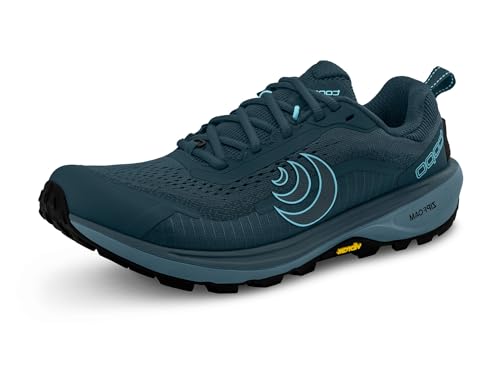
- 3 mm drop with balanced moderate cushioning
- Vibram Megagrip outsole with deep lugs
- Spacious toe box and secure midfoot fit
Best For: Trail runners and hikers wanting low-drop stability
Most Cushioned Road Pick
Topo Athletic Aura road running shoe

- 38 x 33 mm platform with maximum cushioning
- ZipFoam midsole and Y-Frame Guidance System
- Breathable mesh upper; 5 mm drop
Best For: Road walking and running when cushioning and stability matter most
Cushioned Trail Cross-Over
Topo Athletic Ultraventure 4 trail running shoe

- 35 x 30 mm platform with ZipFoam cushioning
- Vibram XS Trek EVO outsole for traction
- Lightweight build at 8.3 oz for women
Best For: Mixed-surface trail runners who want cushioning and grip
Most Protective Hike Pick
Topo Athletic Traverse hiking shoe

- Vibram Megagrip outsole for rugged traction
- Forefoot rock plate adds trail protection
- Mesh upper and FKT insole for wet conditions
Best For: Hikers needing protection and grip on rough terrain
Maximum Cushion Daily Comfort – Phantom 4 for Women
If you want Topo Athletic shoes for Mortons neuroma that lean heavily into softness, the Phantom 4 is built around max cushioning and a smooth, easy ride. Its 35 x 30 mm platform, lightweight ZipFoam midsole, and OrthoLite insole make it a practical choice for long walks, daily training, and all-day wear.
Best For: Walkers and runners who want maximum underfoot cushioning for daily miles and long wear.
Pros:
- Max-cushioned neutral trainer with a 35 x 30 mm stack height
- ZipFoam midsole adds lightweight comfort and responsiveness
- OrthoLite performance insole improves step-in comfort
- Durable rubber outsole supports reliable traction
Cons:
- Neutral design may not suit those who need stability features
- Road-focused build is not intended for trail use
The Phantom 4 is a strong pick if your priority is plush comfort without giving up a lively feel. For neuroma-sensitive feet, its high cushioning and smooth ride are the standout traits.
Most Plush Road Option – Atmos 2 for Women
For shoppers comparing Topo Athletic shoes for Mortons neuroma, the Atmos 2 stands out as the most heavily cushioned road option here. Its 40 x 35 mm platform, updated ZipFoam midsole, and OrthoLite Performance Insole are designed for plush protection, easy daily miles, and comfortable all-day wear.
Best For: Women who want the highest level of cushioning and a soft, protected ride.
Pros:
- Maximum cushioning with a 40 x 35 mm platform
- Updated ZipFoam midsole adds rebound and responsiveness
- Lightweight outsole is designed for grip and slip resistance
- Breathable recycled mesh upper supports airflow and comfort
Cons:
- Neutral road design may not fit runners needing extra guidance
- Low-top road construction is not made for trail terrain
If your main goal is to reduce underfoot pressure, the Atmos 2 offers the most substantial cushioning in this group. It is a sensible choice for long walks or training miles when softness matters most.
Most Protective Trail Choice – Ultraventure 4 for Men
If you need Topo Athletic shoes for Mortons neuroma and want a trail option, the Ultraventure 4 is built for comfort on mild to moderate terrain. It pairs a 35 x 30 mm platform and ZipFoam midsole with a Vibram XS Trek EVO outsole, giving you cushioning plus traction for trail-to-road use.
Best For: Men who want a cushioned trail shoe with secure traction and a supportive feel.
Pros:
- 35 x 30 mm platform with a ZipFoam midsole
- Vibram XS Trek EVO outsole provides multi-surface traction
- Recycled mesh upper and PU print add durability
- Lightweight design for a trail shoe at 10.4 oz
Cons:
- Trail-focused outsole is unnecessary for pure road use
- Still a neutral shoe, so it does not add stability support
This is the right pick if you want cushioning beyond the pavement and need dependable grip on mixed terrain. For neuroma-sensitive feet, the blend of padding and traction makes it an appealing outdoor option.
Lightest Low-Drop Trainer – Fli-Lyte 6 for Women
Among Topo Athletic shoes for Mortons neuroma, the Fli-Lyte 6 is the most minimal-feeling road option here thanks to its 3 mm drop and low-profile 23 x 20 mm platform. It is designed as a versatile trainer for running and gym work, so it suits people who want a lighter, more connected ride with moderate cushioning.
Best For: Women who prefer a lightweight, low-drop shoe with a more natural road feel.
Pros:
- Very lightweight at 6.4 oz for a low-profile trainer
- 3 mm drop offers a more connected feel to the road
- ZipFoam midsole keeps the ride responsive
- Versatile enough for running, tempo work, and cross-training
Cons:
- Moderate cushioning is less plush than the max-cushion models
- Low-profile build may not be ideal if you want maximum softness
The Fli-Lyte 6 is a good fit if you want less bulk and a lower drop without going fully minimalist. It is the most agile option in this set, but it gives up some of the underfoot padding found in the Phantom 4 and Atmos 2.
Trail-Ready Cushioning – Pursuit 2 Zero-Drop Trail Runner
For shoppers comparing Topo Athletic shoes for Mortons neuroma, the Pursuit 2 stands out as a zero-drop trail option with a roomy, natural-feeling fit and high cushioning. It is built for technical terrain, so it makes sense if you want underfoot comfort plus secure traction on uneven ground.
Best For: Trail runners and hikers who want zero drop, high cushioning, and a spacious toe box feel on technical terrain.
Pros:
- Zero-drop design with a high-cushion 28 mm platform
- Vibram Megagrip outsole for strong traction and slip resistance
- Spacious Topo fit with a secure, durable recycled mesh upper
- ZipFoam midsole aims for a softer, lighter, more responsive ride
Cons:
- Trail-focused build may be more shoe than needed for everyday road use
- Not water resistant
- Generously spaced lugs are optimized for trail conditions, not smooth pavement
The Pursuit 2 is a strong pick if you want a cushioned, zero-drop trail shoe that still feels stable and protected. For Morton’s neuroma, the combination of a roomier forefoot feel and soft cushioning may be especially appealing.
Max-Cushion Road Comfort – Specter 2 Fast Cushion Trainer
If you are looking at Topo Athletic shoes for Mortons neuroma and prefer road mileage, the Specter 2 is the most cushioned road model in this set. Its high-stack platform and Pebax-powered midsole are aimed at runners who want a soft, responsive ride for long runs and faster efforts.
Best For: Road runners who want maximum cushioning, strong energy return, and a lightweight feel.
Pros:
- Max-cushioned 37 x 32 mm platform for long-distance comfort
- Lightweight Pebax Powered midsole for strong energy return
- Durable rubber in high-abrasion areas for added outsole life
- Secure, breathable recycled mesh upper
Cons:
- 5 mm drop may not suit shoppers who want a zero-drop shoe
- Road-focused design is less versatile for rough trails
- Built for performance running, so it may feel more shoe than casual walker needs
The Specter 2 is the best choice here if your priority is a plush road shoe with plenty of cushioning. It offers the most overt comfort-and-speed balance in the lineup, though it is less about natural-ground versatility than the trail models.
Balanced Trail Support – Terraventure 5 Low-Drop Hiker
For buyers comparing Topo Athletic shoes for Mortons neuroma, the Terraventure 5 offers a middle-ground trail feel with moderate cushioning and a low 3 mm drop. It is designed for both fast trail running and longer hiking, making it a practical choice if you want protection without moving to a very high stack.
Best For: Trail runners and hikers who want a secure fit, moderate cushioning, and dependable grip.
Pros:
- 3 mm drop with a balanced 25 mm x 22 mm platform
- Vibram Megagrip outsole with deep multi-directional lugs
- Spacious toe box with a secure midfoot fit
- Dual-mesh upper is breathable and reinforced in abrasion zones
Cons:
- Moderate cushioning may feel less plush than max-cushion options
- Not water resistant
- Trail/hiking focus makes it less suitable for road-only use
The Terraventure 5 is a solid all-around pick when you want low-drop stability, traction, and a more natural-feeling ride. It is especially appealing if you like a roomy forefoot but still want the security and protection needed for varied terrain.
Most Cushioned Road Pick – Topo Athletic Aura road running shoe
If you want Topo Athletic shoes for Mortons neuroma, the Aura is the road model here with the most cushioning and a 5 mm drop. Its 38 x 33 mm platform, ZipFoam midsole, and Y-Frame Guidance System are aimed at a smoother, more stable ride for daily training, long walks, or long-distance runs.
Best For: Road runners and walkers who want maximum cushioning with a stable feel.
Pros:
- Maximum cushioning with a 38 x 33 mm platform
- ZipFoam midsole plus Y-Frame Guidance System for guided support
- Breathable engineered mesh upper for comfort and ventilation
- Lightweight for a max-cushion shoe at 9.1 oz for women
Cons:
- Road-focused outsole is better for pavement than rough terrain
- 5 mm drop may not suit shoppers looking for a zero-drop feel
- Not water resistant
The Aura is the most comfort-first choice in this group, and its combination of cushioning, stability, and a roomy-feeling road setup makes it a strong pick if pressure relief is a priority.
Cushioned Trail Cross-Over – Topo Athletic Ultraventure 4 trail running shoe
For shoppers comparing Topo Athletic shoes for Mortons neuroma, the Ultraventure 4 is a cushioned trail option that can also transition to road. It uses a 35 x 30 mm platform, ZipFoam midsole, and Vibram XS Trek EVO outsole to deliver a comfortable, responsive ride with dependable traction on mild to moderate terrain.
Best For: Trail runners who want cushioning, traction, and a lighter build for mixed surfaces.
Pros:
- 35 x 30 mm platform with a comfortable ZipFoam midsole
- Vibram XS Trek EVO outsole for multi-surface traction
- Lightweight at 8.3 oz for women
- Recycled mesh upper with PU print for added structure in high-abrasion areas
Cons:
- Trail design may be more shoe than needed for pure road use
- Not water resistant
- 5 mm drop may not appeal to buyers wanting a different geometry
The Ultraventure 4 is a practical middle ground if you want trail-ready protection without giving up a cushioned feel. It makes the most sense for mixed routes and moderate terrain.
Most Protective Hike Pick – Topo Athletic Traverse hiking shoe
If your priority is protection in Topo Athletic shoes for Mortons neuroma, the Traverse is the hiking-oriented option in this lineup. It combines a cushioned platform, Vibram Megagrip outsole, and a forefoot rock plate, which can be useful when you want more underfoot security on rugged trails and longer hikes.
Best For: Hikers and thru-hikers who want traction, protection, and drainage-friendly comfort.
Pros:
- Vibram Megagrip outsole for rugged traction
- Forefoot rock plate adds protection on rough terrain
- Mesh upper for ventilation
- FKT insole with closed-cell construction helps with wet conditions and drainage
Cons:
- Moderate cushioning is less plush than the Aura or Ultraventure 4
- Hiking-focused build may feel more substantial than a road shoe
- Not the lightest option at 1.5 pounds
The Traverse is the most protective shoe here, so it fits best if your foot needs are tied to rocky trails, extended hikes, or wetter conditions rather than everyday pavement miles.
How We Picked the Best Topo Athletic Shoes for Mortons Neuroma
For Topo Athletic shoes for Morton’s neuroma, the most important features are a wide forefoot, a shape that lets the toes spread naturally, and a platform that does not cram the ball of the foot. We also looked at heel-to-toe drop, cushioning level, outsole grip, and whether the shoe is better suited to road, trail, or mixed-use wear.
Models with a lower drop often feel better for sensitive forefeet, but the best choice still depends on how much cushioning you want and how you plan to use the shoe. Some buyers prefer a softer daily trainer, while others need a firmer, more stable platform for trails or long walks.
Quick Comparison
Think of the lineup in three buckets: plush road shoes for maximum daily comfort, lighter road shoes for a more responsive feel, and trail or hiking options for uneven ground. If your neuroma flares with pressure and impact, prioritize cushioning and a forgiving fit. If you want more ground feel and agility, choose a lighter or lower-drop option.
Key Buying Factors for Topo Athletic Shoes for Morton’s Neuroma
Toe Box Shape
A roomy toe box is one of the biggest advantages Topo Athletic offers. It helps reduce compression across the forefoot and gives your toes space to move, which can matter a lot when you’re trying to limit nerve irritation.
Heel-To-Toe Drop
Lower-drop shoes can shift pressure away from the forefoot for some wearers, but they are not ideal for everyone. If you are sensitive to forefoot loading, a 0MM to 5MM drop is worth considering, especially if you already tolerate minimalist or low-drop shoes well.
Cushioning and Firmness
More cushioning may soften impact during walking or running, while a firmer platform can feel more stable and controlled. For Morton’s neuroma, the goal is usually enough cushioning to reduce pounding without making the shoe feel unstable.
Use Case
Road shoes are best for daily wear, walking, and pavement miles. Trail models bring added grip and protection, while hiking-focused options are better if you need more structure and durability. Match the shoe to your main terrain so you do not trade comfort for poor traction or excess weight.
Who Should Buy Which Topo Athletic Shoes for Mortons Neuroma?
If you want the safest all-around starting point, choose a cushioned road trainer with a 5MM drop and a generous fit. If you prefer a lighter, more flexible feel, look at lower-drop road models. For off-pavement use, trail shoes with a broad base and protective outsole are the better pick. And if your main goal is all-day walking or standing comfort, prioritize the most cushioned option that still leaves plenty of room in the forefoot.
In short, the best Topo Athletic shoes for Morton’s neuroma are the ones that minimize toe-box squeeze, match your terrain, and give you enough cushioning to keep pressure off sensitive nerves throughout the day.
